

With over 35 years in the field, host Don Lamont covers topics and issues with industry leaders and influencers to bring you up to speed on what’s happening in the outdoor world.
And now, here is your host, Don Lamont.
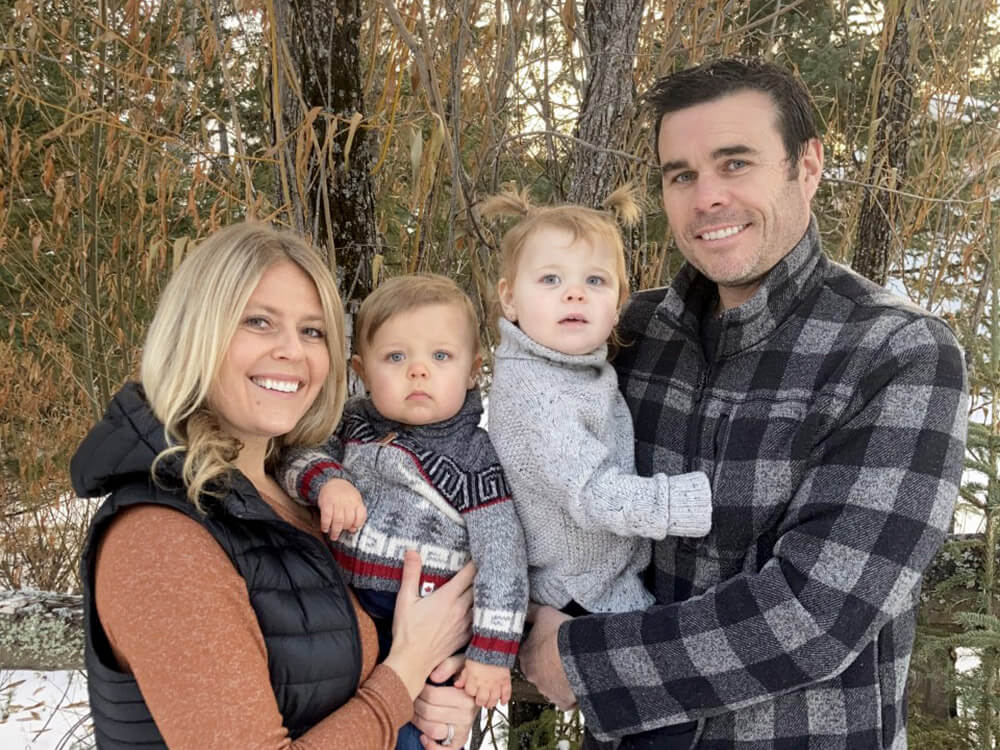
Our guest on today’s show is one of the biggest tourism operators in Manitoba.
The Jackson family has been in the aviation industry since 1972, when Bob Jackson purchased his first air service.
Since son Shaun got his commercial license in 1999, they have steadily expanded their properties.
Shaun now has 12 outposts and one main lodge on the east side of Lake Winnipeg.
His aviation business, Adventure Air, is growing by leaps and bounds with 13 aircraft, including eight caravans.
Located on the Winnipeg River at Lac du Bonnet, with an airstrip next door, it is a gateway to unbelievable fly-in fishing experiences.
Hey, Shaun.
Thanks for coming on the show.
Yes, sir.
Good morning.
Good morning.
You’re a tough guy to get a hold of.
Yeah.
I’m tired.
We’ve been trying for about a month to get you on the Complete Angler podcast, but we finally got you, and great to have you.
Great.
Great.
Now, you’ve been a big supporter of Hooked Magazine.
You’ve always donated a trip when needed, and we want to appreciate your latest, our 15th anniversary celebration.
You donated a trip to one of your outpost camps for three days for four people, and Kevin and I really appreciate that.
Thank you very much, Shaun.
Yeah, no problem.
You’re welcome.
We’ve had an incredible response to that as well, so looking forward to it.
We’re going to have the draw here on the 1st of May, and we’ll let you know who wins, and you’ll be able to look after them.
Absolutely.
We’ll make sure that they enjoy their trip.
Well, the last few years has been an interesting experience for many of our operators in this province because of COVID and forest fires and so on.
But with the border now opening and no regulations in place, are you seeing a fairly dramatic increase in your bookings this year, Shaun?
Yeah, it seems like things are coming back sort of to pre-COVID, I guess you’d say.
I mean, it’s still a bit of a slow return, I think.
But yeah, it definitely seems like our American friends are coming back and excited to get back on their trips.
I mean, some of them are three, four years missed, right?
So we’re getting to see some of the people back again.
So it’s looking good that way.
Now, you also had some bad luck during COVID.
We had a really bad forest fire season on the east side of Lake Winnipeg, and you ended up losing some of your properties, didn’t you, Shaun?
Yeah, that was something else.
That was really challenging, and we did.
We lost two of our main camps, basically.
So that was definitely a game changer for us.
But, you know, it could have been a lot worse.
Our forestry did an excellent job, and they saved probably six other ones we had that were at risk.
So we were very lucky there.
But yeah, what a deal.
I’ll tell you, from flooding to burning, it was something else.
We might get a bit of flooding this year, given the forecast right now.
Yeah.
Yeah, no, it’s something else.
So yeah, we’re looking forward to hopefully just getting back to a little bit of a norm and, you know, just get back at it.
Now, have you replaced those outpost camps that you lost?
Not as of yet.
We haven’t.
It’s just, you know, it’s sort of something you’ve got to wrap your head around and make a plan to do that, especially nowadays with the cost of everything and even lack of supplies, even just to get things to do it.
You know, so it’s definitely on our radar and a couple of the places, you know, like the one we lost, like Bradbury, for example, that was one of our main places and a fantastic lake.
So I’d really like to see that one back again.
Yeah, that’s a heck of a fishery.
Now, I’ve been lucky enough, fortunate enough to be to four-year properties, and one of them you ended up selling, Harrop Lake, which your dad, Bob, used to enjoy, I understand.
Yeah, yeah.
So we sold, this kind of got to a point where we just had a little bit of too much going on, and mom and dad were at a point where they wanted to step back a little bit.
And so we made that decision, and it was sort of bittersweet, but we still have plenty on our plate and still lots to offer.
Well, I want to get into a bit of the history of your parents and how you built this empire.
But first of all, I want to give people an idea of exactly where you’re located and where your outposts are and what they can expect.
So you fly people out of Lac du Bonnet, do you not, Shaun?
Adventure Air?
Yeah, so our main base, so we operate, like you mentioned, the air service as well, Adventure Air, so that’s our charter.
So we operate right out of the airport in Lac du Bonnet.
And then our camps are located basically all up the east side of Lake Winnipeg, so anywhere from 25-mile flight to 160-mile flight.
So we’re just basically up that whole east side of Lake Winnipeg.
And then, yeah, so we have multiple locations there.
Now, you know, a lot of people, kind of the feedback we get when we offer a fly-in outpost camp is the majority of the people have never been to that kind of an experience.
So if I was to book a fly-in outpost experience with you, Shaun, what could I expect?
Yeah, good question.
So I think a lot has changed in the last, you know, 10, 15 years with the experience out there.
In the past, you know, a fly-in outpost camp was a pretty rustic, hardcore kind of trip you would want to go on.
But there’s been lots of improvements.
They’re very comfortable now.
So we would fly up in one of our airplanes to the lake.
We’re the only camp on any of our lakes.
So you get there.
There’s no other cabins there.
So it’s very remote.
You get a nice full-service cabin.
They all have hot and cold running water, showers.
Some of them have indoor plumbing.
Some have outdoors still.
All your boats and motors are there, gas.
So basically, all you bring is your fishing gear, your personal clothing and stuff, and your food.
Other than that, everything is looked after for the outpost side of things.
They’re very well furnished.
And then we also have the full-service packages, too, like Amphibian, which I believe you’ve been to,
that are, you know, a letter step up, where there’s staff at the site that can do your meals and whatnot for you.
So it’s a little bit more of a full-service package.
And then, yes, we kind of offer the full range.
When I started doing the television show, everybody wanted to have me up on the American plan.
The first outpost camp I ever was at was with you, Shaun.
Actually, I think we went in a big echo.
Or it was Harrop.
I can’t remember, but it was one of those two.
And it was a great experience.
And this last summer, we went into, with my family, the Little Sass.
And one of the things I really appreciate, besides how great your cabins are and your accommodation and your boats and reliability and everything,
is that you also offer a generator and a satellite phone, which is important.
You know, I remember falling on a dock one time in outpost camp.
We didn’t have a satellite phone.
I could have been seriously injured.
And so I think that is definitely, if I was to tell people, if you go to an outpost camp, make sure you bring along the satellite phone.
And that’s important.
Now, in this case, it worked out really well because on the last day, we saw a flare-up around the island.
We were out fishing at Little Sass.
And so I got on the phone to you guys at Adventure Air, and they had an aircraft out within half an hour, and they got that put out.
So that’s another reason to certainly have a satellite phone, and it’s a great service to offer.
Anyway, yeah, so, yeah.
And, you know, when you think of an outpost camp, it’s relatively inexpensive because you can accommodate from four to eight people.
That would be about the average, Shaun?
Yeah, so the camps are all, our camps anyways, our smallest is, you can accommodate, up to eight.
But, like you said, a group four to eight is sort of our average group, like lots of six.
The groups are getting smaller.
I think it’s just, you know, tougher to get the guys together and stuff like that.
But, yeah, they’ll all hold up to eight real comfortable.
We have some larger ones, like Echo has a bit more room in there.
And then Red Willow, for example, we can hold 12, and Amphibian can hold 16.
So, yeah, but they’ll all hold the least eight, so nice and comfortable.
It’s funny, my favourite one was probably Big Echo.
It’s a five-minute float plane ride from your base.
Yeah, you know what, same here, that’s got a, that place has a real spot in my heart, too.
It’s close, it’s such a fantastic fishery, and it’s a beautiful spot, too.
Like, the scenery around there is just unbelievable, and the quality of fish is just great.
Yeah, I would say that’s probably the only lake in your outpost chain that has smallmouth, and would that be correct?
Yeah, you’re right, Dad.
Our artery lake is starting to produce some smallmouth bass the last few years, too, for some reason.
But, yeah, Echo has got a great smallmouth fishery.
Well, let’s talk about what the, if you fly in there, what you can expect.
First of all, I’m going to tell you this, you’re going to catch a lot of fish, no matter if you know what you’re doing or don’t know what you’re doing.
But I do recommend that you bring a depth finder, portable depth finder with you, because you’re going to get a generator from Shaun for a small fee, and you’re going to be able to charge your batteries and your cell phone, so you can take lots of pictures.
And you’re going to catch a lot of fish.
In fact, in Little Sask, Shaun, I brought my auto chart live on my Helix 5, and I auto charted the whole lake.
So, by the end of three days, I pretty well had them figured out, and it was just absolutely great fishing and spectacular.
And, you know, the nice thing about an outpost camp, Shaun, is that, especially with your family, you can pick your own time to go out.
You can fish as hard as you want or as little as you want, and just enjoy the time, because the cabins and scenery, like you say, is outstanding, and you’re the only cabin on the lake.
So, it is really a fantastic experience.
So, let’s talk a little bit about the history of your family and how.
Now, I was reading the background information you have on your website, Jackson’s Lodges and Outposts, and your dad, Bob, got his first air service back in 1972.
It was in northern Manitoba?
Yeah, he started up in Flin Flon back in the day there.
So, yeah, you’re right, around 1972 was when the air service sort of started, and then he’s been involved in it ever since.
And then we, I think we bought our first outpost camps in 89, I believe it was.
And then from there, that was with a package of three, and then we’ve sort of just been acquiring them ever since, up to around a dozen now, I guess we still have.
And then the air service has grown a lot as well.
We’re running 13 aircraft now, and that’s a big, big part of our business.
Yeah, and you got your commercial license and really got involved in the industry in 1999.
Is that correct?
That’s right.
That’s sort of when we started there.
And then shortly after that, we moved down to Lac du Bonnet and got the base here.
And that was really a big step for us, and it’s been great.
Well, that’s kind of a key move because it gives people that want to go to the outpost easy access.
It’s not a far drive from Winnipeg.
First of all, to get to your air base and hop on a float plane or whatever and get to your camp.
Most of them, I would say, would probably be about an hour fly, right?
Is that correct?
Yeah, with the caravans, now it’s a little shorter, but yeah, anywhere between a half hour to an hour, and you’re on site.
Well, talk a little bit about your air fleet, because those de Havilland Turbo Otters are incredible airplanes, aren’t they?
Yeah, so we still have the Turbo Otters.
They’re, like I say, the backbone of the industry, I guess, from back in the day.
And they’re retrofitted with the turbine engine now, so they’re really reliable, and they’re just a workhorse.
And then we still have the, we run the de Havilland Beaver as well, and then caravans is really what’s been taken over our fleet.
We’re running eight of them now, and they’re a real versatile airplane run on wheels and floats and amphibious floats, so they work really good for us.
Those caravans are cool, because when we went into Little Sass, we flew in and landed on water.
They came, picked us up, and then we ended up landing at the airstrip.
But you can also just fly the people right to Winnipeg if they want, right?
Yeah, we do that as well.
So, yeah, they’re just a real great airplane.
So, what does the future hold?
Now, you don’t, that’s not your only business.
Do you have a hauling business as well, John?
Yeah, we have a trucking company as well, so we’re into a little bit of everything there.
But, you know, the lodge business is definitely true to our heart.
You know, my wife, Jessica, has Eagle’s Nest, and that’s a big part of our family now, too.
So, she runs that completely, so I’m helping her with that a bit.
And so, that’s going to be taking up some of our time.
And then, I say the air service just keeps growing and growing, and there’s so much going on in the north now that we, that’s definitely going to be a big part of our future.
But, yeah, we’ll just keep on trucking.
Well, glad you mentioned your wife, Jessica, because I knew her when she was knee-high to a grasshopper.
I got my start at Eagle Nest Lodge, which she manages and their family owns, and it’s a beautiful location as well.
And I really enjoyed my first three years in the industry at Eagle Nest, and I learned a lot.
And people don’t understand how beautiful that country is up the Winnipeg River.
It’s so rugged, so remote.
I mean, people get a little intimidated by the water and the number of rocks there, but if you take your time, it’s certainly a worthwhile adventure.
So, that’s great.
It’s a little nice thing to our operation, too.
Like, you see, we have the Elk Post, obviously, and then we have Amphibian, but then Eagle Nest side of it there, that really fits in for the full, full-service packages in the corporate market.
Like, you know, it’s just a fantastic place.
So, it gives us a – we can basically offer – we have everything to offer, no matter what you’re looking for when it comes to service.
So, you said you had eight caravans?
Yeah, we’re running up – we have up to eight now, yeah.
Holy smokes.
That’s a lot of airplanes.
So, when do you find time for recreation, Shaun?
Well, I don’t get to fish if you’re asking that question.
I knew that.
Every time I show up at your airbase there, you’re always organizing, loading, flying.
You don’t do as much flying as you used to, though, do you?
No, mostly office stuff now.
I still get out a little bit there.
But, yeah, it’s just, like I say, it’s busy times there.
And I do get out a little tiny bit here and there to enjoy some wilderness.
But, yeah, I don’t get to fish like I used to.
And I just really enjoy seeing other people have a good time and enjoy it.
And that’s really what makes me happy.
So, what do you see in the future of the industry?
You know, I think during COVID, there was a lot more people in this province that were
willing to branch out a little bit and do a little more adventure.
And I would think that you probably saw the – well, I mean, mostly the Americans who can
come here, but you must have really seen a lot more people from Manitoba enjoying an
outpost experience.
Yeah, there’s definitely a shift.
What I noticed lots was, like, I guess everyone from being cooped up so much, you saw that
need to get out.
And, obviously, we’re selling a fishing package, but it’s really – there’s really so much
more than that because it’s about getting out there, like you say, with a family.
It’s not all about being a hardcore fisherman.
You know, like I see more and more – even groups of guys that are doing these trips.
And, you know, out of the eight guys, two of them might be fishermen, and the other guys
haven’t even put a hook in the water in their life.
And they’re just about getting out there and enjoying, you know, with the friends and a
good time.
And they love it.
And I see that even at the lodges, you know, with the corporate groups.
You get – a lot of the people have never experienced that in their life.
They’re not fishermen, but they want to do it again because they’ve never even realized
that experience was out there.
So, yeah, definitely our Manitoba market has really increased since COVID, and it’s good
to see that people are getting out and enjoying it.
Well, I think during COVID, a lot of the fly – our drive-to operations also really benefited
because it was an easy no-brainer for people to get out.
And then I think that, you know, like you say, I think it translated over.
They’re more willing to try that outpost experience, which it really is something special.
And if I recommend it, if you’ve never done that and you’re listening to this podcast or you’ve
never been to an outpost, it really is a fantastic experience.
And like you said, Shaun, it’s not the rough and tumble, you know, way it was.
You know, for example, little Sask, we had a nice hot shower in our cabin.
You got – it’s a beautiful cabin, comfortable beds.
You got a full kitchen.
You got a propane.
You can make your shore lunch right on the deck or just down on the shore, and you got a barbecue
that’s brand new, and, you know, we just had such a great family time, you know.
We didn’t have to rush out early in the morning to go fishing.
We could have a leisurely breakfast, go out for two hours, catch a million fish, come in,
have a shore lunch, spend three hours, go out for three hours in the afternoon, and then
go for a couple hours in the evening.
And in the meantime, enjoy yourself.
Like you say, it’s an incredible experience.
Mm-hmm.
Yep.
Okay, well, is there anything you wanted to add?
I mean, you’ve seen it all.
Okay, here’s a question for you.
So you’ve seen it all, and how long have you been flying?
99 and outposts?
So you’ve kind of seen it all.
When people arrive to get on their airplane to go into an outpost, this was really funny
because I remember this back in 2015 when I was going into Harrop Lake.
There was all these Americans, and they had all their fishing rods, and everything were all
over the place.
They even still had hooks on their rods.
And Canadians are even worse than that because they have no idea, right?
If you’ve never been to a fly-in.
So what are some tips?
If you’re going to take a fly-in trip for three or four days, how should you prepare?
How should you pack?
Yeah, good question.
So I think the biggest thing is, especially if you’ve never done it before, you’re always
you’re, I guess, don’t know what to expect of you out there.
So most guys are bringing way too much stuff.
Like, you know yourself, you’ve been there.
The cabins are stocked, fully stocked when it comes to cooking stuff, you know, barbecues,
deep fryers, all that good stuff.
But you just see everyone bringing so much stuff, and they can cut back on it.
Even your tackle, like, you don’t need those, you know, 100-pound tackle bags there to go
enjoy some good fishing in those lakes.
So it’s really about just planning what you’re really going to need there.
And, yeah, everyone doesn’t have to have a whole hockey bag full of gear.
You know, you’re trying to fit on one airplane.
So that’s what we notice.
It just seems like guys are bringing it.
And I know they get there, because I’ve even done it myself.
You get there, and you only use that quarter, what you brought.
So you can really cut down.
That would be a big help.
Yeah, no, that’s a big thing.
And if you have a rod case, too, it really helps.
You know, pack your equipment, have a reel case, a rod case.
It makes it very efficient.
The other thing that’s come along, Shaun, is the lithium battery.
You know, when I brought in my Helix 5, I had just a small lithium battery.
And, you know, charge it at the end of every day at your portable generator,
and you’re where you go.
And it lasts the whole trip, and it’s light as can be.
Pack, you know, pack a pillow, pack a sleeping bag,
and minimum of clothes, a rain jacket, and pants,
and minimum of tackle, a few jigs, a few spoons, a few crankbaits,
a couple rods per person, and knock yourself out.
That’s right.
That’s right.
All right.
Well, appreciate you finally coming on the show,
and I hope you have a fantastic season.
And make sure you say hi to Jessica for me
and all the folks at Eagle Nest.
It will do.
It will do.
Thanks a lot for having me.
Thanks, Shaun.
Great.
Thanks for tuning in.
Visit hookedmagazine.com to subscribe to The Complete Angler
and never miss an episode.
The Jackson Family have been involved in the aviation industry since 1972 when Bob Jackson bought his first air service in northern Manitoba. In 1985, when the opportunity arose, he expanded his fleet and began operating out of Silver Falls, MB. along the Winnipeg River. Up to 1986, his business had serviced several Lodges and Outposts and then he purchased his first three outposts cabins, located between the east side of Lake Winnipeg and the Ontario border.

In 1999 Shaun Jackson (son) became actively involved in the family business. He had acquired his commercial pilot’s license and together they purchased another lodge with access to three different lakes. Soon, in 2005, they expanded once again. This time to Lac Du Bonnet, where they again increased their fleet of aircraft and added several fly-in outpost cabins as well as another Lodge.
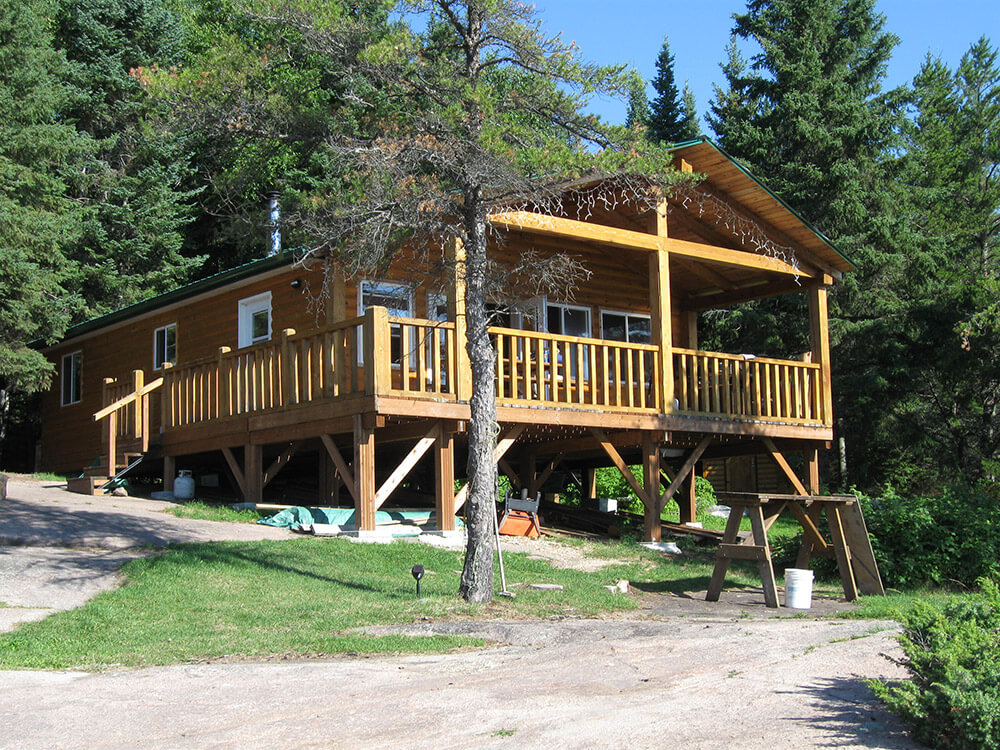
It was only five years later in 2010, that they increased their number of outpost cabins and added yet another Lodge. Today, the Jacksons lodges and Outpost camps consist of 1 lodge and 12 fly-in outpost cabins. They are all located in eastern Manitoba and are fly in only. Their large fleet of aircraft provide safe and dependable transportation for all guests and the many other fishermen and hunters who chose to travel to their destinations with Adventure Air.