



With over 35 years in the field, host Don Lamont covers topics and issues with industry leaders and influencers to bring you up to speed on what’s happening in the outdoor world.
And now, here is your host, Don Lamont.
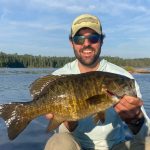
Eric Mullen has a passion for the sustainable management of fish and wildlife.
Growing up in southwestern Ontario, Eric spent much of his youth fishing and hunting in the natural spaces where he grew up.
This upbringing inspired him to pursue a career in natural resource management.
Recently, he moved into the regional fisheries manager position in eastern Manitoba.
Here, he helps protect and enhance fish stocks and fishing opportunities.
To that end, Eric also believes in furthering the conservation message and has shared fisheries science and management information to the public through Hooked magazine.
Hey, Eric.
Welcome to the show.
Hi, Don.
How’s it going?
It’s going well, my friend.
How are things in Lactobonnie?
Awesome.
Awesome.
Yeah.
We’re well along with the ice fishing season here.
Got a bit of a cold snap and I’m looking forward to the weekend get out on Lake Winnipeg.
Okay.
Well, actually, we met in Lactobonnie many years ago when you were doing some work, consulting work on Sturgeon, Lake Sturgeon.
And you set some test nets and brought in some Sturgeon to the students at Centennial School in Lactobonnie, the grade six class.
And you brought those Sturgeon in.
You showed the kids how it’s all done.
What were you doing in those days?
Yeah, that was a really awesome day.
So that was part of the Mark Recapture program that’s ongoing on the Winnipeg River.
So every two years, this part of the system out in front of Lactobonnie here, the MacArthur Reservoir, essentially we set a bunch of Sturgeon nets.
We catch fish.
We tag them.
And then over time, as you continue to come back and catch more Sturgeon, and then you’ll see the rate that you’re recapturing your previously tagged fish.
Then you could actually estimate how many fish you have in the population, as well as how they’re growing and get data on their growth.
Oh, sorry.
I have a call coming through here.
All right.
I’ll put you on hold there, big guy.
So tell us what you were doing with those Sturgeon, Eric.
Yeah, absolutely.
So that was a really great day.
We had nets out in the MacArthur Reservoir here out in front of the town of Lactobonnie.
That’s a program that we run every two years, and it’s basically just a long-term population monitoring program where we’ll catch the Sturgeon, and then we implant tags and measure them.
As we go over the years and recapture these fish, and we’ll have sort of a rate of how many tags that we’ve, you know, initially put in and how many we have now.
And then from that data, we can estimate the total size of the population, as well as get a lot of great information on their growth and their body condition and the relative density of Sturgeon in different parts of the river.
So we were able to bring some of those fish to the dock and actually do that tagging, that whole process of sampling these fish in front of the kids.
And they all got to put fish gloves on, and we gave them a Sturgeon.
They actually got to release it.
So it’s pretty cool.
It’s a really good experience, and honestly, I think just the look on all those kids’ faces tells the whole story because Sturgeon are so unique, and everyone knows how unique and cool they are.
And so just for those kids to get to interact with them and hold them, it was a pretty awesome day.
And we actually got to do that again this year on the Town Docs, as well.
And I hope that’s something we continue to get to do because it’s really fun, and the kids ask some really cool questions, too, really unique questions.
Yeah, that was a great day, and I’ve been involved with that for a long time.
Now, I want to get some background.
That was the first time that I met you, and we got talking about your background, but you’re originally from Ontario.
Yeah, that’s right.
I grew up out in the country in Essex County in southwestern Ontario.
Yeah.
And now, how did you get into fishing and hunting?
You said you were from a fairly large family?
Yeah, actually, I’m the youngest of six.
I think it kind of started, you know, I grew up in a really nice spot with some bush and cricks around and lots of space to explore.
So as a kid, I kind of went through a bit of a Steve Irwin phase where I was going around all the ditches catching snakes and snapping turtles and measuring them and writing notes down in my little book.
So I was kind of already down the road of wanting to be a biologist.
And I also had the opportunity to go fishing and do some hunting around.
And, you know, I started finding some old fish equipment in the sheds where I grew up.
And I actually went down fishing by that creek.
And that’s kind of where it all started.
I was able to catch all sorts of cool fish and bring them back home and eat them and sort of a slippery slope from there, Don.
Where did you go for your education?
So, yeah, after I finished high school, I went and I did a degree in ecological restoration.
And that was at Trent University and then also at Fleming College in Ontario.
And during that time, I got to do some summer contracts at Harkness Lab in Algonquin Park, which is a fisheries research station.
And it just blew my mind.
I was like, oh, my gosh, I could do this.
You know, I’m obsessed with fishing.
I’m obsessed with fish and nature.
And I could actually, you know, have a job doing this.
And over those two summers, I did, you know, took float planes out to backcountry lakes to do brook trout, lake trout surveys and snorkeling surveys for smallmouth bass and all these great projects.
And I was like, maybe I should consider continuing my schooling so I could, you know, I knew it was a competitive sort of field and job market.
But I was like, you know, I’m going to I want to take that risk if it means I could do this for a living like that’s awesome.
So how did you end up in Manitoba?
Yeah, that that same path led me here and and in an extremely sort of fortunate way because I couldn’t be more happy to live in Manitoba.
But as I was exploring different options for postgraduate education, I got offered a position, a master’s position, University of Manitoba and Dr. Gary Anderson’s lab.
And the project was just like I couldn’t I couldn’t pass it down.
It was a research program looking at the behavioral and physiological response of lake sturgeon to catch and release angling.
So it already had to do with fishing and it had to do with this really cool, unique species that I didn’t really have much experience with going into it.
And then, yeah, I got to work here for two years.
And during that time, I got to work, you know, with some of the provincial employees and on some black crappie projects.
And I was like, this is the best place in the world.
I love doing this work and I love being in Manitoba and fishing here.
It’s it’s exceptional.
Well, yeah, that kind of impressed me when I talked to you said Manitoba has so many different species to angle for in this part of the world.
And you’re in eastern Manitoba headquartered out of Lactoblany.
And it is really true, isn’t it?
There’s nothing quite like it.
I mean, in terms of just the abundance of opportunity, the diversity, the diversity of species.
And not to mention the fact that you have, you know, a chance at catching a trophy fish and virtually any species you go after here.
Like, even when I was living in Winnipeg, you drive an hour or two hours in just about any direction and think of all the different landscapes you could fish, all the different species you could target.
You know, from fishing prairie pothole lakes for big stock trout to greenbacks on an inland ocean and then in the shield country for bass and crappie.
It’s just like it’s endless.
And then, yeah, now that I live in Lactoblany, it’s so much closer to home and just the abundance of water and opportunity.
It’s, there’s nothing quite like it if you’re an angler.
This is, this is the place to be.
So you, you had a fairly rapid rise to success.
Now you’re the regional biologist in Lactoblany.
And you kind of look after the whole eastern region, which has, we’ve had some fun.
Like, we both like to fish for crappies.
We both like to fish for a wide variety of species of fish.
Now you were, you ended up writing for Hooked, I think you’re what, you’re your third or fourth year?
Now for Hooked magazine?
Yeah.
You know, I can’t even, I must have written at least four articles until now.
And it’s been such an awesome opportunity.
I mean, I love the magazine.
I read it before I ever got to write for it.
So really cool to be part of that.
And you were out at our 15th anniversary celebration at Kendall’s Point.
And you got to fish with Gussie, didn’t you?
That was something else.
Yeah.
Being in a boat with that guy, that was really, that was a learning opportunity.
And just so, so cool to watch that guy pick apart water.
And just the techniques he uses, like, it just really shows you how much you, you know, how much space there is to learn in this sport.
It’s wild.
Well, we, we got together on the last half day and I want to talk a little bit of a story.
So we’re almost ready to go back to the lodge.
So we pull up to one last spot to fish and the wind is really blowing.
And so I figured, well, I don’t know, there’s a lot of water blowing on these rocks.
So, so windy, I couldn’t fish.
I had to kind of hold the boat out from shore back trolling and you got to the front and start throwing a crankbait.
And how many walleyes did you catch in a row?
You know, I lost count.
We just had that little pocket there.
It just seemed like they were stacked on top of each other.
It was, that was crazy.
Yeah.
I think at one stage you caught 12 or, I think he had 15 casts with 13 walleyes, something like that.
Well, it was all because I was, you know, guided by an expert and a legend there.
And he put me on the spot and he kept me there.
And then he didn’t even insist on casting himself.
So that was, that was entirely due to my guide.
I got to say.
Yeah.
That was a lot of fun that day.
Yeah.
You’ve, you’ve done a lot of different articles.
You’ve done a most recent one that we’re going to talk about in a minute.
That was, is illegal stocking.
But I want to first talk about a couple of other ones you did.
One was a barotrauma and the other one was a lake trout catch and release.
Let’s talk about the lake trout one.
That was really interesting article that you can find on our website.
Yeah, absolutely.
I think, yeah, the timing is right.
Cause you know, in, in sort of the last two years, we’ve had some students come through
and do some really cool research projects through the university of Winnipeg and the Caleb
Hassler’s lab.
Um, and those two master’s students had graduated.
And so their information became available.
And now there’s a bit of a continuation with some of the, um, spawning impacts of angling
work.
That’s still happening in Clearwater.
And so it just felt like a really good time to get some of that information out.
And, and we learned a ton from that too.
Like it was really, for me, one of the biggest, most fascinating things about it was just seeing
how differently those populations were structured in Southern and Southeastern Manitoba compared
to Northern Manitoba.
Um, and it really just shows you how incredibly productive those fisheries are in the North,
particularly Clearwater Lake.
It’s, uh, it’s pretty impressive.
Yeah.
Clearwater is a beautiful lake.
I fished it many times.
Uh, the water clarity is as advertised.
There’s a ton of lake trout in there.
Some really big fish.
One of the, one of the surprises for me out of that survey was, uh, the quality of lake
trout fishing in Second Cranberry up by the Paw.
Yeah.
Yeah.
Yeah.
Fast growing fish and, and, you know, all kinds of, of good quality fish in solid numbers.
I mean, again, for a drive to lake trout fishery, that’s, uh, that’s pretty impressive.
So let’s talk about your most recent article that’s coming out in the latest issue of Hook
Magazine, what we call our special edition.
Which will be out the middle, uh, first week in February.
It’s about illegal stocking in Manitoba.
Uh, so how did you, how’d you get started on that?
And why did you write about that?
Well, you know, I kind of got down this path of really trying to do as much research as
I could about the potential impacts and implications of illegal stocking events on, on our, on our
fisheries.
Right.
And this is, it’s not a new concept.
This is, you know, it’s actually, it’s very old, right.
And, and it’s as old as the, uh, fish stocking programs that various governments have run
in the provinces and States.
Right.
We’ve been, we’ve been stalking fish around, um, for the better part of a century.
And.
You know, in the early days of that, we were throwing all kinds of species around and some
of it was pretty unscientific.
And a lot of it, um, potentially was led to some issues down the road.
And so now we’re sort of at a point in fish stocking where in, in, in the modern days where
when we put a species in a lake, it’s done very deliberately, you know, like the conditions
there are suitable for that species.
And we’re not going to have any negative impacts on preexisting fishery or other sport fish
that exist in that system.
And they’re not going to escape and then potentially become, you know, somewhat of an invasive species.
And so there’s a lot of conditions to our fish stocking program, which is very successful
in Manitoba, of course.
And a lot of trout anglers can attest to that.
Um, but the other, the other part of that too, is that there is a long history of people
sort of taking stocking into their own hands.
And that’s not unique to Manitoba happens all over North America.
Um, and so people essentially will, will move species and physically transplant them.
You know, maybe there’s a species they find more desirable or they’re not satisfied with
the way a lake’s producing.
And then, so they take it upon themselves to actually move some fish into a system.
And then as they establish, then a novel fishery is born and in Manitoba, um, this has been
happening quite a bit recently, not just in the Eastern region, but all over Manitoba.
And that’s sort of what we were writing about.
And it was particularly prevalent in species from the Centrarchid family, like smallmouth
bass, largemouth bass, bluegill, black crappie.
Um, these are species that have expanded their range dramatically in the province and, uh,
partially due to them moving around naturally.
But a lot of it is, um, or at least a good proportion of these, of these stockings were,
um, just done by what we sort of colloquially, colloquially referred to as bucket biologists.
Right.
Right.
And you had, you had a few examples.
Let’s talk about, uh, Goose Lake for one.
I mean, the number of master angler stock trout that that, those two lakes in, um, in Roblin
produced over the years was, was unbelievable.
But, uh, all of a sudden now you have walleye and bass showing up.
Yeah, it’s true.
Unfortunately.
I mean, yeah, those lakes talk about unique, you know, north of 1200 master angler records
in these two small lakes and anyone who’s been there, they are small and they’re right
inside the city limits of a small town with, you know, restaurants and lodging and all those
opportunities.
So it’s, it’s a local attraction and just a long-term producer.
It’s produced giant fish consistently for years and years.
Um, but yeah, a few years back, there were some reports to some of, uh, my colleagues out
West that there might’ve been some illegal stocking and that there was different species
popping up in those lakes.
And, and, uh, now we know from a recent survey that there are, you know, juvenile and adult
smallmouth bass and walleye in those lakes.
And, you know, the problem there is that those stock trout lakes were managed very carefully.
And so now with these new predators in the lake, it’s going to have an impact on those
trout for sure.
Um, and in recent years, it seems like the number of trophy submissions have sort of dropped
down in the trout department there.
But, uh, yeah, absolutely.
You know, smallmouth bass in particular are very hardy species and they can very easily
outcompete species like trout for the exact same food resource.
And so it can end up having this really negative impact on the density of other species in the
lake or their growth.
And it’s, it’s not, uh, restricted to the South or central Manitoba.
There’s been some, some of that in Northern Manitoba as well, which is even a more fragile
environment.
Yeah, absolutely.
That, that one really sort of, uh, that’s one we should all think about, I think, because,
um, Northern Manitoba, just the, just the sheer abundance of water and rivers and fisheries
up there is astounding.
And, you know, as you know, and as a lot of people in Manitoba know, just trophy, Lake
trout, trophy, walleye, trophy, Northern pike, and all sorts of different opportunities.
And, um, you know, there have been cases where there was provincial stocking efforts, sometimes
quite a long time ago to establish smallmouth bass, uh, in Northern, Northern Manitoba.
And, you know, I would suggest that those probably weren’t very good ideas in hindsight, knowing
what we know now about, you know, how smallmouth bass can invade different systems and compete
with species when they’re, when they’re newly introduced.
And so, yeah, we do have, you know, there’s a number of lakes that people can think of where
smallmouth bass exist, but some of them have moved to lakes that, um, you know, the province
never stopped, like mid lake up near Thompson.
And there’s actually a couple of quarries near Wabowden, uh, along the route to Thompson that,
uh, now have smallmouth bass.
And then, you know, in recent years, some, some of the folks who fish at the Papaskow a lot,
which is, you know, a legendary lake are saying they’re seeing more and more smallmouth pop
up.
And so the problem there is it’s, it’s really hard to predict what’s going to happen to
the existing fishery when you throw in this new variable, which is smallmouth bass.
Yeah.
So people should be aware of that and understand that it can be, it can ruin fisheries.
It can ruin trophy fisheries.
And it’s really very inconsiderate that they do that for sure.
So I think it’s a matter of public education.
And that’s one of the reasons I wanted to have you on the show is to be able to talk about
that and why, why, you know, you should be very careful and not even consider doing something
like that for sure.
Yeah, absolutely.
I mean, you know, it’s, it’s really, it’s one person’s decision to move fish.
Um, but ultimately everyone who fishes that lake and anyone, whoever will fish that lake
will sort of, um, see the consequences of that decision.
And so, and again, you really don’t know what the reaction at the ecosystem level or biologically
will be when you introduce this new species there.
You know, it’s possible that the effect might not be, um, too bad.
And, and, and part of the thing too, is that, you know, as you know, people are somewhat
infatuated with bass, um, and people like to fish for them and they’re very popular game
species.
And so, you know, it’s one of those fish that if they do pop up in new areas, sometimes
in the short term, people are very, very happy.
Right.
And part of that ties into that sort of social palette for that species.
But then the other piece is that when you throw a new species into a system, that’s not
yet adapted to having it, sometimes they grow very fast.
And it’s, and it’s often seen that that first wave of fish in that system grows, you know,
very quickly and grows to trophy sizes.
And so anglers will sometimes flock to these lakes and all of a sudden there’s this new
novel trophy, exciting opportunity.
Right.
But what can happen even, even in that sort of isolated scenario is that over time, those
fish, their growth will slow as they become more focused on reproducing and becoming more
dense in that lake.
And sometimes they can stunt.
And we’ve seen that in a number of lakes where you essentially just get left with a very
abundant population, let’s say of 15 and 16 inch smallmouth.
And then all of a sudden your heart, hardcore smallmouth guys aren’t, aren’t so excited to
go out and catch a hundred of those in a day if they don’t have the chance of that, you
know, 19, 20 inch fish.
Right.
And of course the other component being, and then what happens to your other fish in that
system?
What happens to your walleye?
What happens to your Northern pike?
And in the context of Northern Manitoba, it’s interesting because, you know, smallmouth bass
are, are unique biologically to what exists in the North.
They have a very unique reproductive strategy of creating nests, laying their eggs in those
nests and then defending it voraciously.
And a lot of our other sport fish species in the North are, are broadcast spawners.
And so they have this sort of unique advantage up there and, you know, relatively few predators
at various life stages.
And they might not be the preferred prey of pike or, or, or of walleye, even when they’re
young.
And so you, you kind of get this impact of all of a sudden, all of these fish are now
competing for the same food resource.
And, uh, anyone who knows about smallmouth bass knows they’re versatile.
They’ll eat just about anything.
Right.
They, they can, and so they can compete with walleye and they can compete with pike and
they can do it quite well.
And we have the Northern most population in North America, don’t we?
Yeah.
Yeah.
Yeah.
And researching that article, I reached out, I knew that, uh, in British Columbia, they do
have smallmouth bass.
And so I reached out to a fisheries biologist out, um, out in, um, trying to remember where
it was Williams Lake.
And he explained to me that there was a couple isolated populations just North of Williams
Lake.
And those would sort of be the contenders for the next most Northern population.
Of course, in BC, um, you know, BC is very big on their salmonids.
And so they see smallmouth bass essentially strictly as an invasive species, but the populations
that exist up North in that Thompson country right now, those are the, the furthest North
recorded distribution of smallmouth bass.
And so that’s really interesting.
Right.
And then, especially when you think about the sheer volume of water up there of rivers, how
interconnected everything is, you know, I think we’d all hate to see the situation.
Come about where smallmouth bass, for example, get into a highly interconnected system and all
of a sudden they start popping up in all of the very popular lakes up there.
Right.
And so, and then the risks of which could sort of play out over the landscape and over the
years.
Um, and then we also don’t know, right.
How well do they perform at these, in these climactic extremes?
Are they even really capable of, of growing to a large size that’ll satisfy anglers, or maybe
they just get really dense and, and they sort of stay small.
There’s a lot of unknowns to what could happen if they get up in that system too.
And so it is, uh, yeah, it is a concern I think for anglers and, and it’s, it’s not something
you can manage your way out of too, because once they’re there, how do you get rid of them?
Exactly.
So speaking of master angler size fish and trophy fish, uh, I was on a meeting today actually
on the fisheries enhancement fund board, and we’re talking about a, a new project upcoming
through the university of Winnipeg.
And it has to do with, uh, imaging.
Talk a bit about that, Eric, cause you’re kind of been on the ground floor on that.
What’s it all about?
Yeah, I think that’s a, it’s a really cool, it’s a really cool technology that’s sort of
becoming more popular in the fisheries biology field.
Basically what it does is you can take a photo of a fish and of course it works well with
fish that have some sort of unique and identifiable pattern, like a Northern pike or a brook trout
or a brown trout tigers, those sorts of fish that have the spots and the vermiculations.
But essentially you put a picture of one of those fish into this software and the software
automatically creates a digital fingerprint of that fish’s pattern.
And so, and then you can continue to input photo after photo after photo into the software
and it’ll automatically identify those fish that you’ve previously captured it, that an
angler’s captured before to you.
And so the benefit of that and why this is a technology that is definitely worth researching
is that it provides a really cool potential opportunity for citizen science.
Because as you could imagine, you know, if I were to use an example, you know, all of the
master angler fish that are submitted on, you know, the tiger trout and twin lakes, for example.
Well, if we could harvest those master angler photos and sort of create a digital fingerprint
for those fish and then build that data set over the years, we could actually use sort of traditional
statistical methods in fisheries to make population estimates for how many fish are in there,
how many tigers are in there, we could estimate how long they actually last after stocking what
their longevity is in the system, how fast do they grow, how many capture events does a
single fish can a single fish withstand, you know, some of these fish in some cases, maybe
they’re caught three or four or five times.
And there could be other species that are more sensitive, and perhaps, you know, they can
only get caught a couple times.
So it’s a, it’s a really cool technology, the potential to learn a lot about fish without
having to go and set nets and without having to go and sort of manually tag fish or put
floy tags or pit tagging, which can be quite expensive, and this could involve anglers.
And so I think it’s something that has really cool potential going forward, and I think it’ll
involve anglers.
And I know it’s something that people, a lot of people have done on their own before,
you know, they’ll catch a picture of a pike, and then they’ll look at another picture of
a different pike, and they’ll say, well, those patterns look the same.
And sometimes they’re right.
And this software will do that for you automatically, and it can hold thousands of pictures.
So it’s a, it’s a, it’s a really cool potential opportunity.
Yeah, I’m, I’m really looking forward to it.
I think it, I think it really will be impactful on, on the landscape here.
So that’s, that’s some great work.
Um, yeah, I mean, I, I don’t know, I, I just want to comment, you know, we had some huge
changes to the landscape of the Manitoba recreational angling strategy here in Manitoba, where you
basically, you’re not allowed to retain any trophy fish.
What do you think the long-term impact will be on that?
Yeah, I mean, I would imagine it’s going to vary quite a bit by species, and it’ll vary
quite a bit, um, by the water body that they’re in.
But of course, the intent and the hope is that essentially, just in protecting larger size
classes of fish, more mature individuals, which are disproportionately female in a lot
of our species, um, we’ll be able to retain a spawning stock that’ll consistently produce,
you know, those eater-sized fish for us and consistently produce more cohorts of fish that
can grow up into those trophy sizes.
And so it, uh, it definitely works in the context of Manitoba and how we, we have these trophy
fisheries and we want to protect them.
Um, some of these regulations are pretty unique and, and, and offer pretty unique opportunities
to sort of protect those trophy sizes indefinitely, hopefully, so that, you know, not only we can
catch them, but future generations will be there to catch them as well, because it’s, uh, it’s
certainly not lost on me that in a lot of other jurisdictions in North America, some of the
fish that we catch and take for granted are, you know, the fish of a lifetime.
And so we have this very unique fishery.
We have this very unique province for that.
And we want to make sure that we preserve that because there’s obviously a ton of benefits
that come from having this incredible fishery in Manitoba.
Well, on that, Eric, I want to thank you for all your hard work, all the, all the research
you’ve done, all the time you’ve committed to writing those great articles for Hooked Magazine.
Like I mentioned, uh, you’ll be able to find the, uh, illegal stalking article and special
edition of Hooked coming up.
You’ll find Eric on the back page with this podcast.
And, uh, hopefully, uh, I’m not necessarily want to get on the ice, but I certainly want
to get in a boat with you sometime in open water next year.
I would love that.
And I think, uh, both you and I are somewhat enamored with big pike.
And so maybe that would be a good target for us.
Yes, I would totally agree.
Thanks so much, Eric, for, for coming on the show.
Thank you, Don.
Appreciate it.
Thanks for tuning in.
Visit hookedmagazine.com to subscribe to The Complete Angler and never miss an episode.
Eric Mullen has a passion for the sustainable management of fish and wildlife. Growing up in Essex County, Southwestern Ontario, Eric spent much of his youth catching reptiles, fishing, and hunting in the natural spaces where he grew up. This upbringing inspired him to pursue a career in natural resource management, to work towards the advancement and promotion of conservation and sustainable resource use.
As an avid hunter, angler, and canoe tripper, Eric loves Manitoba and exploring its wilderness areas. During his studies, he spent countless hours exploring incredible fisheries across the province, his favorite target species are Musky, Northern Pike, and Burbot.

Recently, Eric moved into the regional fisheries manager position, where he leads the management and fisheries-related programming of the Eastern Region. Here, he takes his responsibility to help protect and enhance fish stocks and fishing opportunities very seriously.
To that end, Eric also believes in furthering the conservation message and has shared fisheries science and management information to the public through Hooked Magazine articles, presentations, podcasts, radio shows, and video.”
