
How high-intensity flames can shape aquatic life and make ripples through fish habitat.
Editors Note: You can hear Alex talk about the effects of the wildfire season on my podcast # 52 on this website under The Complete Angler!
Author Dr. Alexandra Schoen, Fish Culture Manager, Fisheries Branch, Natural Resources and Indigenous Futures
“The rise of larger, hotter, longer-burning wildfires can be problematic for both terrestrial and aquatic environments.’
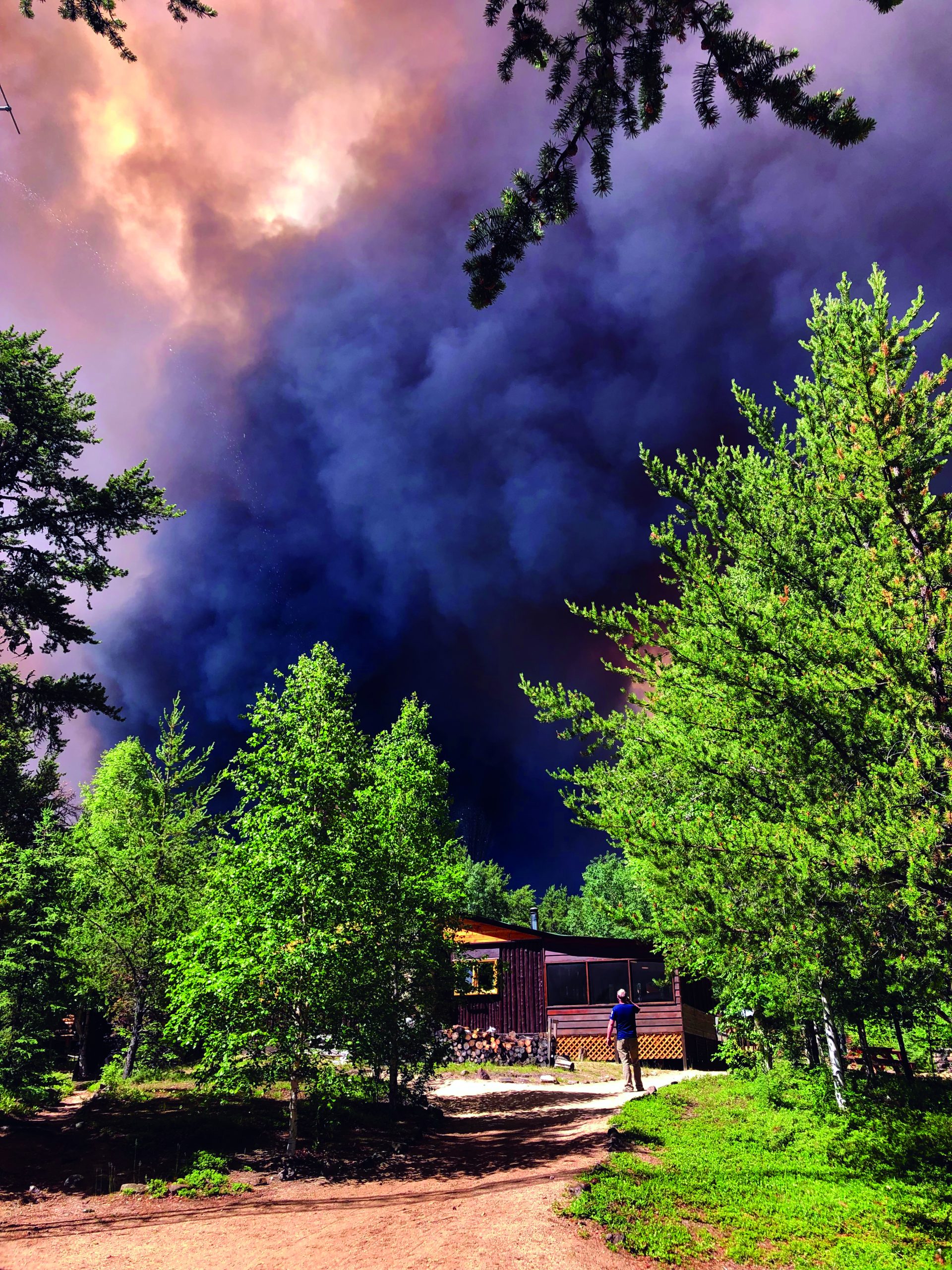
Western Canada is no stranger to wildfire, but the 2025 season has been record-breaking. Wildfires in the prairies and northern boreal regions burned through much of the summer, giving us a glimpse of the reality facing Canada’s forests, where wildfire intensity and frequency are progressively increasing. Not all fire is bad; some ecosystems are fire-adapted and need a burn to recycle nutrients and promote forest succession. Periodic low to medium-intensity fires (soil temperatures remain below ~400°C – this varies based on environment and conditions, fire is low to the ground, there is high humidity and low fuel abundance) help regenerate forests and support biodiversity by creating mixed habitat and new leafy browse. This improves the abundance of wildlife species that thrive in young forests and slowly introduces useful nutrients into aquatic systems. The rise of larger, hotter, longer-burning wildfires can be problematic for both terrestrial and aquatic environments.
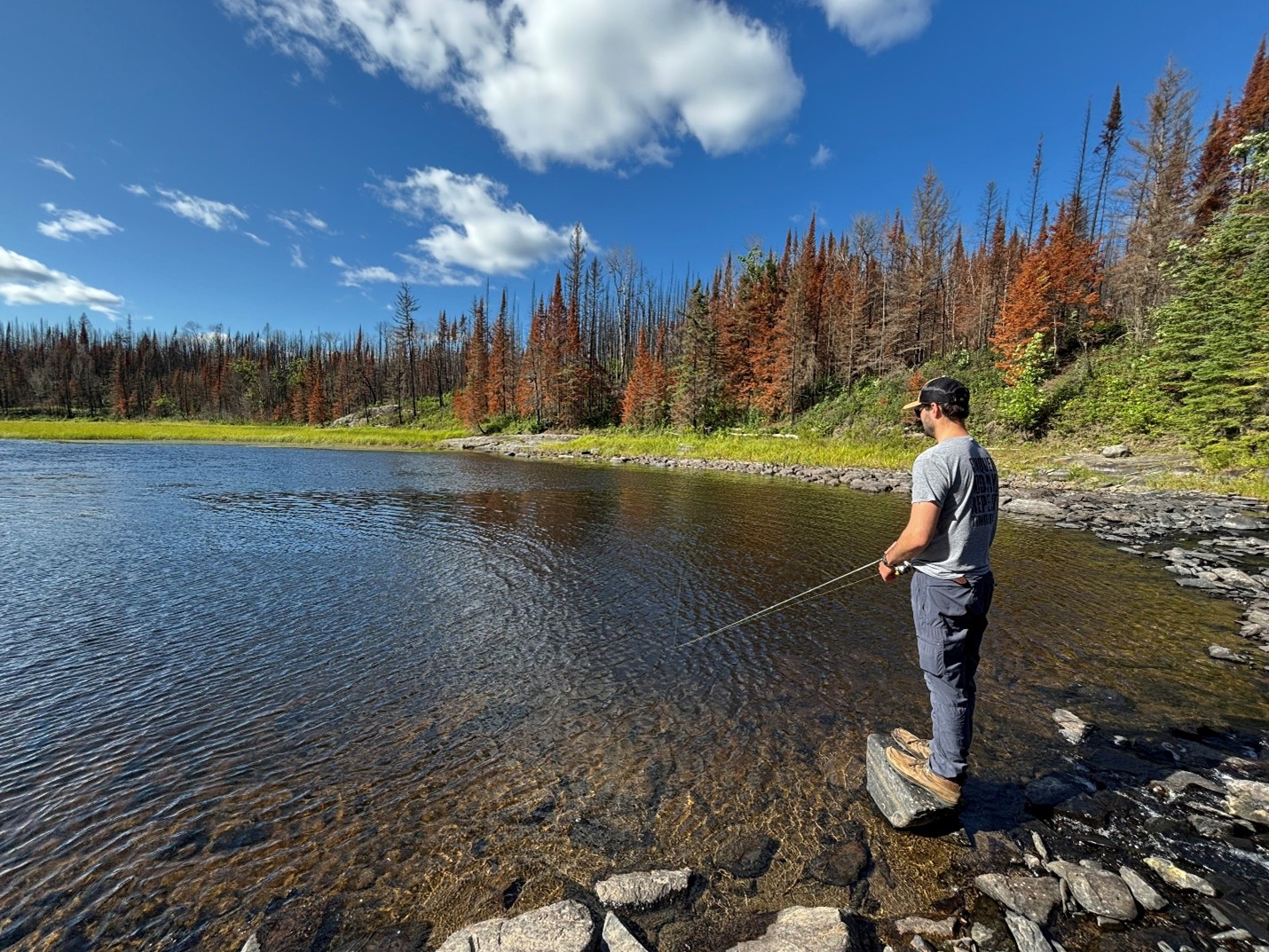
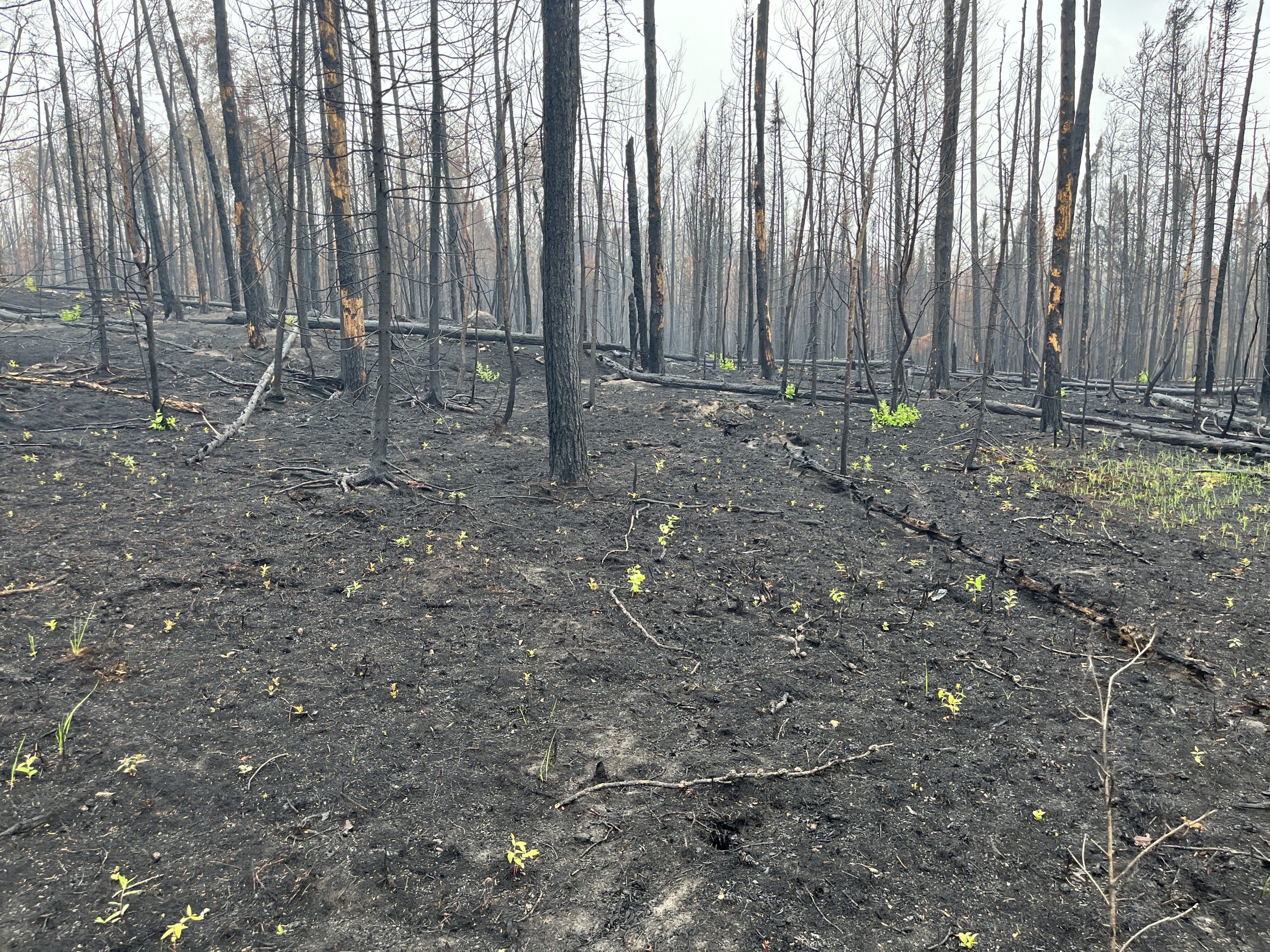
When you picture a high-intensity wildfire, you might imagine the charred, spindled remnants of what was once a stand of jack pine, or the soot-coated forest floor and smell of ash that drifts through the air. Low-intensity burns are balanced by natural buffers, like soil composition and forest root integrity, that absorb and/or inhibit wildfire products from moving to other more vulnerable parts of the ecosystem. However, high-intensity fires degrade these buffers. Dr. Tamzin Blewett, an aquatic biologist at the University of Alberta who studies wildfire impacts, also explains that “as the fire gets hotter, it causes a thermal transformation of the plants and soil, leading to changes in soil nutrients and increased production of combustion materials like polycyclic aromatic hydrocarbons. […] To explain it simply: imagine grilling a steak. You want the grill hot enough to cook it, but not so hot that you burn it black. That black char is similar to what happens in really hot fires, the more intense the heat means more burning and charring, which can release harmful substances.”
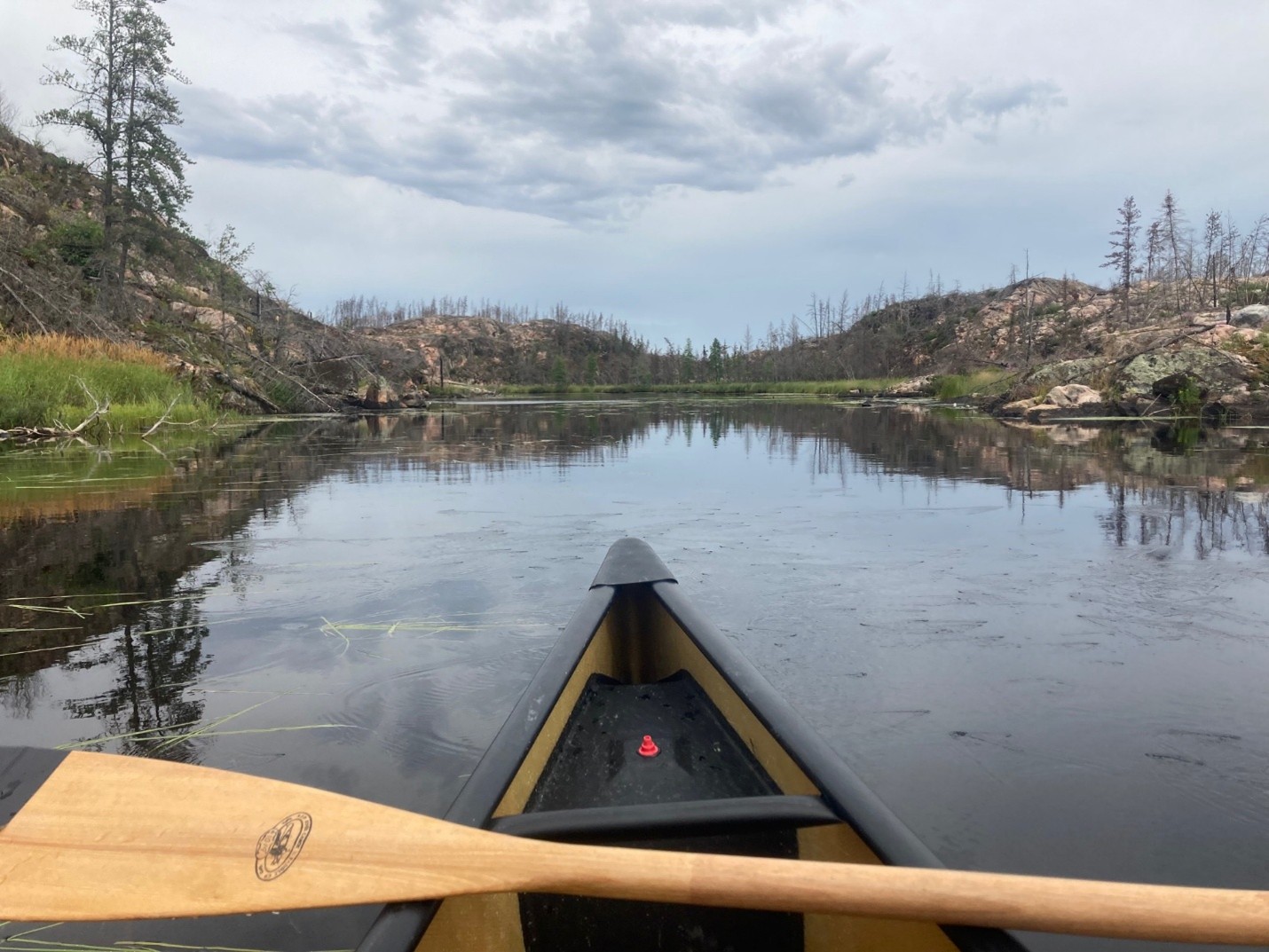
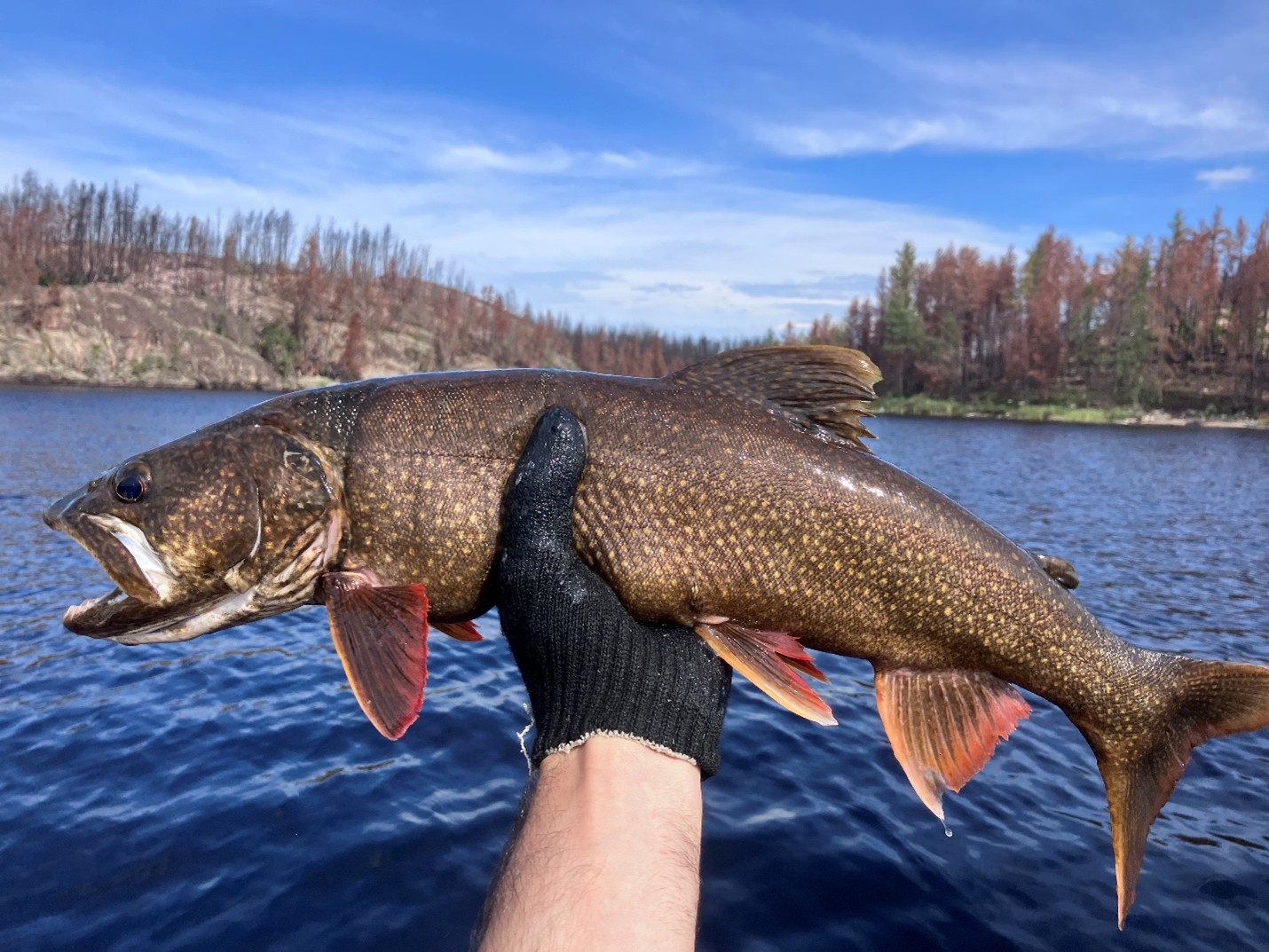
Wildfires occur on land, so how does that effect fish and other aquatic life? When it rains after any wildfire, ash mixes with rainwater to make a caustic solution of lye.In low-intensity burns, this solution doesn’t move very far from the source due to the forest’s natural buffering capacity. However, in high-intensity fires, the ashy sludge flows through the burnt land, collecting more ash, other chemicals and plant nutrients, natural metals in the soil, salt, and/or fire-suppressant compounds. This chemical soup eventually makes it to a lake or river where the freshwater impact begins. Larger lakes and faster-flowing rivers have a reprieve against the chemical input, as higher volumes of water can dilute the mixture into manageable concentrations. But smaller waterbodies can become overwhelmed.
The ash pollution can immediately cause problems for aquatic life by decreasing water clarity. Depending on how extreme this is and for how long, reduced light can inhibit the growth of aquatic plants, causing a cascade of food web disruptions. When lots of organic matter – like plants and the tiny plankton that eat those plants – die all at once, bacteria are treated to a smorgasbord of food and use a copious amount of oxygen in the feeding frenzy. This process can create oxygen-poor zones, where little or no animal life can exist. On the other end of the spectrum, if the run-off contains lots of plant nutrients (good in small but not large concentrations), there may be an overabundance of plant growth. Fast-growing plant life, like algae, benefit the most, sometimes creating algal blooms. However, when blooms occur, they can also produce oxygen-poor zones when algae die, and certain alga can be toxic.
The lack of light may disrupt the delicate lacustrine balance, but too much light can also be problematic for aquatic systems. As forested areas surrounding waterbodies are burned, not only is the riparian sponge that naturally filters silt and contaminants compromised, but also the forest canopy that offers shaded refuge. In the heat of summer, the water offers welcome relief for humans, even if it is a degree or two warmer than normal. This is not the case for some fish, which match their body temperature to the environment and have little room to cope when water temperatures rise. Increased light and temperature of wildfire run-off, which may still be hot, decreases the available habitat for fish to shelter from temperature fluctuations. Small changes in temperature have demonstrated deviations in behaviour, health, reproduction, and ultimate survival of fish. For example, higher temperatures cause fish to use more energy and therefore require more food, which may or may not be present following a wildfire.
Amidst climate change driven thermal and drought conditions, fires have the potential to occur earlier or later in the year than normal. The extended timeline of fire potential has begun to overlap with the reproductive seasons of fish, like walleye in the spring and trout in the fall. Early life stages of fish, such as eggs and fry, are very susceptible to environmental change, just like the early life stages of any animal. Anything you can think of – light, temperature, pH, water clarity, nutrients and metals in wildfire run-off– can impact eggs and fry in various ways. These effects, good and bad, often have long-term consequences on fish survival and adaptability, overall age-class recruitment, and sometimes the biology of future generations of fish. Not to mention, anything that is a concern for a larger fish, like increased silt in the water, is that much more problematic for a larval fish with microscopic gills and less ability to clear toxins or handle thermal change.
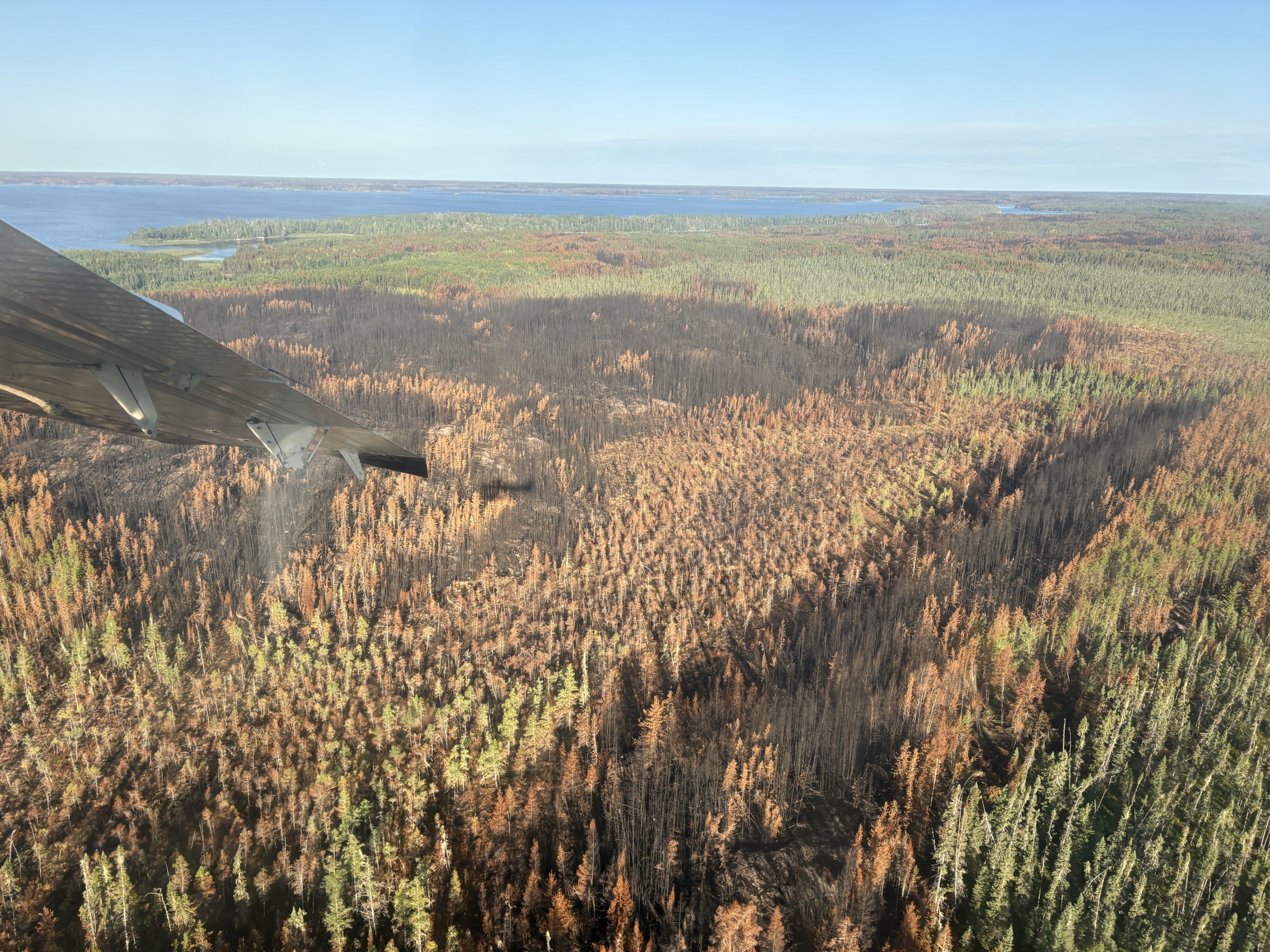
While the impacts of wildfires are numerous, the effects on our favorite lakes and rivers will be revealed over time. Some consequences for aquatic life, such as the loss of riparian environments, are mitigated as fast as it takes for the forest undergrowth to take root – sometimes only weeks. Other problems, like the inflow of ash and nutrients, may become a chronic problem depending on the surrounding burn area, the turnover rate of the waterbody, and the adaptability of the animals and plants that live there. High-intensity fires inevitably create uncertainty for aquatic, terrestrial, and human life that benefit from the outdoors. All said, and with the reminder that we do live in a fire-adapted environment, there is a certain beauty in witnessing a burned wilderness come alive with possibility in the coming months and years.