


EDITORS NOTE: In this second instalment Eric Mullen talks about how the burbot reproduce, a fascinating spectacle that I have had the luck to experience. It happened on a small lake by Kenora, Ontario at last ice a few years back. We had headed out to fish a shallow reef for smallmouth but instead dropped our jigs into a massive spawning ball. After two hours of non stop, line stretching action we decided enough was enough. My arms took a while to recover after that day!
Burbot spawn in large congregations over preferred substrates including small cobble, gravel, and sand. Large numbers of males surround spawning females in a display known as a ‘spawning ball’, where eggs and milt are released as the ball rolls over prime substrates. Large individual females can produce as many as three million eggs! Interestingly, research has found that burbot use acoustic signaling during spawning, essentially creating humming or purring sounds by rapidly contracting striated muscles along their swim bladder. Though the purposes of these calls are not fully understood, other gadids like Atlantic cod use similar vocalisations not only during spawning but also during aggressive displays.
Not all burbot spawn each year. Numerous studies have documented that a proportion of females are in non-spawning condition during winter, which may be an adaptation to account for the energy it takes to produce so many eggs. Thus, rest years can afford burbot the opportunity to restore energy reserves and preserve body condition to ensure survival. Some have theorized that non-spawning burbot also join spawners on the shoals and act as ‘guards’, clearing egg predators like crayfish from the area, though this behaviour has not been substantiated in the scientific literature. Burbot eggs hatch in the early spring but rely on their yolk sacs for nutrition until 11 to 23 days post-hatch, when larvae shift to feeding on phytoplankton and then zooplankton. Juveniles subsequently spend most of their time hiding amongst rocks in littoral habitats along shorelines before seeking out deep water basins.

HOW OLD TO BURBOT GET?
Burbot growth, like most fish, is moderated by food, habitat quality, and temperature (i.e. colder climates typically cause slower growth). While burbot assessed in Lake Athapapuskow in Northern Manitoba achieved maturity at ages of 6 – 7 years old, other studies found mature burbot between ages 3 and 4 in Lake Winnipeg, suggesting variability between populations. These fish commonly achieve ages over 20 years and can reach lengths exceeding one metre under ideal conditions. Since 1978, 3,366 catches of burbot over 30 inches long have been reported to the Manitoba Master Angler Program, with peak catches dominantly reported in March (29.6 % of records from 1991 – 2016), suggesting spawning periods in some popular lakes.
CONSERVATION
From a management perspective, burbot have been historically neglected in fisheries conservation strategies in North America. This is likely an artefact of negative perceptions of the species, which have proliferated until recent improvements in the status of burbot as a food and sportfish. Several jurisdictions have no regulations for burbot, permitting unlimited harvest. Thankfully, this trend is slowly reversing in Canada as fisheries managers consider the increasing interest of the angling public towards burbot, in addition to their key ecological roles in our fisheries.
Despite an increasing interest in burbot by the public, datasets on the population dynamics of burbot are scarce. Part of this issue relates to the unique behaviours of the species (more active in the winter, occupying deep water basins when not spawning, etc.), which cause burbot to be difficult to study via contemporary fish stock assessment. Methods to meaningfully assess burbot stock metrics should be evaluated comparatively and provide the basis for future management.
INCREDIBLE FOOD SOURCE
The value of burbot as a food source is a driving factor in their popularity – their cod relatives are one of the most marketable food fishes in North America. In fact, there is scientific evidence supporting the excellent taste and quality of burbot meat. A survey in Idaho evaluated consumer acceptance and market potential of burbot relative to trout and tilapia, two very popular commercial products. Researchers found that burbot scored higher than tilapia and trout in aroma, flavour, and taste, and that 87% and 81% of consumers preferred burbot to tilapia and trout, respectively.
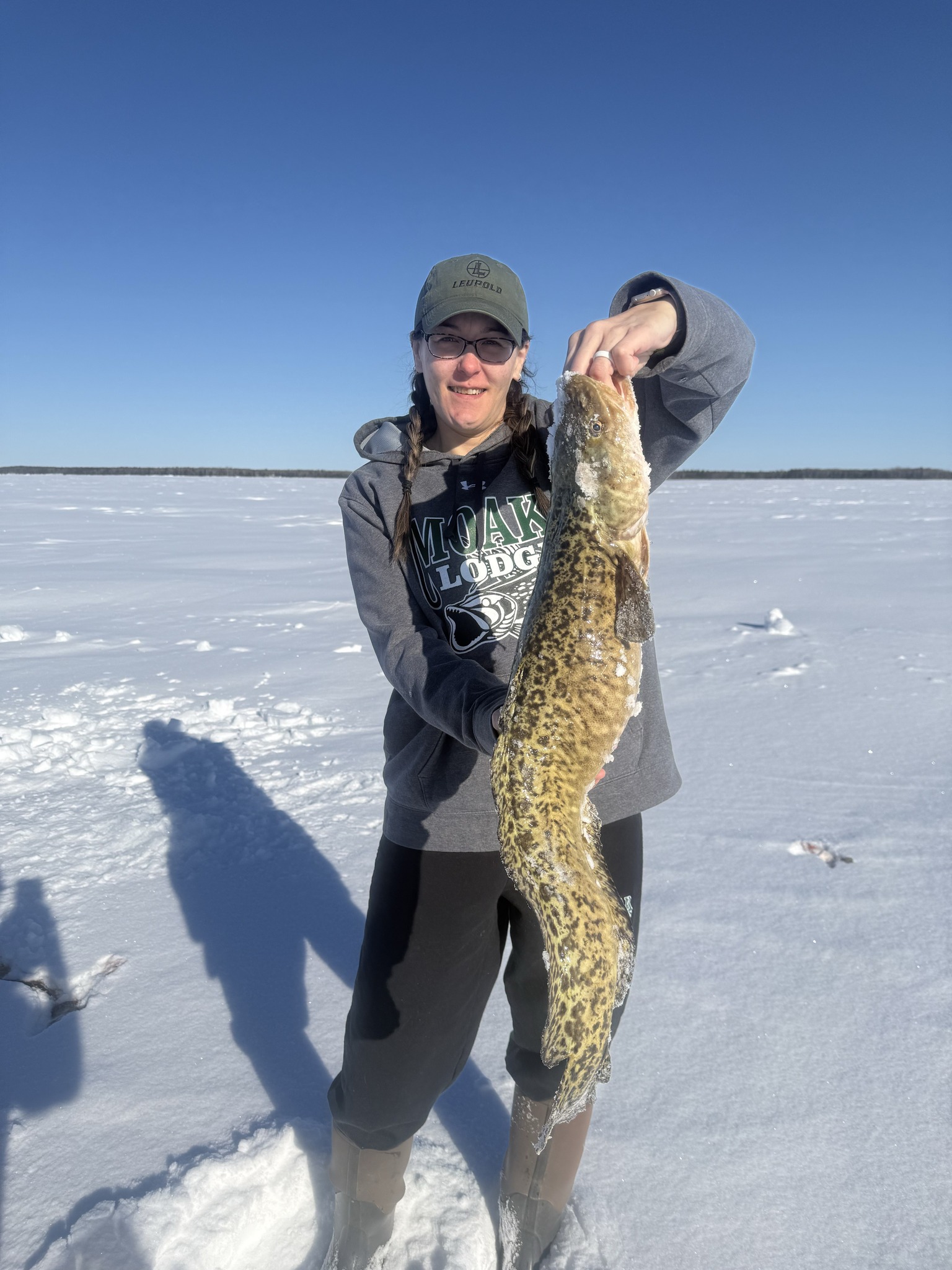
Currently in North America, there are no large commercial fishery markets for burbot, though incidental catches may be sold in certain cases. However, commercial fisheries targeting burbot are active in Eurasia. As of now, the value of burbot in Canada is for subsistence and recreational fishing, presenting a growing interest to ice anglers across the country looking to diversify their angling portfolio.
Looking forward, more anglers should challenge themselves to target burbot on their favorite waterbodies not only while ice fishing, but also during the open water season. Burbot can grow to large sizes, have striking body patterns, and fight hard. Together, we can elevate this incredible fish to the same status that we ascribe to our other iconic sportfish, while completely removing the term ‘trash fish’ from our communities’ vernacular. As such, we secure ourselves another fulfilling fishing pursuit and improve the basis for the conservation of this iconic animal. As anglers, we are one of the primary beneficiaries of our shared fish resource and should accept the responsibility to care for the future of our fisheries. Becoming the voice for the conservation advocacy of all fish species, particularly those that have been historically neglected, is one way for us to give back to the ecosystems we all cherish.
