


Editors Note: In the last of our three part series we feature ancient recipes that were used in the past by royalty to prepare the burbot, especially the liver. These were supplied to me by Steffen Bunge who was inspired to share them after reading Eric Mullen’s feature story on burbot in Hooked Magazine. Steffen has been fishing for burbot for almost 40 years on both sides of the Atlantic.
In Europe, Burbot is an absolute delicacy, particularly the liver. You can pay a lot for this in restaurants in the East and South of Germany, as well as parts of Austria and Switzerland. They used to be the fish that were reserved only for the rich or the nobility. I fished along the river Oder, typically between February and April, where you would fish for them like you would do for catfish from the banks of the river in the winter, as the river hardly ever gets frozen over. In Bavaria, I fished for them even during the summer in deep mountain lakes in the pre-Alpine region. Lac du Bonnet seems to be a hotspot for the big ones.
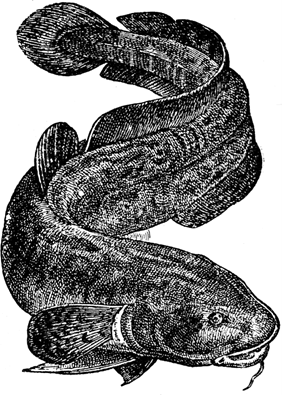
1879 — Featured in works with illustrations by Alexander Francis Lydon
Steffen’s Burbot recipes collection
Translated from German
Historic note:
The old cookbook “Well-Protected Fish recipe secrets,” published in 1758 by Richard Gerlach, features many historical fish recipes. One recipe is Elisabeth von Matzingen’s favourite for Burbot, which is listed below.
Elisabeth von Matzingen was the abbess of the Monastery Fraumünster Church in Zurich, Switzerland (abbess 1308–1340). In Gerlach’s book, he describes how she loved Burbot liver so much that she went into debt for her extravagance and sold one of her properties to pay for her cravings.
The book also features other stories of aristocrats from the 18th century and earlier, and their excessive hunger for Burbot. The Countess of Baeuchling also had to sell large properties from her shire/grafschaft (county she ruled) to pay for her overconsumption of Burbot.
Another story, which turned into a legend, is told about the foster mother of a prince in Silesia, who ate only Burbot liver. When the prince could not provide or get enough Burbot liver, the foster mother became mentally unstable. The prince, who was tired of her histrionics, let her drown in the river Oder, which was the main source of the Burbot. This story soon became the basis of a legend where the prince, who was down by the river, was dragged and drowned by a monster Burbot. The Oder River, on Germany’s eastern border, is still one of Europe’s hot spots for Burbot fishing.
The cookbook also further describes Burbot as food for the rich alone. In fact, Burbot is mentioned as a delicacy in early scrolls as far back as the Roman Empire. Because of the aristocracy’s excesses, of eating of Burbot and Burbot liver during Richard’s time almost drove the fish to extinction. Many bodies of water in German-speaking Europe, as well as in England, were devoid of fish in the 18th century due to overfishing.
For the following liver recipes, it is important to prevent the liver from freezing!
“Elisabeth von Matzingen’s” favourite recipe, “delicious and delightful Burbot”
(original written in 1334)
Ingredients:
1 Burbot 200-300 grams (10 oz or .3 kg) (skinned with head) Fresh black pepper (from mill)
Fresh lemon juice Worcestershire sauce All-purpose flour
40 grams or 3 tbsp. soft butter Seasonal herbs freshly minced Seasonal vegetables
Fresh tomato cut in cubes Vegetable or olive oil
Directions:
When filleting the fish, separate the liver carefully from the entrails; clean both thoroughly, and put the liver aside.
Prepare sauce by combining butter, lemon juice, salt and pepper, herbs, and tomato cubes in a small saucepan. Simmer gently.
Put ¼ cup to 1/3 cup of flour in a separate dish. Place the fillet in the dish and cover with flour, turning the fish to coat all sides. Lift and gently shake the fillet to remove excess flour.
In a large frying pan, heat oil. When the oil is hot, sauté the fish on one side until golden brown; then turn it over to brown the other side. Preheat the oven to 220°C (425°F). Remove the fillet from the heat, place on a baking tray, and heat in the oven for 10 minutes.
Meanwhile, melt butter in a small frying pan and gently fry the liver.
To serve, place the fillet with the cooked liver on a serving platter. Before serving, pour the sauce over the meats. Serve with hot boiled potatoes and your choice of seasonal vegetables. Best served with a Räuschling wine.
Burbot prepared in the Capuchin tradition (18th century), as described in Henriks Debski, Polish cookbook 1982
Ingredients:
1000gr (1kg) Burbot filet Butter or oil
40gr or 3 tbsp. all-purpose flour 600 grams or 4 cups Sauerkraut
40 grams or 2 oz. dried mushrooms 150 grams or 1 cup onions, minced
100 ml or 6 tbsp. & 2 tsp. regular cream warmed 80 grams or 3 oz. grated dry cheese
Salt & pepper
Caraway (optional flavouring) Lemon juice
Directions:
To prepare the fish filets, cut them into pieces and slightly salt them. Sprinkle lemon juice over the fish pieces and let stand in the refrigerator for 30 minutes.
Put mushrooms in a small saucepan and barely cover with water; simmer until soft. Meanwhile, cut the sauerkraut, then place it in a larger pot, pour mushrooms and water over the sauerkraut, and keep warm.
Dredge individual fish pieces in flour. In a frying pan, heat oil and cook the filets until golden brown. Remove from the pan, drain on paper towels, and cover to keep warm. Place the minced onions in the hot frying pan and sauté until opaque. Pour the sautéed onions into the sauerkraut mushroom mixture. Season to taste with salt, pepper, and caraway.
To serve in a casserole dish or deep platter, layer the sauerkraut mixture on the bottom; place the Burbot on top, then evenly distribute the warmed cream over the entire dish. Sprinkle with grated cheese.
Delicious Burbot Liver Ragout, as described in “certified German cookbook”, Stettin 1847, Pauline Jonas.
Ingredients:
Several Burbot Livers White Vine
Vinegar
Seasoning as you like Onions
White coulis Champagne Lemon juice Egg yolk, beaten butter
Crawfish tails (cooked) Truffles (cooked) Champignon mushroom Milt from Burbot or Carp
Directions:
Cook the livers in white wine, with some vinegar and seasoning; cut into pieces after cooking. Set aside. Cook a strong vegetable coulis with Champagne, mushrooms, and lemon juice until clear. To the beaten egg yolk, add some hot coulis, stir well, then gently whisk into the coulis. Add the liver pieces and simmer until hot.
To present the dish, place the liver pieces in the center of a fish platter, with crawfish tails forming a ring around them. Then add the truffles and champignons. Serve with toasted white bread slices. Surround everything with backed milt from Burbot or Carp
Note: Coulis (koo-LEE) –
- A French culinary term. It is a type of sauce, usually a thick one, which derives its body (either entirely or in part) from pureed fruits or vegetables. A sauce of cooked-down tomatoes can be a tomato coulis, as can a puree of strained blackberries.
- Today, coulis also means a thick soup made with crayfish, lobster, prawns, and other crustaceans
– the word being used where bisque has formerly been used.
German Simple Burbot, as described in “certified German cookbook,” Stettin 1847, Pauline Jonas.
Ingredients:
As many Burbot as needed, with heads cut off.
Directions:
Rub the Burbot’s body thoroughly with wood ashes and salt. Clean out the Burbot body, but leave the liver inside. In a Dutch Oven on top of the stove, cook until done in salty water.
Moorish Traditional Burbot (Spanish tradition) (Serves 2-4 people)
Ingredients:
1000gr or 1 kg Burbot filets (no Liver) cut in cubes 1 large onion, minced
1 clove of garlic, minced 4 shallots, minced
40 grams or 3 tbsp. butter
20ml 1 tbsp. plus 1 tsp. Cognac 1Tbsp Curry powder
125ml or ¼ cup thick cream
2 medium-sized tomatoes, skinned and pureed salt and black pepper fresh from the mill Cayenne pepper
Minced parsley
Directions:
Season the Burbot cubes with salt and pepper. Mince onions and shallots, then sauté in hot butter in a frying pan until opaque. Add the Burbot pieces and fry until golden brown at medium-high heat. Sprinkle the meat with Cognac and flambé. Remove fish and drain. Keep fish warm in the oven.
In a small saucepan, add the tomatoes. To the pureed tomatoes, add a tbsp. of water, minced garlic, seasonings, and curry powder. Cook the sauce for 10 minutes on medium heat. Thin with a little water until the desired consistency is reached. Add 1 tbsp. of hot sauce to the cream and stir; gradually add the cream to the tomato sauce while mixing for 2 minutes until thickened. Remove from heat. To the sauce, add the amount of seasonings and Cayenne pepper. Serve in a beautiful bowl, garnished with parsley.
French Cognac Burbot (Serves 4-6)
Ingredients:
1,500gr or 1.5 kg Burbot filet, cubed
1 clove of garlic, minced
6 medium sized onions, sliced in rings 4 shallots, minced
20ml or 1 tbsp. & 1 tsp. olive oil 160ml – 320ml or 6 – 10 oz. Cognac 1 small can of tomato paste (156ml) 1 can of tomato sauce (680ml)
250 ml or 1 cup medium dry white vine
Fresh herbs (leaves of parsley, thyme, marjoram, sage) Salt & pepper
Cayenne pepper Minced parsley
Directions:
Mix the tomato paste with white wine and set aside. Gently heat tomato sauce in a small saucepan. Heat oil in a frying pan; add onions and shallots, cooking until opaque. Add fish pieces in frying pan. Briefly heat on high heat until fish pieces are golden brown and crisp. Add Cognac, briefly cook and then flambé. Extinguish the flames with the wine-tomato paste mixture, then add heated tomato sauce. Add minced garlic and fresh herb leaves, and seasonings. Add Cayenne pepper to taste. Cook thoroughly. Before serving, remove the herb leaves, then serve hot in a medium-deep dish. Sprinkle minced parsley on top for garnish.
