

Cracking the Code: Revisiting Challenging Waters
There’s something special about the Duck Mountains. Tucked into the rugged beauty of Manitoba’s Parkland region, East Blue Lake is the kind of place that keeps calling anglers back. Especially when the prize is a massive rainbow trout. With its striking blue-tinted clarity, staggering depths of over 180ft, and the possibility of hooking a provincial-record rainbow, East Blue is a very different fishery compared to the shallow, nutrient-rich, stained prairie pothole lakes most Manitoba anglers are familiar with. Success here requires a change in tactics and a willingness to adapt.
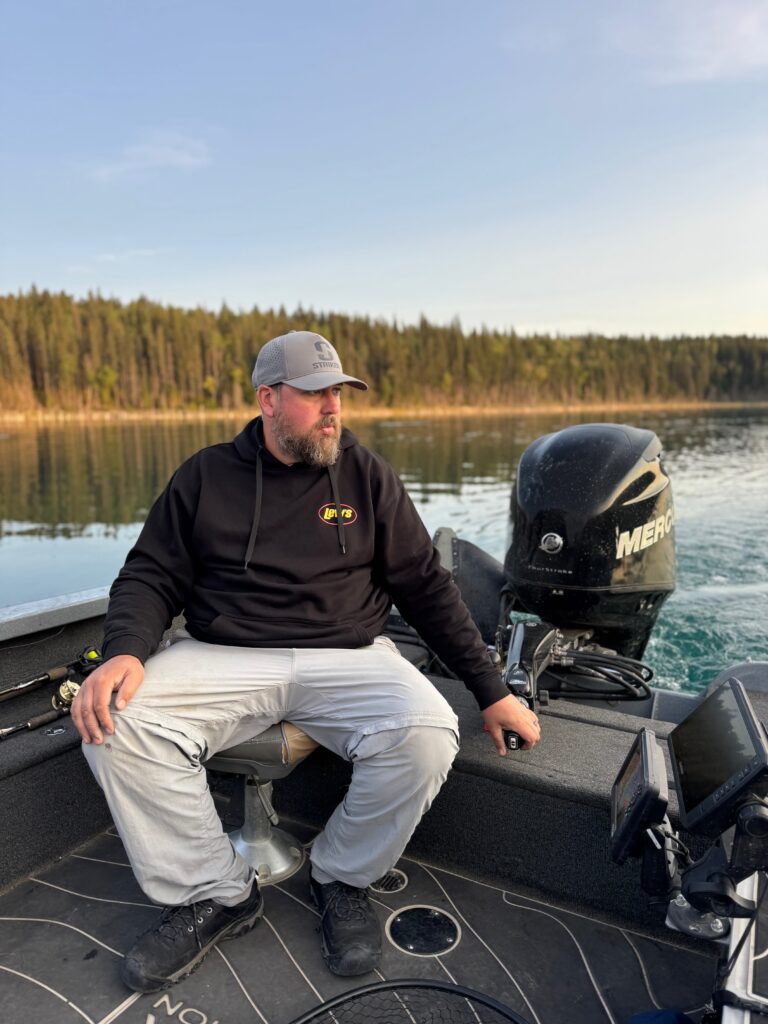
A couple falls ago, my husband Stuart and I returned determined to crack the code. The last time we fished East Blue was seven years ago, and luck just wasn’t on our side. This time, we came prepared to solve the puzzle.
Reading the Lake
We started with trolling, a natural choice on unfamiliar lakes where covering water quickly is key, but East Blue wasted no time reminding us it doesn’t follow the usual rules. After some time of adjusting speeds and changing baits it was clear we needed a new plan.
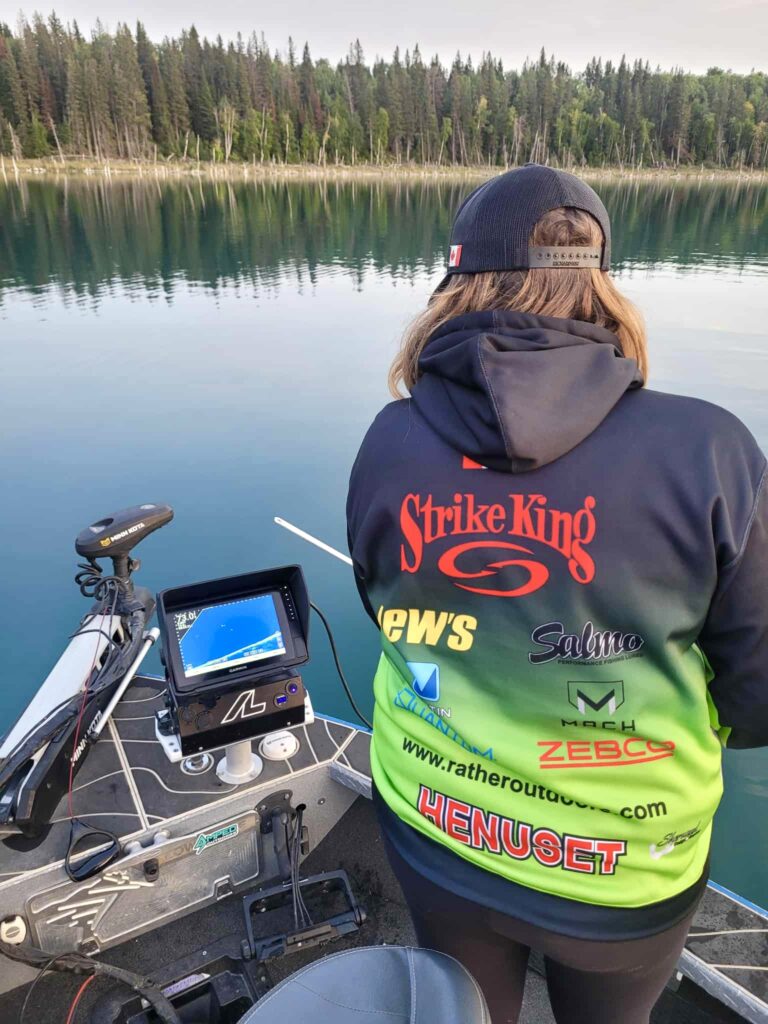
While trolling, we noticed on sonar that most of the fish were suspended over deeper water just off shorelines and shallow flats. We devised a new strategy and cruised around the lake, dropping waypoints on every decent fish we marked that wasn’t too deep and could be caught ethically to be released. Once we had a few promising areas, we shifted to casting and jigging with natural presentations better suited to East Blue’s remarkable clarity. On a lake this transparent, even the sound or vibration of a boat can spook fish. Using the bow-mounted trolling motor and forward-facing sonar (FFS), we quietly located rainbows suspended 20–25 feet down and targeted them with precise casts.
The Strike
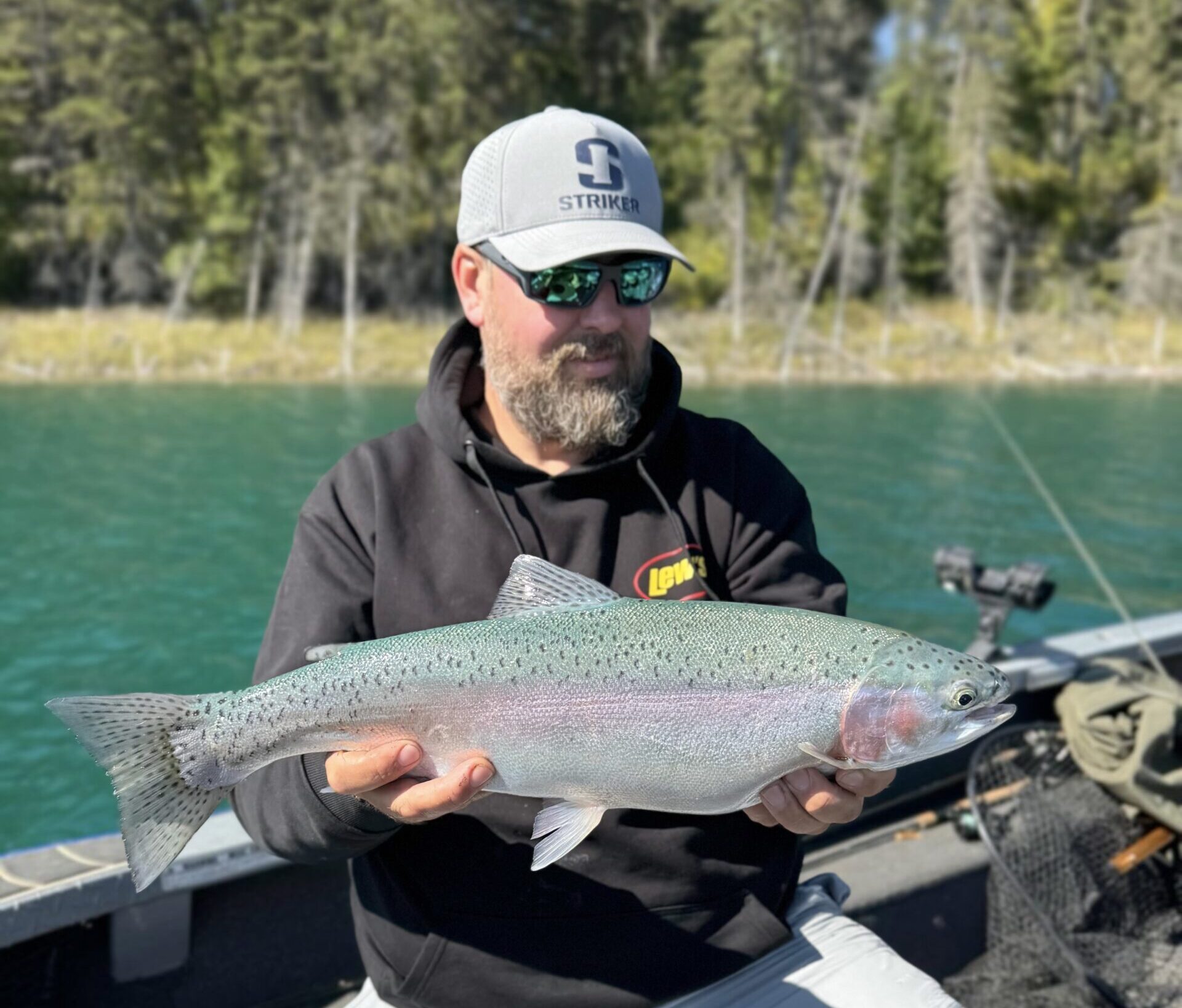
After a few carefully placed casts, Stuart’s rod doubled over. A powerful rainbow had bit and was immediately testing both his gear, and his patience. Every violent head shake threatened to throw the hook, and each flash of silver beneath the surface was a reminder of how quickly the fight could be lost. With steady pressure, a light drag and calm control, Stuart slowly gained ground. After several explosive surface breaches, the rainbow paused just long enough to slide into the net.
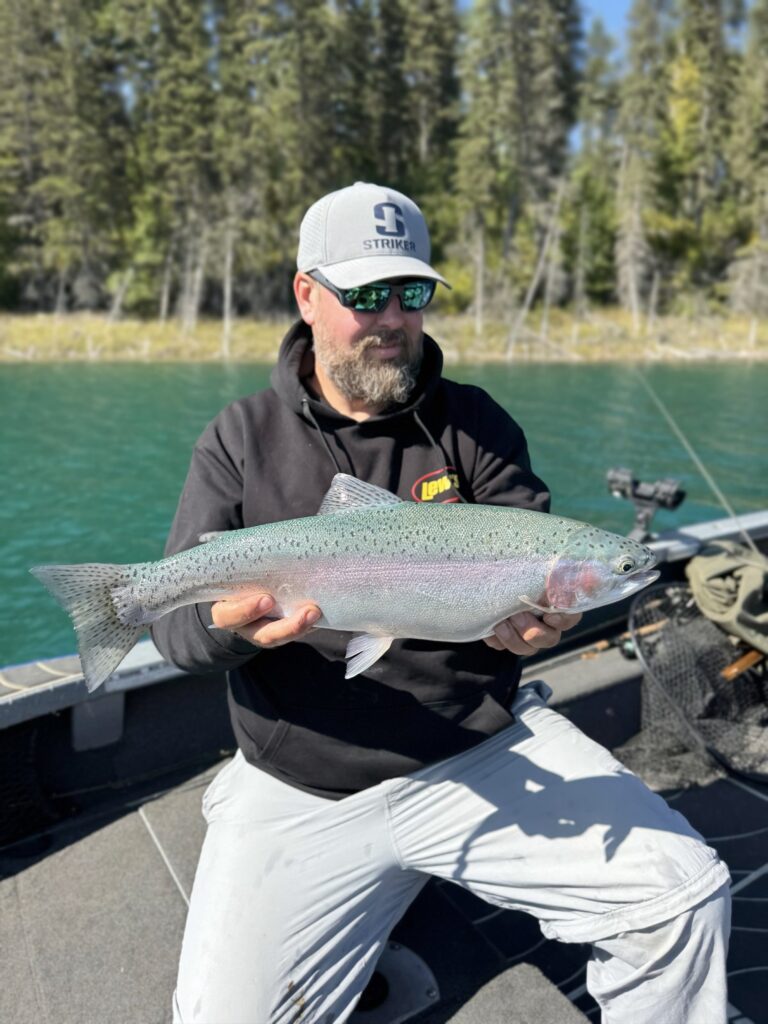
On the bump board the rainbow measured 22.25 inches, qualifying as a Manitoba Master Angler. It was a hard-earned reward for persistence, adaptability, and a willingness to rethink our approach until it paid off.
Dialing In The Gear
When chasing trout on a lake like East Blue, versatility is everything. Pack tackle suited to your target species, but bring a range of rods and baits so you can adjust as conditions change. Here’s the setup that worked for us, and why it mattered:
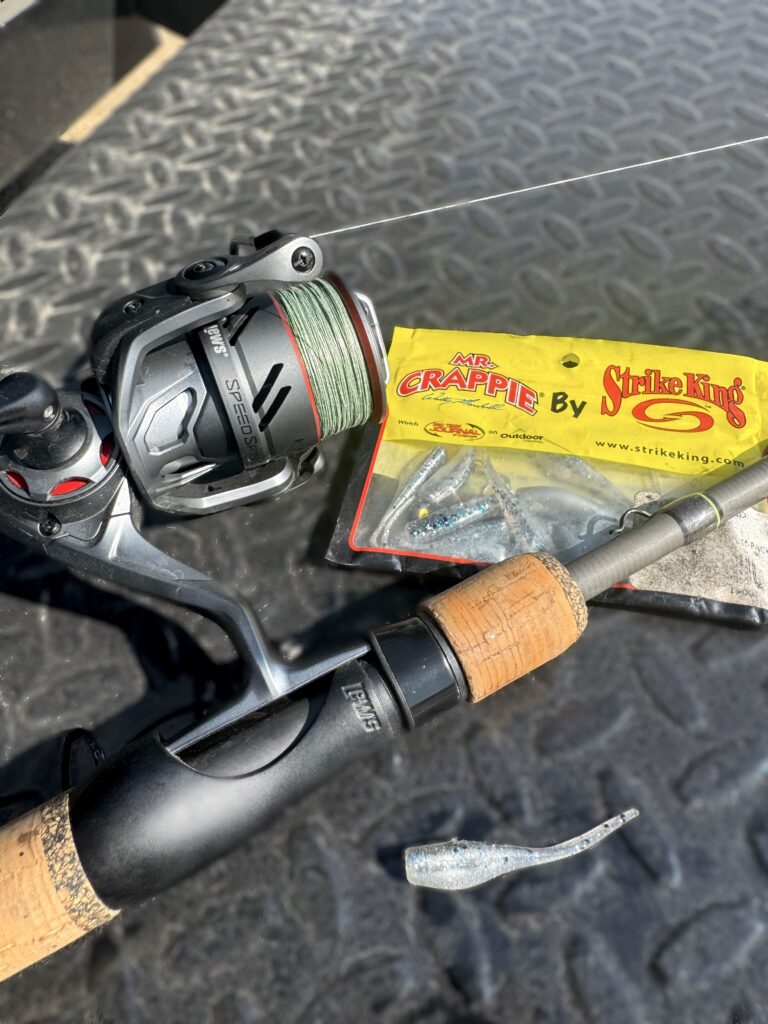
Rod: Lews Speed Stick 6’7″ Medium Action: Extra Fast. Lightweight and sensitive enough to detect subtle bites, with the flex to absorb head shakes, yet enough strength to handle a big powerful trout.
Line & Leader: Light braid main line paired with a six foot long, 6–8 lb fluorocarbon leader. Perfect for maintaining stealth in clear water and reducing line visibility.
Bait: Mr. Crappie by Strike King 1.5” minnow with 1/8oz jig. Small, realistic, and irresistible for cautious trout. Make sure to use jigs with sturdy hooks as these big trout are powerful.
Lessons from the Deep
East Blue Lake is not a lake to easily have success on. Its clarity and depth make rainbows cautious, but anglers willing to adapt and fish with intention are rewarded with some of Manitoba’s finest trout opportunities.
That’s what makes East Blue special. It doesn’t hand out success, you have to earn it. With patience, persistence, and the discipline to adjust, every strike feels like a victory. And when that shimmering rainbow finally hits the net, the reward is all the sweeter for the effort it took to get there.
