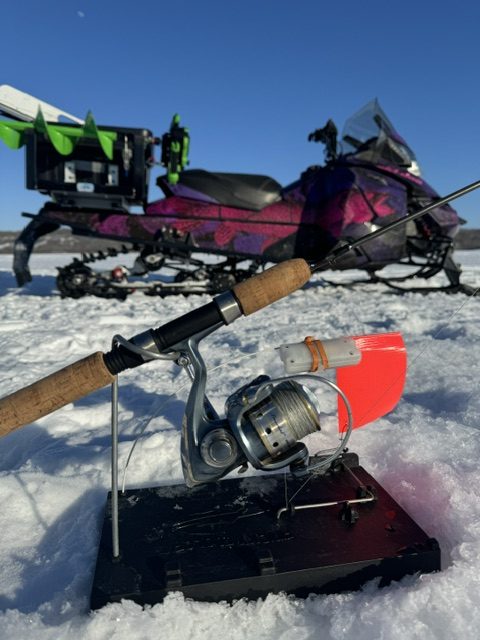
There’s something about ice fishing for big Northern Pike that gets the adrenaline pumping like nothing else. The frozen lake stretches endlessly before me, the wind biting at my face as I scan my spread of tip-ups across the ice. Silence hangs in the air, broken only by the groan of shifting ice beneath my boots. And then—snap! A flag pops. The line spins wildly. It’s go time.
For me, it’s never just been about the fish. It’s the entire experience—the icy grind, the patience, and the moments of calm broken by sudden, heart-pounding action. The kind of moments that turn an ordinary winter day into a story worth retelling.
My husband, Stuart Henuset, has been my mentor from the beginning, sharing hard-earned wisdom from his years as a fishing guide. Together, we’ve braved countless days in bitter cold, testing gear, refining setups, and exploring remote lakes in search of northern giants. Not everyday is a win. Some days the lake gives nothing back but frostbite and frustration. Other days, everything comes together, and the chaos of a battle beneath the ice makes every hour worth it. That’s why I keep coming back. It’s not just the fish—it’s the moments when the cold fades, adrenaline surges, and you’re completely locked in. Because once you’ve felt that rush, you’re hooked for life.
The Hunt for Giants
Catching big pike isn’t about luck—it’s about strategy. These apex predators are built for ambush, lurking around structure where they can strike with explosive power. To find them, you need to think like a hunter. Early in the ice season, I focus on deeper flats around 10-15 feet near drop-offs. As winter progresses and they prepare for the spawn, I shift to water as shallow as 3-5 feet, especially near creek mouths.
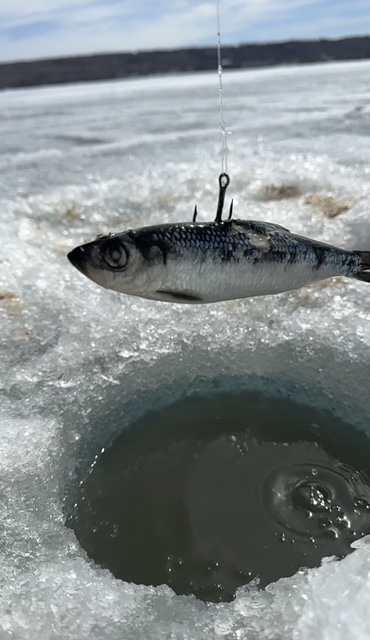
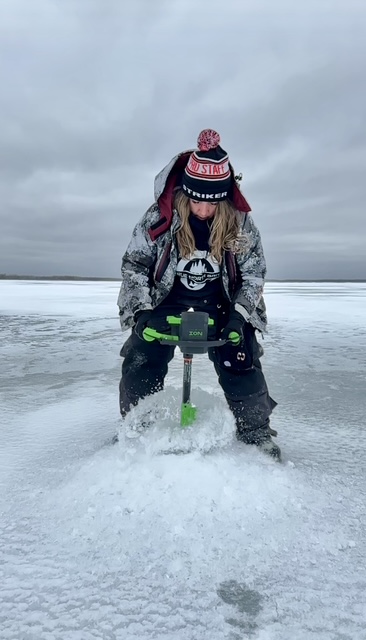
When exploring new lakes, I drill multiple holes throughout the area and set baits at different depths to find where the pike are most active. Having pre-drilled holes at various depths saves time and keeps the fish from getting spooked by the sound of drilling later in the day, when you want to move a bait to a more active depth.
The Snowmobile Advantage
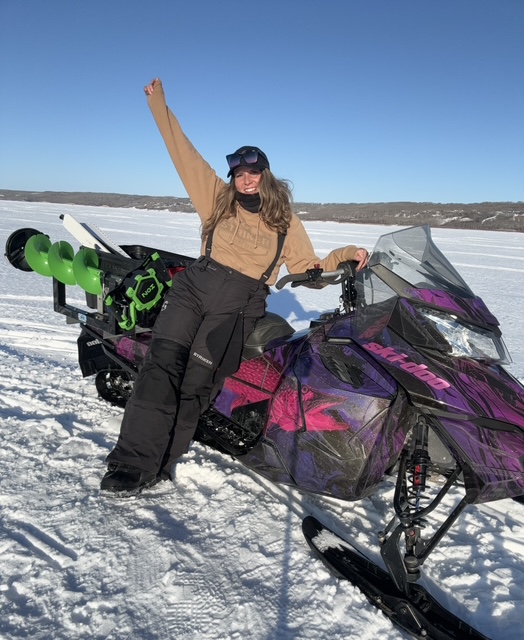
Growing up, snowmobiling was my winter obsession. Now, it’s an essential part of my ice fishing game plan. My sled isn’t just for crossing the ice—it’s a mobile basecamp built for efficiency and performance. I’ve customized my Skidoo with racks for my rods, auger, and electronics, along with storage compartments for tip-ups, tackle, and tools. On colder days, I tow a flip-over shelter for extra warmth, transforming my setup into a mobile fishing fortress. And because I love combining my passions, I personally designed and installed a custom wrap for my Skidoo, featuring a massive Northern Pike. It’s a one-of-a-kind design that reflects the essence of both fishing and snowmobiling—two activities that fuel my winter adventures. Plus, it makes for a great conversation starter when I pull up to the ice.
The Thrill of the Catch
There’s nothing quite like the electric rush that comes when the flag pops—an unmistakable signal that something big is on the other end. My heart races as I feel the surge of adrenaline course through me, knowing that every second counts. But while that initial burst of excitement is exhilarating, landing a trophy pike takes far more than just speed—it requires precision, patience, and a deep understanding of the fish’s behaviour. The real challenge begins once the rush of anticipation settles and the strategy kicks in.

Here’s my approach to making sure I land that monster pike:
Approach Calmly: It’s easy to let excitement take over and charge in, but pike are smart and can be easily spooked by sudden movements or noise. I move in slowly and with purpose, staying as quiet as possible to avoid disturbing the fish. I keep my snowmobile parked well away from the action, letting the environment stay calm and undisturbed.
Read the Line: Once I reach the hole, the first thing I do is observe the line. If line is being taken, I know the fish is running with the bait, and it’s important to give it time. If the line has stopped, I don’t rush in just yet—pike are known to reposition the bait before committing fully to the strike. I give it a moment, letting the fish settle and get a good hold before taking action.
The Hook Set: When I feel the unmistakable weight on the line, it’s time to set the hook with confidence. Pike have notoriously tough, bony mouths, and a weak hookset won’t get the job done. I give a firm, deliberate pull to make sure the hook penetrates deep, knowing that if I miss this critical moment, the fish could break free.The fight that follows? Explosive headshakes. Sudden bursts of power. The unpredictable dance of strength and skill.
Handling Big Pike
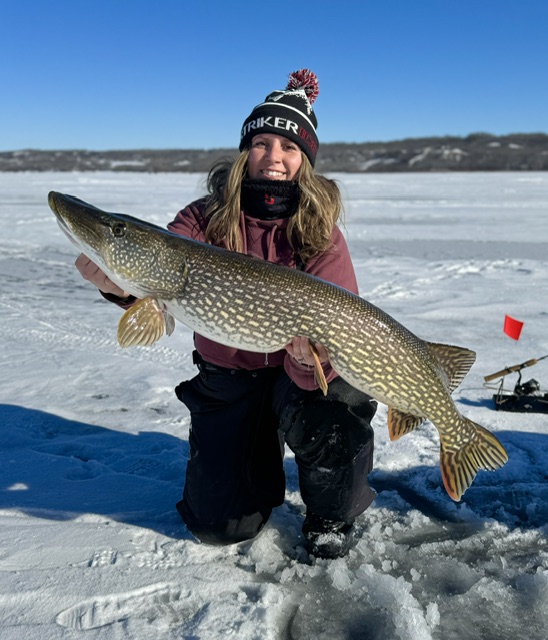
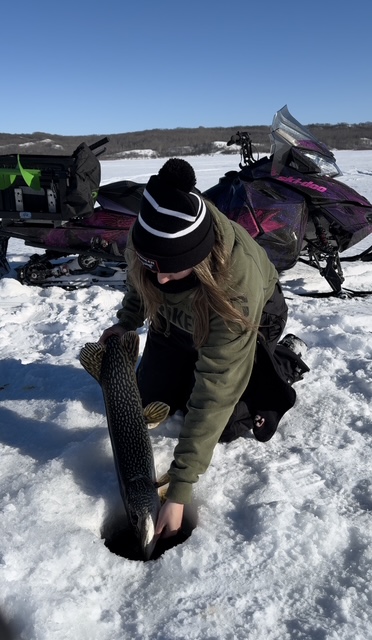
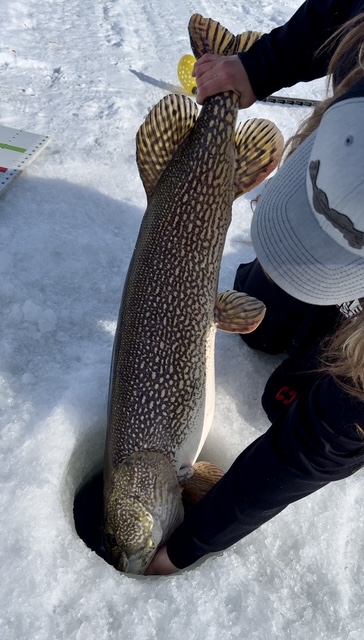
Handling big pike requires patience and care. To release them quickly, I use jaw spreaders and long-nosed pliers to unhook the fish while it’s still in the hole, minimizing its time out of water. Pike are powerful and can thrash unexpectedly, so these tools help maintain control while protecting the fish for quick release.
When lifting the pike from the hole, I hold it horizontally with one hand under the gill plate and the other supporting its body. I place it gently on the bump board to measure its length accurately. Keeping the fish off the ice or snow helps preserve their protective slim coating. For photos, I have my camera ready to minimize time out of the water. Safely releasing large pike ensures they remain a vital part of the ecosystem for future anglers to enjoy.
 Why I Keep Coming Back
For me, it’s never just about the catch—it’s the whole experience. Landing a big Northern Pike through the ice is a thrill, but it’s everything leading up to that moment that makes it so special. It’s about pushing yourself—mentally and physically—through the relentless cold, long days, and unpredictable conditions. It’s the quiet beauty of a frozen lake, the adrenaline that breaks the stillness, and the challenge of the hunt. It’s knowing each trip holds the possibility of a giant pike that could test everything you’ve learned. So grab your gear, fire up the sled, and chase your own monster. Once you’ve felt that rush, you’ll understand—it’s about so much more than the fish. It’s the thrill of the hunt, and nothing else compares.
