


Finding Water, Finding Fish
A local Gem!
The Whiteshell River, where it leaves West Hawk Lake, gives southern Manitoba anglers the chance to chase stream trout. I love it! I can feel the flow, pick out the spots, and make the cast. The river actually lends some water to a bank-side hatchery. The hatchery gives the water back, and a few hundred of its product each year. Occasionally, a few 20-inch-or-so brood stock get mixed in.
Normally, the river exits the lake in a tumble of whitewater. Soon after, fishable pockets appear. Then a boulder garden. Then a few nice pools. A log-filled meadow section follows. Catching fish usually keeps me from going further. The Whiteshell River held regular spots on my calendar for the longest time.
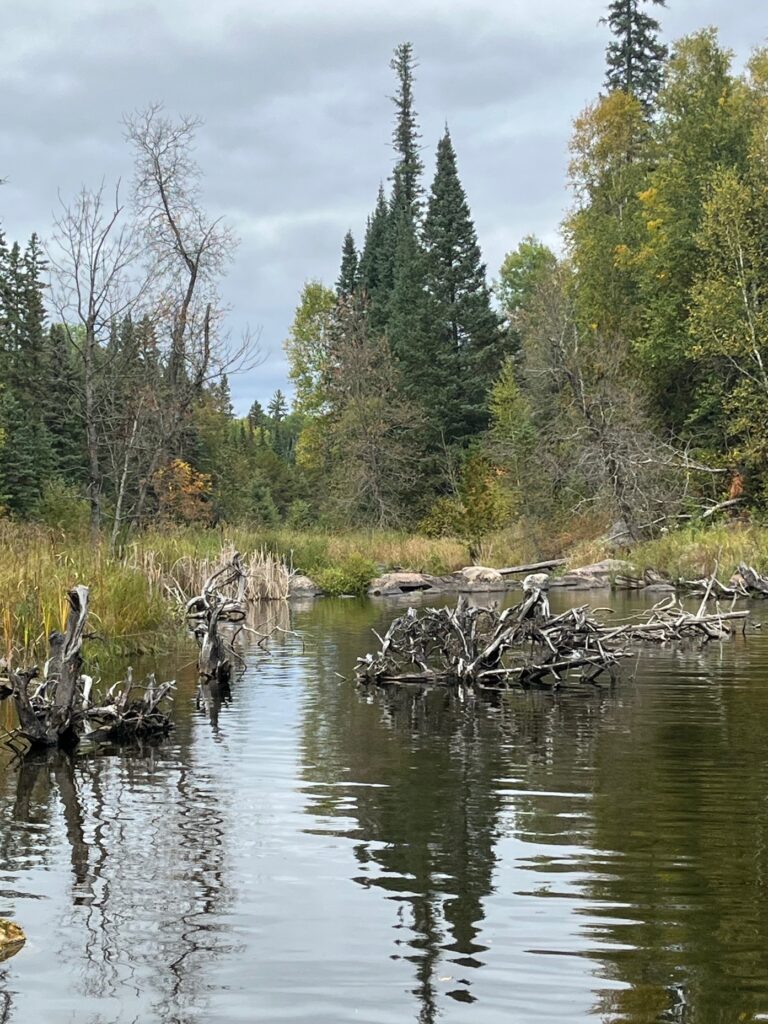
One evening in June, a 4-pound tippet drifted my nymph along a granite face. Big mistake! The spring flow, holdover trout, and enthusiastic hooksets, led to three quick break-offs. So I upsized the leader and landed a few girthy 15-inchers. On a September afternoon, fish after fish rose to a small dry. They were all small stockers, but watching surface eats made it worthwhile.
One August sunrise was unforgettable. Several 10-inchers welcomed me to the upper river. Close to the meadow, my rod doubled over, and the line sliced 50-feet up a side channel. A big rainbow wallowed on the surface, showed its flank, then came unbuttoned. I’ll take it to my grave that fish was at least 24-inches.
During the last few years, results have been more sporadic. One spring trip handed me low flows, and zero trout. Nevertheless, as the light faded, I saw shadows finning near logs. The shadows gulped Woolly Buggers, and several nice smallmouth saved the evening.
Which brings me to this past September. I was itching for trout in moving water. So after a couple of good rains, I stood in the Whiteshell River, sort of…
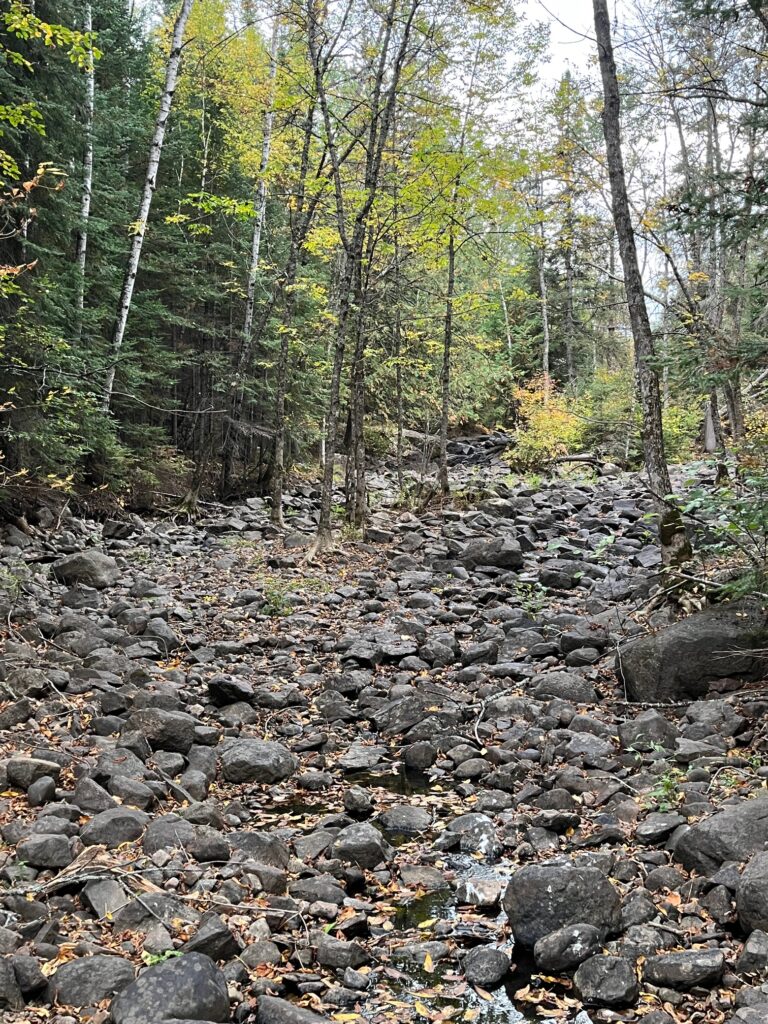
Just below the lake, there was nothing but dry boulders. Where the hatchery initially replaces parts of its borrowed water, the Whiteshell River became a trickle, shin deep at best. My first few fishing spots were not viable.
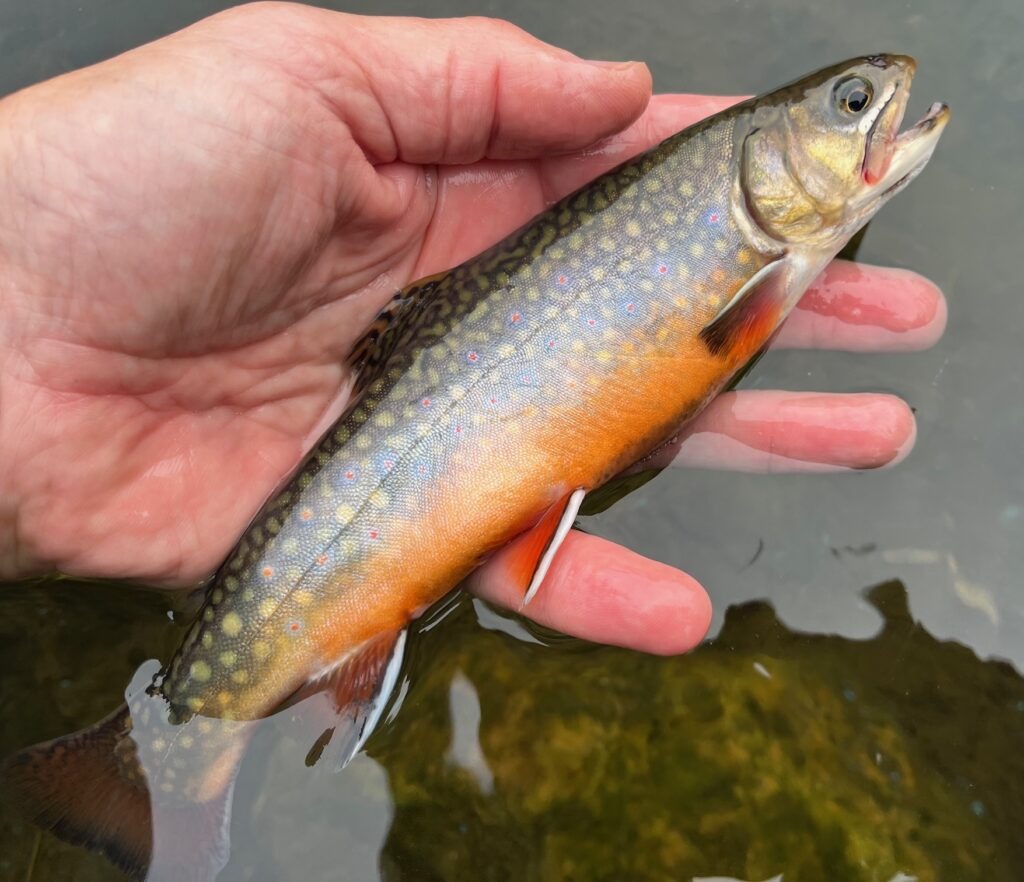
The hatchery’s main return culvert became visible. It filled a large, lagoon-like pool with a bunch semi-submerged logs. Casting a Woolly Bugger into woody pockets brought a half dozen eager browns and brookies to hand. Near the pool’s tail out, the logs became sparser, and I could actually see cruising trout.
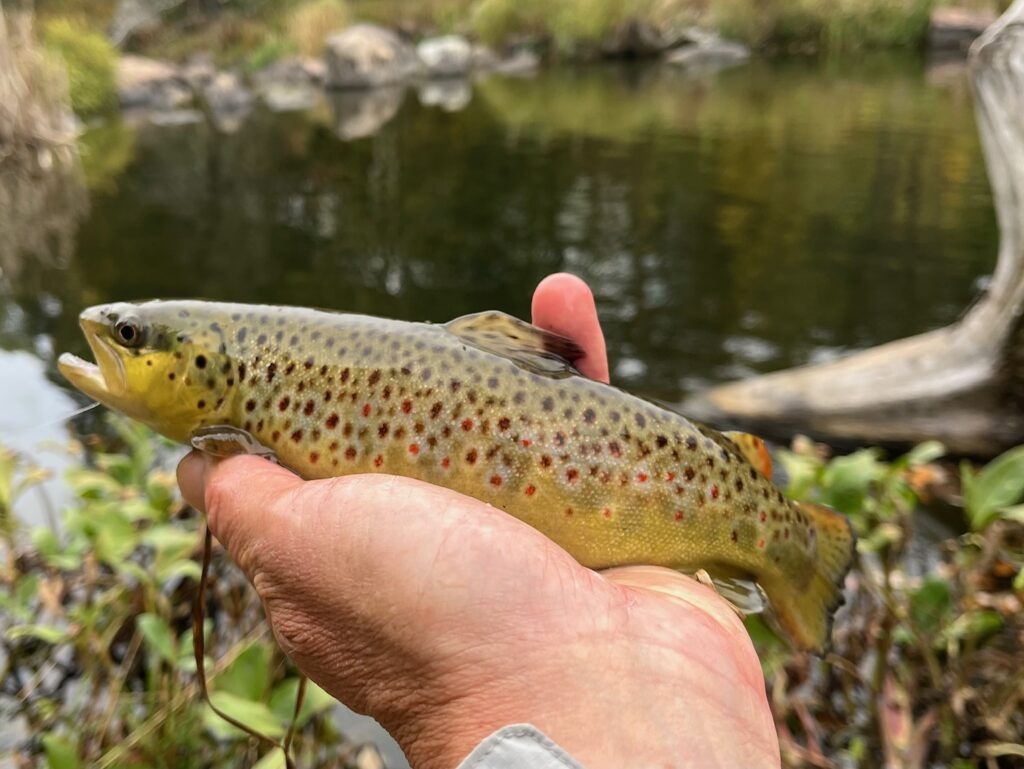
These cruisers would consistently rush my streamer, but stop short. I switched to a small scud, and sight fished another half dozen. Then I positioned myself where the culvert gushed into the river. It formed a classic riffle, with good depth and seams along the edges. A small nymph under an indicator kept me hooked up consistently for half an hour. A few rainbows even accompanied the brooks and browns.
I decided to explore downstream. The pools close to the meadow section were sprouting algae and offered only a couple bites. The side channel, where a monster ‘bow had once breached, was dry and grown over. Just beyond the meadow, a deep hole and adjacent log jam held great potential, but no fish. So I turned back.
Before reaching the car, I floated a foam ant near the culvert. A dozen drifts induced the surface take needed to cap off my day.
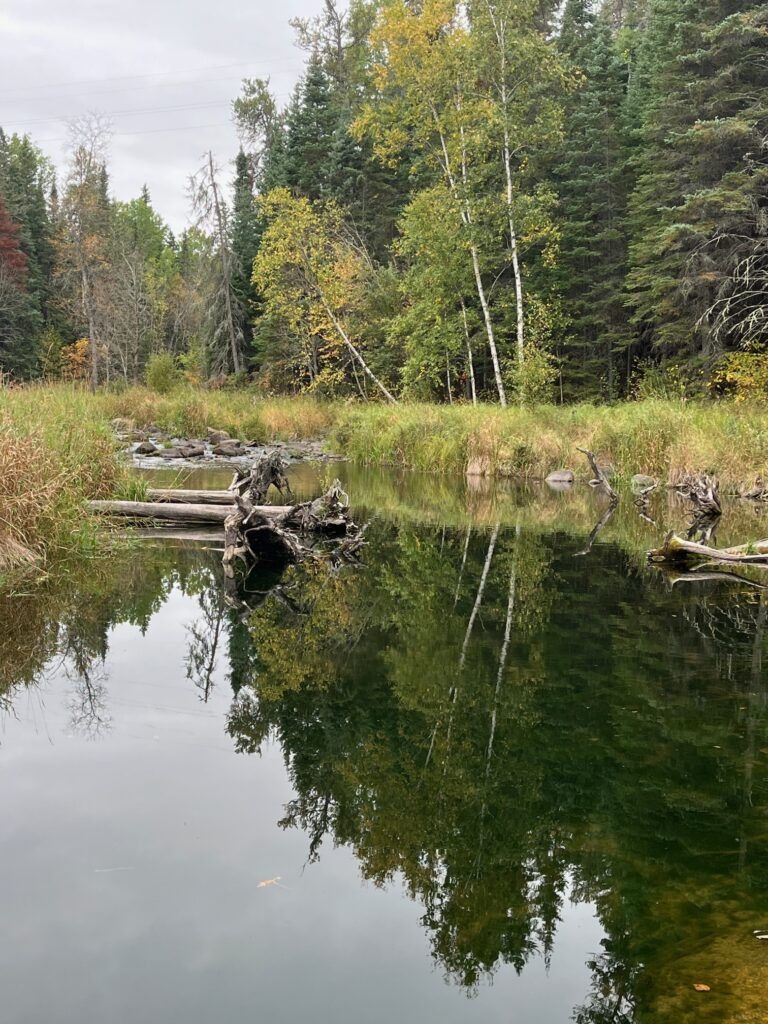
In the car, I reflected on my experience. Low water had concentrated the fish in a small stretch of water, and given me a fun afternoon – target casting to snags, sight-fishing to cruisers, non-stop nymph eats, and even dry fly action. But in reality, I would have rather fished the whole river and caught a fraction of the fish. Hopefully, chronically low water is something we can all avoid going forward…
