

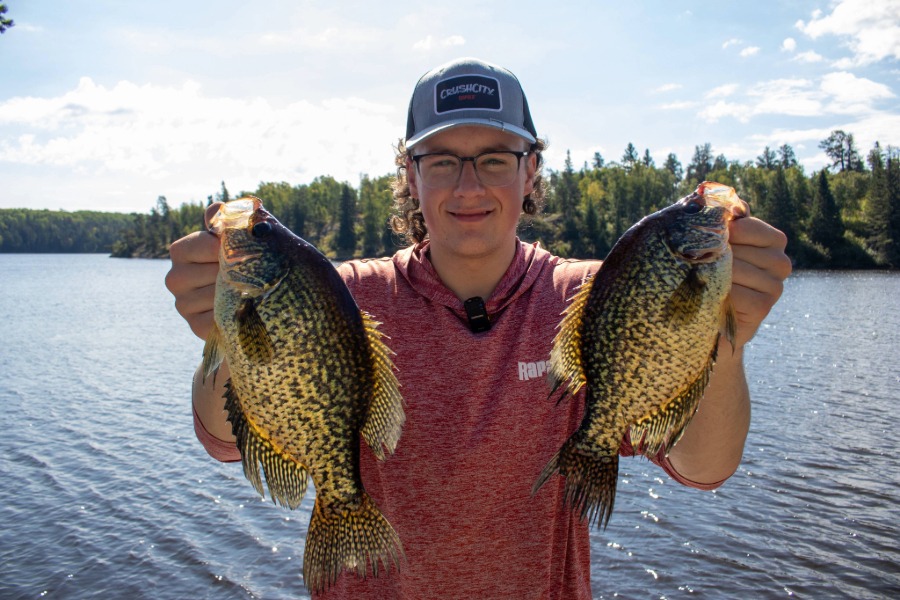
The Chain Connection: How Caddy, South Cross, and North Cross Shape Crappie Fishing
How three connected Whiteshell lakes create one of Manitoba’s most unique crappie fisheries.
The Route
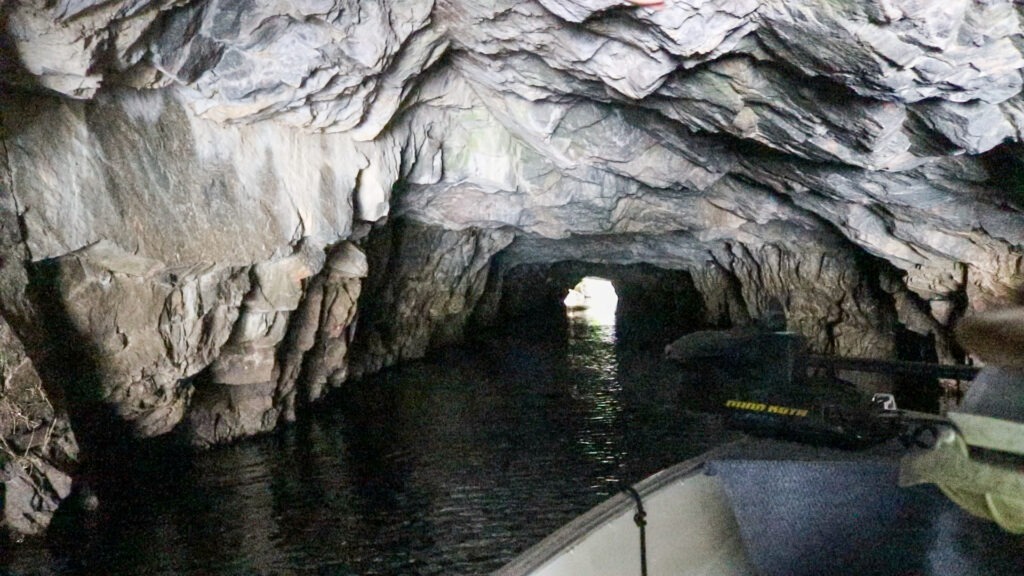
The journey into North Cross is half the fun. You launch into Caddy Lake and make the run across its open water before lining up with the first rock tunnel — a narrow, cave-like passage carved right through the rock wall. Glide through and you’re in South Cross, a relatively narrow, weed-filled lake that feels completely different from Caddy’s open depths. At the far north end waits a second tunnel, darker and just as rugged, and once you ease through, you spill into North Cross. Here the landscape shifts again, with deeper basins, pockets of structure, and fewer boats. Each lake in the chain has its own character, and that contrast makes the final arrival into North Cross feel like you’ve discovered something hidden — the perfect backdrop for a fall crappie trip.
The Payoff: North Cross Crappie
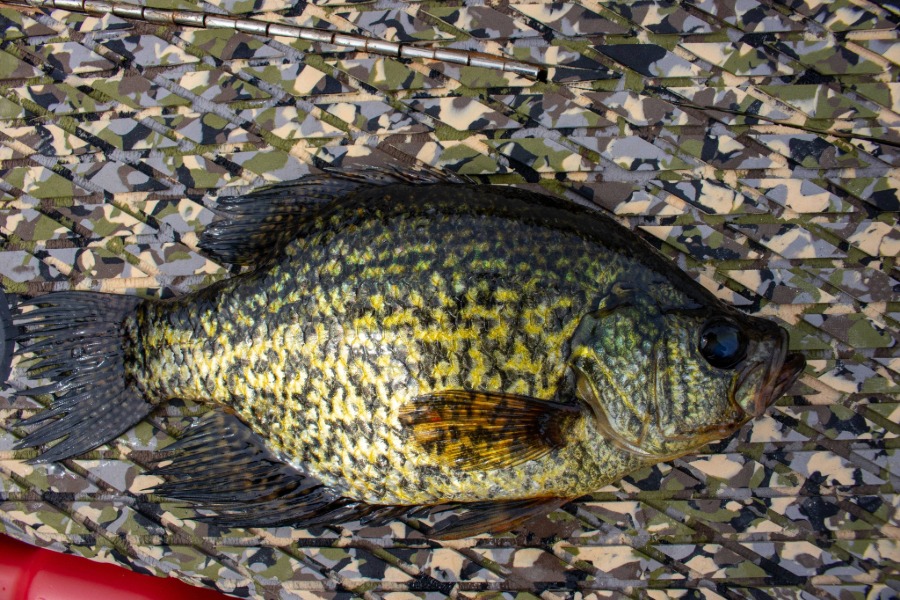
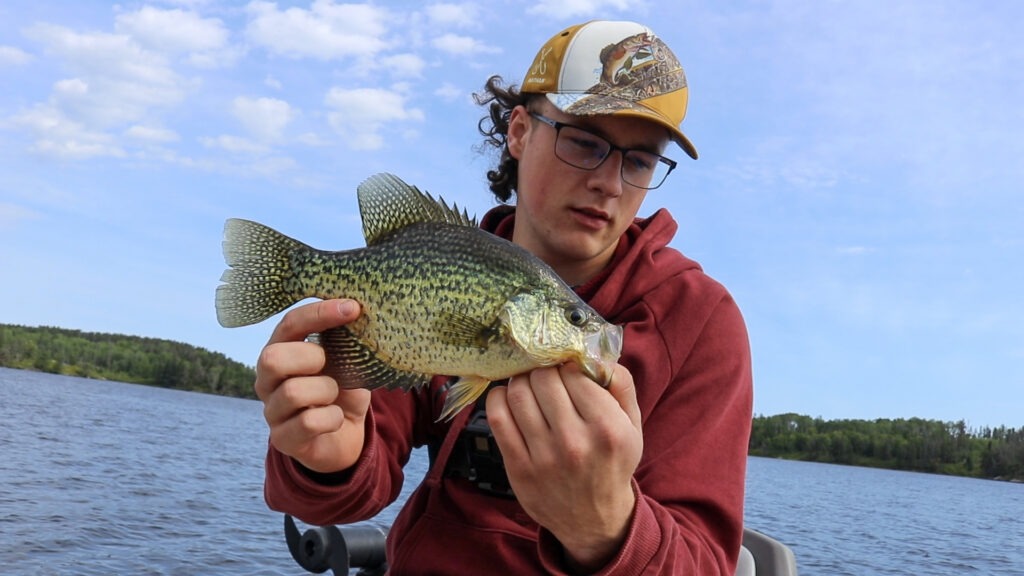
North Cross doesn’t see the same traffic as Caddy or South Cross. The length of the journey keeps most people away, which is exactly why the crappie fishing shines. With Humminbird LakeMaster mapping, I marked out the basin contours in the 20–25 foot range and idled into position. That’s when the Humminbird MEGA Live came into play.
On the screen, schools of crappies lit up like fireworks. Each of us picked a target and dropped in. “Fish on!” came almost immediately from the bow, and then another from the stern. The clicker counter started spinning before we even settled in.
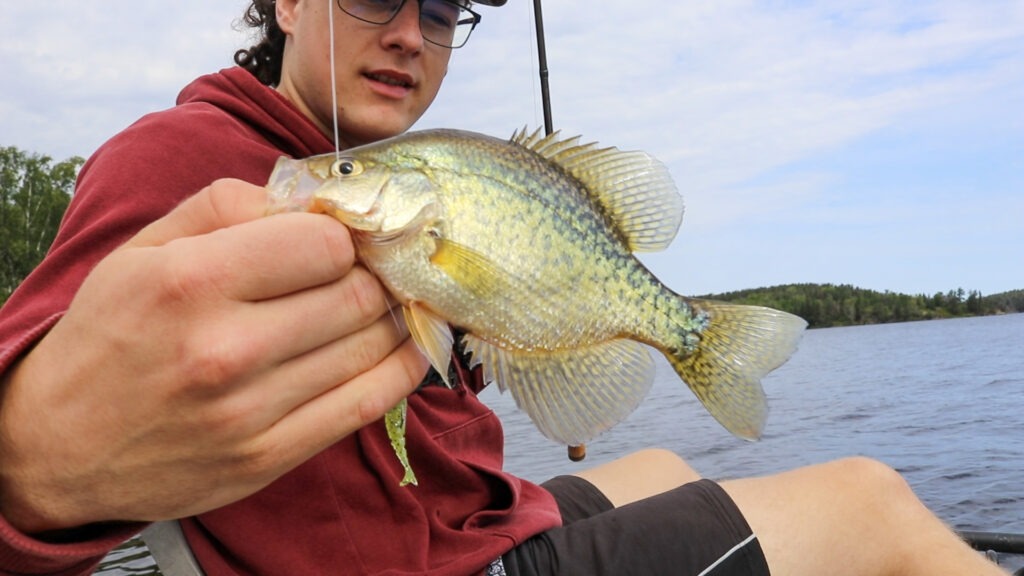
Every drop was a different interaction. Some fish rocketed up the moment the jig showed up on screen, hammering it without hesitation. Others hung back, following, pausing, needing just the right twitch to commit. That’s the magic of forward-facing sonar — you’re not just fishing, you’re playing a game of cat-and-mouse in real time. And with three of us running baits, the action never slowed.
Why the Chain Is Special
What makes the Caddy–Cross chain so unique is how each lake along the route has its own personality. Caddy is the gateway — a larger, open body of water with small bays and classic Canadian Shield shorelines, perfect for boating across before slipping into the first tunnel. South Cross couldn’t be more different: a relatively smaller, long and narrow strip of water, it feels like a hidden jungle lake in the middle of the Shield. Then comes North Cross, tucked away past the second rock tunnel. It’s deeper, quieter, and more complex, with basins and structure that hold fish year-round. Together, the three lakes make the trip feel like a progression through completely different worlds, all connected by those cave-like tunnels.
A Day to Remember
The rest of the day blurred into a cycle of scanning, dropping, setting hooks, and clicking the counter. Laughter echoed across the boat as the numbers climbed higher than any of us expected. The biggest challenge wasn’t finding fish — it was convincing ourselves to finally stop. By late afternoon, with the sun sliding down and the shadows stretching long across the water, we eased the boat back toward the tunnel. The ride out felt quieter, as if North Cross wanted to keep its secret a little longer.
There’s a reason anglers keep coming back to the Caddy–Cross chain. The combination of open water, hidden tunnels, diverse lake layouts, and the quiet isolation of North Cross creates a fishing experience that feels both adventurous and rewarding. It’s a trip that captures the best of the Whiteshell — a sense of discovery, challenge, and the simple thrill of being on the water in a place that feels almost untouched.
My Tips for Fishing the Cross–Caddy Chain
- Navigation: Launch on Caddy, run north to the first tunnel into South Cross, then continue north, straight across to the second tunnel into North Cross. Trim your motor up — water levels can get very shallow.
- Mapping: Humminbird LakeMaster mapping makes it easy to find the right basins in North Cross.
- Electronics: Side Imaging or Forward-facing sonar like MEGA Live takes the guesswork out of crappie fishing. Watch their behavior and adjust your presentation.
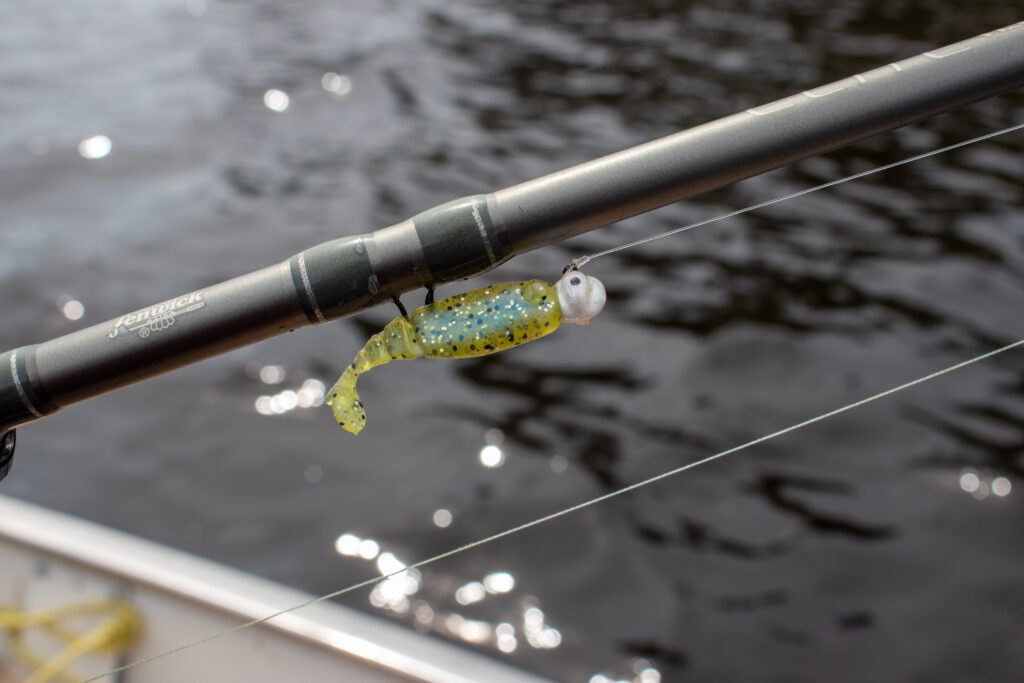
- Gear: Light action rod, 4–8 lb line, 1/16 – 1/8 oz jigs with no bigger than 2.5” plastics.
- Fish Counter: Bring one. If you don’t, you’ll lose track fast.
- Best Time: Mid-September through October, when crappies school tight before freeze-up
