



/
RSS Feed
Welcome to The Complete Angler, your source of information on the outdoor industry in Central Canada.
With over 35 years in the field, host Don Lamont covers topics and issues with industry leaders and influencers
to bring you up to speed on what’s happening in the outdoor world.
And now, here’s your host, Don Lamont.
For those hardcore anglers who love to catch one of the most exciting sport fish on the planet,
your time has almost arrived.
Musky season opens in northwestern Ontario on the 19th of June.
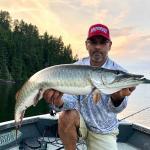
Hooked contributor and musky guide Glenn McDonald has been counting down the days.
Glenn has big plans this year to keep anglers informed on social media about the musky bite in his part of the world.
Glenn, welcome to The Complete Angler podcast, take two.
Thanks for having me. Appreciate you guys having me on again, Don.
Well, it’s musky season coming up, so we figured no better guy to talk to than you, Glenn.
That’s for sure.
So when does the season open in Ontario?
In Ontario, June 19th is the opening of our season.
So we’re, as we record this, we’re looking at a week and a half away.
So probably by the time this airs, we’ll be just days away from the opening of the Ontario musky season.
Well, according to all reports, and you’ve been on the water a lot, is that the season is pretty advanced for this time of the year.
Is that right?
It is, absolutely.
We were out on the past weekend here doing some walleye fishing and some bass fishing, and we’re seeing water temps already in that 70-degree range, which for this time of year is rare.
It’s not totally unheard of, but we’re certainly ahead of schedule.
Some guys we’re reporting still seeing some muskies paired up in some of the bays, which I think would be probably the tail end of what would be our spawning season for muskies.
I would fully expect by the end of this week that all the muskies would be spawned out.
Well, you kind of got me hooked on the musky part of things.
I’ve been following the Musky Insider newsletter, which is a great newsletter.
Do you contribute to that?
I’ve had a few pictures and stories in there.
I do know the guys a little bit through some mutual friends, and I’m looking forward to trying to do a little bit more with them.
But those guys do a fantastic job, and as an online newsletter, they kind of cover all the bases of everything musky-related, and it’s a good resource for a lot of people to go to.
It gives a bunch of information and kind of a fishing report style is very similar to what you do with Hooked.
Yeah, no, it’s great, and I was reading some of the guide reports.
Now, down in the northern U.S., the musky spawning season seems to be just wrapping up, like you were talking about.
So what do you expect when the season opens here on the 19th?
Well, historically, in northwestern Ontario, when the season opens, we’re, again, we’re right at the tail end of the musky spawn.
So you may see a few pairs still up in the shallows.
This year, I don’t think we will because of the advanced temperatures.
So if anything, we’ll be looking at some smaller males will be still hanging around the spawning areas, and I would expect all the bigger females will have moved out into the deeper water outside of the spawning areas.
And they’ll be recuperating, and they’ll be probably just getting ready to start feeding heavy, and they’ll be into that slightly cooler water.
So if we’re going to target bigger fish, we would target those bigger females just out in open water.
But in the musky world, that’s a bit of a needle in a haystack proposition this early in the season.
Yeah, I was reading about that a lot, about how they get out there in open water, especially if there’s an insect hatch.
So why is that coincidental?
Well, timing, of course.
Timing this time of year, the insect hatch.
And then with the insect hatch is going to bring in the smaller prey fish, so your perch and bringing out your tulipies, maybe your whitefish, even the walleyes.
And those big muskies will be out patrolling those areas looking for those easy feeds.
They’ll try and target any of those smaller prey fish that are schooling up.
And the bigger females will generally like to have slightly cooler water to recuperate after a hard spawn.
Yeah, no kidding.
It brings back memories of this show I did up in northern Alberta.
We were hunting northern pike at the time and, you know, on the back bays.
And, of course, there was only small males in there.
There wasn’t any big females.
We got out into kind of the main lake on a big mud flat, and we all saw these dimples on the surface.
So we started fishing these big mud flats, and we were trolling husky jerks,
anywhere from 2 feet of water to 12 feet of water.
And we ended up just catching nothing but big fish, either walleye or pike.
Is that a pattern that you would be looking at fairly soon?
Yeah.
Actually, this year, I was just talking to a couple of buddies that are pretty proficient in that open water trolling game.
And we’re going to try it this year.
So me and my wife and my main fishing partner, Dave, we got a bit of a strategy going into these first couple weeks of the season where we’re going to spend a portion of our time chasing the smaller fish or chasing some numbers, trying to get some bites, see if we can kind of get our game back.
It always takes a little bit at the beginning of the year to get your systems working in the boat and how you’re going to net the fish and handling them.
And then we’re going to spend some time doing some open water trolling, and we’re going to try and target some of these bigger fish.
But it comes at the price of, you may come out of a day with a skunk, but the risk is worth it because we could possibly pick up a 50 inch plus fish on the opening weekend.
So we’re kind of going in with that twofold approach.
We’re going to put a little bit of our eggs in one basket and put a little bit in the other, and we’re going to hope for some success.
Well, talk a bit about that hat that you have there, because it’s 54 bust.
And have you ever caught a 54 inch muskie?
No, I haven’t caught a 54 inch muskie.
They certainly don’t come easy in these parts of the world.
And actually, I’m just finishing up the Next Hooked Magazine article, which will be all about Eagle Lake.
And my biggest muskies come out of Eagle Lake, and it was a 51 inch plus ball fish.
And Eagle Lake usually produces three to four fish over the 54 inch mark every year.
And that’s from some of the world’s greatest guides on Eagle Lake.
So it’s certainly tough in our area of the world.
Kenora puts up one or two out of Lake of the Woods.
But as you get down into the Great Lakes areas, the Green Bays, the Lake St. Clairs, the possibility for those big fish is definitely higher.
St. Lawrence River, those kind of areas are known for huge fish.
We do certainly have big fish here, but to catch a 54, that’s a major achievement in our area.
So that’s where my goal is for sure.
So why did those fish in the areas you just talked about get a little bit bigger than your region?
Well, there’s a couple different strains of fish.
And some of the places in the States have had stocking over the years.
And the stocking fish, I’m not a biologist, but from what I understand,
the fish that have been stocked have the ability to grow quicker only because of the, I guess it’s the fighting for the food as they’re growing.
And as they’re put into these stocked lakes, there’s only a finite amount of forage there.
So these fish tend to grow quicker and they grow faster and they grow to larger proportions.
And then some of the strains, like the St. Lawrence strains, have always been known to be big, heavy fish because of the river currents.
And I think the Great Lakes fish are very similar.
So that’s, I believe, why a lot of those Great Lakes style fish or big river fish grow faster and heavier than we do up here.
And I think another reason is our season’s much shorter up here with the warm water.
And I tend to think that the muskies, their metabolism slows down quite a bit in the winter.
So they conserve energy as opposed to exerting energy, looking for food.
Yeah.
I mean, that makes total sense for sure.
Yeah.
I would totally agree with you on that one, Glenn.
Now, a bit of a crazy situation over the last year and a half where the border closed and also now the border closed to Manitoba residents.
And has it really, do you think it’s going to have an impact on the quality of the fishing?
Because really, I would think it would drastically reduce the fishing pressure.
Well, it has.
We did see that last year.
And, of course, through other species fishing in this area of northwestern Ontario, I don’t know that I’ve ever seen it.
And I think that’s just a direct result of less pressure last year.
So I think as the borders start to open up, those anglers are going to see great fishing.
And as it applies to me in the musky world, seeing that with the reduced pressure, it was easier to get on the fish.
Sometimes I think those big, old females, they don’t forget in a couple months on what that silver thing in front of their nose was.
They remember and I think they already know what to expect.
So it’s not going to be as easy as people think.
It’s still musky fishing.
It’s still hard.
But I do think the opportunities are going to be a little bit better for people as they start to come back.
So how long have you been chasing the muskies hardcore, Glenn?
Pretty well since I met my wife.
So we’re going on 12, 13 years that I’ve been pretty hardcore in the musky world.
And certainly the last five or six, it’s been my main focus of the fishing world.
And that’s kind of where I spend the most of my time and the most connected in the industry would be in the musky side of things.
Well, for those of us who, I mean, I’ve caught musky and I don’t have that opportunity as much to fish musky because we don’t really have them in Manitoba.
But what is it that makes musky so special?
That’s the million dollar question.
I think people that have never caught one or never went out and fished for one.
When you tell them you’re a musky fisherman, they give you that little sideways look like you go and spend all day fishing for something that you maybe will catch one a day.
But yet you don’t keep and they don’t understand.
But when when as a guide, if I take somebody out and they catch their first musky casting and they feel the power of that fish on the line, it’s a feeling that people just are not expecting.
Even when you catch a big pike or a big walleye or a big trout, they’re all hard fighting fish.
But just to feel that raw power of such an apex predator, it takes people aback.
And then when you get it in the net and you see that look on their face on what they accomplished, and then as you pull it out of the net and they truly see how big some of these fish are, I think people understand right in that moment what it what it is to truly hunt for one of these apex predators.
So over the last 12 years, what are some of the most valuable lessons that you learned about fishing for musky gland?
Patience is key and controlling your emotions when you’re in the boat, because in musky fishing, like a lot of sports, you can go from hero to zero or zero to hero in a split second.
And you’re going to lose as many fish on the side of the boat as you’re going to catch and it’s controlling your emotions and not letting a bad day get a hold of you and trying to be positive and I’ve had a couple good role models in the musky fishing world that have really helped me try to stay humble and try to stay positive in the boat.
And I think that type of attitude will serve people well in all types of angling but I know in the musky world you need to have a lot of patience which has been a tough learn that part of it, and to just stick with that positive attitude and if you’re positive with it good things will happen.
So again you got to have patience.
But just like any other species that you fish for there there’s certain things that can improve your success.
Hardcore musky anglers they talk about moon phase, they also talk about bite windows, changes in barometric pressure, what are what are some of the things that you look for as far as finding a key window of opportunity to get a big fish to bite.
I think you just kind of key in on a few of them, we started paying attention to moon phase three or four years ago and they did write an article for hooked I think it was a year and a bit ago about the moon phase and was interesting if if we go back and look at some of our major fish catches and put it next to the moon phase calendar.
A lot of them, no surprise came on top of a moon set overhead or moon underfoot and any of the listeners can just Google moon phases and they’ll see how it correlates to fishing.
So we always look for that, we always look for weather and musky fishing, a pre storm situation is always key.
So we’re looking for that, and we’re also looking for just minute changes in the weather.
So it could be as simple as a wind change direction from south all day to as you hit the evening and the wind switches around to the west.
These fish are just notorious for giving you those small bite windows like you just spoke about and it’s, it’s knowing where to be at the right time and it comes with time on the water.
You, as a beginner, guys want to spend hours and hours just casting and casting as, as we get a little bit more experience with it we try to pick and choose our spots based on the weather, the time of day, the moon phase, and you try to stack all those odds in your favor.
And over the years we’ve been really successful and putting numbers together on days where otherwise we if we wouldn’t have been on the water at those key times we might have walked away with a skunk and it just experienced all the experience musky guy thing it’s about reading everything around you and trying to learn from it and putting it into kind of like a piece of a puzzle and trying to come up with that completed picture at the end it doesn’t always work but more often than not it does.
For a novice musky angler let’s talk about where they can find online some some great information about learning more how to catch musky.
Well, like you said earlier the musky insider newsletter, they just Google that that’s a really cool resource, and it shows a lot of stuff from beginners to experts musky hunter magazine, another magazine that I write for, and they’re probably one of the biggest resources and they do have a website and they have a
fish reports and almost daily by the hour updates with different tips and tricks on there and just Google or search YouTube story and just search in musky fishing look for my site my stuff on there 54 bust on YouTube I have lots of little tips and tricks and there’s a few other guys on there.
But YouTube is a great resource but again in the musky world you have to really be careful who you’re taking information from because a lot of people that have information out there are beginners just like the beginners that are trying to find that information so try and seek out the more reputable guys that give out that information.
Yeah, that’s great advice.
And I guess once the musky season starts you’re going to do some little video updates aren’t you Glenn?
Yeah, we’re going to try and do on the water updates couple times a week.
And I’m going to post them through my YouTube and across some of my socials and I’ll probably share some with you.
And we can get that through the hooked online as well.
But I think it’s key for people that are coming as Manitoba border opens I know we have lots of people from Manitoba that are musky nets like ourselves that want to come out fish Eagle Lake the other lakes in the area they’re always looking for weekly weather reports or what’s happening.
So we’re going to try and do that as we go through this year and I know a lot of the lodges will post daily or weekly updates as well so there’s a lot of resources out there for beginners.
And if I can just add one extra thing to the guys that might be beginners or inexperienced and if you’re wanting to get into musky fishing I highly recommend hiring a reputable guide just budget for it.
It’s not going to be cheap, but the experience that you’re going to have is going to be invaluable in learning how to fish for muskies efficiently, and you will learn so much in an eight hour day with a good guide that could take you otherwise a whole summer to learn on your own.
Yeah, great point.
A friend of ours, Mike Corrigan hired you last year, or was it last year or two years ago?
Two years ago, and then I took him out fly fishing for muskies and we had just a fantastic day I believe he got four or five that day.
And he had his first one on within 20 minutes of the morning, and he actually got me trying to cast with the fly rod and I did do a little bit my accuracy was off but I had the mechanics down and I raised a nice fish and
I was able to go back a week later with my conventional gear and catch that same fish and then I’ve been in touch with Mike on and off over the years and I know he’s planning on coming down in a few weeks once that Manitoba border opens and I’ll be touching base with him again.
Yeah, well we all got our fingers fully crossed Glen and hopefully we’ll be able to make it over there in the not too distant future.
So you must be looking forward to this, the opening of musky season.
Yeah, we are. We always have a countdown calendar on our phones that tells us how many days to the countdown it’s, it almost gets to a point it’s a little bit anticlimactic because we’ve been anticipating it all year.
But we’ve been pretty busy with the YouTube content and and just prepping beats and we got a lot of new stuff to try this year.
We’re really doing our homework kind of leading into the season and as far as musky season goes in Northwestern Ontario.
It’s always great to get out on opening weekend and and just kind of get a line wet and hopefully get a couple fish under your belt.
But for us here we’re always looking for the beginning of July when the water temps are kind of at their highest and the air temps are at its highest the weed growth is up.
And that first couple weeks of July can just be lights out around this area so that’s where we really start to get jacked up for summer fishing.
So it’s it’s it’s kind of a moving target all the time because as we get into the heat of summer.
The the bucktail bites great though topwater bites great and then as we get that first cool down in August we start to look to some deeper fish and that there again that’s that moving goal line we’re looking for that next bite.
And then as we get into September and they move a little deeper.
We’re looking into that bite and then by the time we get to September it’s like all eyes are on the end of October for that late fall bite when all the other boats are off the lake.
And the only ones out there dumb enough to still be fishing are the musky guys and that’s that’s truly the season that we all look forward to.
Well, I’m one of those dumb guys, too, but I don’t necessarily be chasing muskies.
I usually head to Lake of the woods and catch some smallmouth at that time of the year and it got the survival suit on so I know what you’re talking about.
Yeah, it’s fine. We there’s so many different aspects of musky fishing and and I think people looking at it from the outside.
They just think that you’re casting these big baits every single time you’re on the water and that’s just not necessarily true.
There’s so much more to it.
I think like I said on our last podcast, it’s truly in your you’re hunting the apex.
Like a hunter, you need to think like your prey, it’s just it’s a really cool experience to be out there with guys minded or women and trying to figure these fish out because they truly are magnificent and to catch a big one.
It’s it’s sometimes it’s it’s an emotional experience when you catch something out of a freshwater lake.
It really can take you back.
So how do people find your 54 bust hat merchandise?
Well, the easiest way would just be look me up on Facebook here on anybody’s on Facebook or Instagram.
Just type in 54 bust and you’ll find me and there’ll be some links there to try and order some of the clothing.
We’ve got our clothing line going a 54 bust apparel and it’s been going really good, probably better than I even expected.
So that’s been really positive and search YouTube 54 bust.
You’ll find me there.
We’ll have content all through the summer and we’ll probably keep most of our big catch videos till fall, but we’ll have daily and weekly updates on on YouTube and look for the hook fishing report every couple of weeks.
And I try to give a Northwestern Ontario perspective there.
And other than that, if anybody wants to get ahold of me for guiding or any kind of tips or anything you need, you guys can just look me up or call me at 807-529-4034.
And I love talking musky fishing.
Tell Doug to open the border by July the 1st so we can get in on the peak season.
That would be great.
Awesome stuff.
Well, we’re going the right way, Don.
There’s some positive talk.
So let’s like you say, we got our fingers crossed and, and we’re all looking forward to having everybody back, whether it’s from Manitoba or Saskatchewan or the United States where we’re open and ready for everybody when they can get across.
Well, I got, I’m fully immunized.
So I’m looking forward to once we’re allowed to travel to get out there and go hard.
So expect me to show up sometime in the next month, Glenn.
Well, I know we’ve talked in the past about trying to plan a fishing trip, and I certainly want to spend a day musky fishing with you, Don, and looking forward to the day that we get to do that.
Well, Glenn, thanks for all this great advice and good luck on the opening of musky season on the 19th.
Well, thank you so much for having me and we’ll, we’ll have some fun out there that opening weekend.
If we get some fish, that’s going to be great.
And if we don’t, we’ll just have a positive attitude and we’ll get back at it the next weekend.
All right, Glenn.
Thanks so much.
Okay.
Take care guys.
Thanks for tuning in.
Visit hookedmagazine.com to subscribe to the complete angler and never miss an episode.
With over 35 years in the field, host Don Lamont covers topics and issues with industry leaders and influencers
to bring you up to speed on what’s happening in the outdoor world.
And now, here’s your host, Don Lamont.
For those hardcore anglers who love to catch one of the most exciting sport fish on the planet,
your time has almost arrived.
Musky season opens in northwestern Ontario on the 19th of June.
Hooked contributor and musky guide Glenn McDonald has been counting down the days.
Glenn has big plans this year to keep anglers informed on social media about the musky bite in his part of the world.
Glenn, welcome to The Complete Angler podcast, take two.
Thanks for having me. Appreciate you guys having me on again, Don.
Well, it’s musky season coming up, so we figured no better guy to talk to than you, Glenn.
That’s for sure.
So when does the season open in Ontario?
In Ontario, June 19th is the opening of our season.
So we’re, as we record this, we’re looking at a week and a half away.
So probably by the time this airs, we’ll be just days away from the opening of the Ontario musky season.
Well, according to all reports, and you’ve been on the water a lot, is that the season is pretty advanced for this time of the year.
Is that right?
It is, absolutely.
We were out on the past weekend here doing some walleye fishing and some bass fishing, and we’re seeing water temps already in that 70-degree range, which for this time of year is rare.
It’s not totally unheard of, but we’re certainly ahead of schedule.
Some guys we’re reporting still seeing some muskies paired up in some of the bays, which I think would be probably the tail end of what would be our spawning season for muskies.
I would fully expect by the end of this week that all the muskies would be spawned out.
Well, you kind of got me hooked on the musky part of things.
I’ve been following the Musky Insider newsletter, which is a great newsletter.
Do you contribute to that?
I’ve had a few pictures and stories in there.
I do know the guys a little bit through some mutual friends, and I’m looking forward to trying to do a little bit more with them.
But those guys do a fantastic job, and as an online newsletter, they kind of cover all the bases of everything musky-related, and it’s a good resource for a lot of people to go to.
It gives a bunch of information and kind of a fishing report style is very similar to what you do with Hooked.
Yeah, no, it’s great, and I was reading some of the guide reports.
Now, down in the northern U.S., the musky spawning season seems to be just wrapping up, like you were talking about.
So what do you expect when the season opens here on the 19th?
Well, historically, in northwestern Ontario, when the season opens, we’re, again, we’re right at the tail end of the musky spawn.
So you may see a few pairs still up in the shallows.
This year, I don’t think we will because of the advanced temperatures.
So if anything, we’ll be looking at some smaller males will be still hanging around the spawning areas, and I would expect all the bigger females will have moved out into the deeper water outside of the spawning areas.
And they’ll be recuperating, and they’ll be probably just getting ready to start feeding heavy, and they’ll be into that slightly cooler water.
So if we’re going to target bigger fish, we would target those bigger females just out in open water.
But in the musky world, that’s a bit of a needle in a haystack proposition this early in the season.
Yeah, I was reading about that a lot, about how they get out there in open water, especially if there’s an insect hatch.
So why is that coincidental?
Well, timing, of course.
Timing this time of year, the insect hatch.
And then with the insect hatch is going to bring in the smaller prey fish, so your perch and bringing out your tulipies, maybe your whitefish, even the walleyes.
And those big muskies will be out patrolling those areas looking for those easy feeds.
They’ll try and target any of those smaller prey fish that are schooling up.
And the bigger females will generally like to have slightly cooler water to recuperate after a hard spawn.
Yeah, no kidding.
It brings back memories of this show I did up in northern Alberta.
We were hunting northern pike at the time and, you know, on the back bays.
And, of course, there was only small males in there.
There wasn’t any big females.
We got out into kind of the main lake on a big mud flat, and we all saw these dimples on the surface.
So we started fishing these big mud flats, and we were trolling husky jerks,
anywhere from 2 feet of water to 12 feet of water.
And we ended up just catching nothing but big fish, either walleye or pike.
Is that a pattern that you would be looking at fairly soon?
Yeah.
Actually, this year, I was just talking to a couple of buddies that are pretty proficient in that open water trolling game.
And we’re going to try it this year.
So me and my wife and my main fishing partner, Dave, we got a bit of a strategy going into these first couple weeks of the season where we’re going to spend a portion of our time chasing the smaller fish or chasing some numbers, trying to get some bites, see if we can kind of get our game back.
It always takes a little bit at the beginning of the year to get your systems working in the boat and how you’re going to net the fish and handling them.
And then we’re going to spend some time doing some open water trolling, and we’re going to try and target some of these bigger fish.
But it comes at the price of, you may come out of a day with a skunk, but the risk is worth it because we could possibly pick up a 50 inch plus fish on the opening weekend.
So we’re kind of going in with that twofold approach.
We’re going to put a little bit of our eggs in one basket and put a little bit in the other, and we’re going to hope for some success.
Well, talk a bit about that hat that you have there, because it’s 54 bust.
And have you ever caught a 54 inch muskie?
No, I haven’t caught a 54 inch muskie.
They certainly don’t come easy in these parts of the world.
And actually, I’m just finishing up the Next Hooked Magazine article, which will be all about Eagle Lake.
And my biggest muskies come out of Eagle Lake, and it was a 51 inch plus ball fish.
And Eagle Lake usually produces three to four fish over the 54 inch mark every year.
And that’s from some of the world’s greatest guides on Eagle Lake.
So it’s certainly tough in our area of the world.
Kenora puts up one or two out of Lake of the Woods.
But as you get down into the Great Lakes areas, the Green Bays, the Lake St. Clairs, the possibility for those big fish is definitely higher.
St. Lawrence River, those kind of areas are known for huge fish.
We do certainly have big fish here, but to catch a 54, that’s a major achievement in our area.
So that’s where my goal is for sure.
So why did those fish in the areas you just talked about get a little bit bigger than your region?
Well, there’s a couple different strains of fish.
And some of the places in the States have had stocking over the years.
And the stocking fish, I’m not a biologist, but from what I understand,
the fish that have been stocked have the ability to grow quicker only because of the, I guess it’s the fighting for the food as they’re growing.
And as they’re put into these stocked lakes, there’s only a finite amount of forage there.
So these fish tend to grow quicker and they grow faster and they grow to larger proportions.
And then some of the strains, like the St. Lawrence strains, have always been known to be big, heavy fish because of the river currents.
And I think the Great Lakes fish are very similar.
So that’s, I believe, why a lot of those Great Lakes style fish or big river fish grow faster and heavier than we do up here.
And I think another reason is our season’s much shorter up here with the warm water.
And I tend to think that the muskies, their metabolism slows down quite a bit in the winter.
So they conserve energy as opposed to exerting energy, looking for food.
Yeah.
I mean, that makes total sense for sure.
Yeah.
I would totally agree with you on that one, Glenn.
Now, a bit of a crazy situation over the last year and a half where the border closed and also now the border closed to Manitoba residents.
And has it really, do you think it’s going to have an impact on the quality of the fishing?
Because really, I would think it would drastically reduce the fishing pressure.
Well, it has.
We did see that last year.
And, of course, through other species fishing in this area of northwestern Ontario, I don’t know that I’ve ever seen it.
And I think that’s just a direct result of less pressure last year.
So I think as the borders start to open up, those anglers are going to see great fishing.
And as it applies to me in the musky world, seeing that with the reduced pressure, it was easier to get on the fish.
Sometimes I think those big, old females, they don’t forget in a couple months on what that silver thing in front of their nose was.
They remember and I think they already know what to expect.
So it’s not going to be as easy as people think.
It’s still musky fishing.
It’s still hard.
But I do think the opportunities are going to be a little bit better for people as they start to come back.
So how long have you been chasing the muskies hardcore, Glenn?
Pretty well since I met my wife.
So we’re going on 12, 13 years that I’ve been pretty hardcore in the musky world.
And certainly the last five or six, it’s been my main focus of the fishing world.
And that’s kind of where I spend the most of my time and the most connected in the industry would be in the musky side of things.
Well, for those of us who, I mean, I’ve caught musky and I don’t have that opportunity as much to fish musky because we don’t really have them in Manitoba.
But what is it that makes musky so special?
That’s the million dollar question.
I think people that have never caught one or never went out and fished for one.
When you tell them you’re a musky fisherman, they give you that little sideways look like you go and spend all day fishing for something that you maybe will catch one a day.
But yet you don’t keep and they don’t understand.
But when when as a guide, if I take somebody out and they catch their first musky casting and they feel the power of that fish on the line, it’s a feeling that people just are not expecting.
Even when you catch a big pike or a big walleye or a big trout, they’re all hard fighting fish.
But just to feel that raw power of such an apex predator, it takes people aback.
And then when you get it in the net and you see that look on their face on what they accomplished, and then as you pull it out of the net and they truly see how big some of these fish are, I think people understand right in that moment what it what it is to truly hunt for one of these apex predators.
So over the last 12 years, what are some of the most valuable lessons that you learned about fishing for musky gland?
Patience is key and controlling your emotions when you’re in the boat, because in musky fishing, like a lot of sports, you can go from hero to zero or zero to hero in a split second.
And you’re going to lose as many fish on the side of the boat as you’re going to catch and it’s controlling your emotions and not letting a bad day get a hold of you and trying to be positive and I’ve had a couple good role models in the musky fishing world that have really helped me try to stay humble and try to stay positive in the boat.
And I think that type of attitude will serve people well in all types of angling but I know in the musky world you need to have a lot of patience which has been a tough learn that part of it, and to just stick with that positive attitude and if you’re positive with it good things will happen.
So again you got to have patience.
But just like any other species that you fish for there there’s certain things that can improve your success.
Hardcore musky anglers they talk about moon phase, they also talk about bite windows, changes in barometric pressure, what are what are some of the things that you look for as far as finding a key window of opportunity to get a big fish to bite.
I think you just kind of key in on a few of them, we started paying attention to moon phase three or four years ago and they did write an article for hooked I think it was a year and a bit ago about the moon phase and was interesting if if we go back and look at some of our major fish catches and put it next to the moon phase calendar.
A lot of them, no surprise came on top of a moon set overhead or moon underfoot and any of the listeners can just Google moon phases and they’ll see how it correlates to fishing.
So we always look for that, we always look for weather and musky fishing, a pre storm situation is always key.
So we’re looking for that, and we’re also looking for just minute changes in the weather.
So it could be as simple as a wind change direction from south all day to as you hit the evening and the wind switches around to the west.
These fish are just notorious for giving you those small bite windows like you just spoke about and it’s, it’s knowing where to be at the right time and it comes with time on the water.
You, as a beginner, guys want to spend hours and hours just casting and casting as, as we get a little bit more experience with it we try to pick and choose our spots based on the weather, the time of day, the moon phase, and you try to stack all those odds in your favor.
And over the years we’ve been really successful and putting numbers together on days where otherwise we if we wouldn’t have been on the water at those key times we might have walked away with a skunk and it just experienced all the experience musky guy thing it’s about reading everything around you and trying to learn from it and putting it into kind of like a piece of a puzzle and trying to come up with that completed picture at the end it doesn’t always work but more often than not it does.
For a novice musky angler let’s talk about where they can find online some some great information about learning more how to catch musky.
Well, like you said earlier the musky insider newsletter, they just Google that that’s a really cool resource, and it shows a lot of stuff from beginners to experts musky hunter magazine, another magazine that I write for, and they’re probably one of the biggest resources and they do have a website and they have a
fish reports and almost daily by the hour updates with different tips and tricks on there and just Google or search YouTube story and just search in musky fishing look for my site my stuff on there 54 bust on YouTube I have lots of little tips and tricks and there’s a few other guys on there.
But YouTube is a great resource but again in the musky world you have to really be careful who you’re taking information from because a lot of people that have information out there are beginners just like the beginners that are trying to find that information so try and seek out the more reputable guys that give out that information.
Yeah, that’s great advice.
And I guess once the musky season starts you’re going to do some little video updates aren’t you Glenn?
Yeah, we’re going to try and do on the water updates couple times a week.
And I’m going to post them through my YouTube and across some of my socials and I’ll probably share some with you.
And we can get that through the hooked online as well.
But I think it’s key for people that are coming as Manitoba border opens I know we have lots of people from Manitoba that are musky nets like ourselves that want to come out fish Eagle Lake the other lakes in the area they’re always looking for weekly weather reports or what’s happening.
So we’re going to try and do that as we go through this year and I know a lot of the lodges will post daily or weekly updates as well so there’s a lot of resources out there for beginners.
And if I can just add one extra thing to the guys that might be beginners or inexperienced and if you’re wanting to get into musky fishing I highly recommend hiring a reputable guide just budget for it.
It’s not going to be cheap, but the experience that you’re going to have is going to be invaluable in learning how to fish for muskies efficiently, and you will learn so much in an eight hour day with a good guide that could take you otherwise a whole summer to learn on your own.
Yeah, great point.
A friend of ours, Mike Corrigan hired you last year, or was it last year or two years ago?
Two years ago, and then I took him out fly fishing for muskies and we had just a fantastic day I believe he got four or five that day.
And he had his first one on within 20 minutes of the morning, and he actually got me trying to cast with the fly rod and I did do a little bit my accuracy was off but I had the mechanics down and I raised a nice fish and
I was able to go back a week later with my conventional gear and catch that same fish and then I’ve been in touch with Mike on and off over the years and I know he’s planning on coming down in a few weeks once that Manitoba border opens and I’ll be touching base with him again.
Yeah, well we all got our fingers fully crossed Glen and hopefully we’ll be able to make it over there in the not too distant future.
So you must be looking forward to this, the opening of musky season.
Yeah, we are. We always have a countdown calendar on our phones that tells us how many days to the countdown it’s, it almost gets to a point it’s a little bit anticlimactic because we’ve been anticipating it all year.
But we’ve been pretty busy with the YouTube content and and just prepping beats and we got a lot of new stuff to try this year.
We’re really doing our homework kind of leading into the season and as far as musky season goes in Northwestern Ontario.
It’s always great to get out on opening weekend and and just kind of get a line wet and hopefully get a couple fish under your belt.
But for us here we’re always looking for the beginning of July when the water temps are kind of at their highest and the air temps are at its highest the weed growth is up.
And that first couple weeks of July can just be lights out around this area so that’s where we really start to get jacked up for summer fishing.
So it’s it’s it’s kind of a moving target all the time because as we get into the heat of summer.
The the bucktail bites great though topwater bites great and then as we get that first cool down in August we start to look to some deeper fish and that there again that’s that moving goal line we’re looking for that next bite.
And then as we get into September and they move a little deeper.
We’re looking into that bite and then by the time we get to September it’s like all eyes are on the end of October for that late fall bite when all the other boats are off the lake.
And the only ones out there dumb enough to still be fishing are the musky guys and that’s that’s truly the season that we all look forward to.
Well, I’m one of those dumb guys, too, but I don’t necessarily be chasing muskies.
I usually head to Lake of the woods and catch some smallmouth at that time of the year and it got the survival suit on so I know what you’re talking about.
Yeah, it’s fine. We there’s so many different aspects of musky fishing and and I think people looking at it from the outside.
They just think that you’re casting these big baits every single time you’re on the water and that’s just not necessarily true.
There’s so much more to it.
I think like I said on our last podcast, it’s truly in your you’re hunting the apex.
Like a hunter, you need to think like your prey, it’s just it’s a really cool experience to be out there with guys minded or women and trying to figure these fish out because they truly are magnificent and to catch a big one.
It’s it’s sometimes it’s it’s an emotional experience when you catch something out of a freshwater lake.
It really can take you back.
So how do people find your 54 bust hat merchandise?
Well, the easiest way would just be look me up on Facebook here on anybody’s on Facebook or Instagram.
Just type in 54 bust and you’ll find me and there’ll be some links there to try and order some of the clothing.
We’ve got our clothing line going a 54 bust apparel and it’s been going really good, probably better than I even expected.
So that’s been really positive and search YouTube 54 bust.
You’ll find me there.
We’ll have content all through the summer and we’ll probably keep most of our big catch videos till fall, but we’ll have daily and weekly updates on on YouTube and look for the hook fishing report every couple of weeks.
And I try to give a Northwestern Ontario perspective there.
And other than that, if anybody wants to get ahold of me for guiding or any kind of tips or anything you need, you guys can just look me up or call me at 807-529-4034.
And I love talking musky fishing.
Tell Doug to open the border by July the 1st so we can get in on the peak season.
That would be great.
Awesome stuff.
Well, we’re going the right way, Don.
There’s some positive talk.
So let’s like you say, we got our fingers crossed and, and we’re all looking forward to having everybody back, whether it’s from Manitoba or Saskatchewan or the United States where we’re open and ready for everybody when they can get across.
Well, I got, I’m fully immunized.
So I’m looking forward to once we’re allowed to travel to get out there and go hard.
So expect me to show up sometime in the next month, Glenn.
Well, I know we’ve talked in the past about trying to plan a fishing trip, and I certainly want to spend a day musky fishing with you, Don, and looking forward to the day that we get to do that.
Well, Glenn, thanks for all this great advice and good luck on the opening of musky season on the 19th.
Well, thank you so much for having me and we’ll, we’ll have some fun out there that opening weekend.
If we get some fish, that’s going to be great.
And if we don’t, we’ll just have a positive attitude and we’ll get back at it the next weekend.
All right, Glenn.
Thanks so much.
Okay.
Take care guys.
Thanks for tuning in.
Visit hookedmagazine.com to subscribe to the complete angler and never miss an episode.
It is one of one of the most anticipated time of the year for anglers that fish Ontario waters. On June 19th, musky season opens! Hardcore musky angler and guide Glenn McDonald and his wife Kyla have been counting down the days. They live in the heart of some of the best musky country in the world, Vermillion Bay. Just down the road are two of the top musky lakes in the world, Eagle Lake and Lac Seul. These are only two of hundreds of options in this part of the world. On today’s podcast Glenn McDonald returns to set the stage for the opening of the season, sharing key techniques to consider at this time of the year!
