

/
RSS Feed
Welcome to The Complete Angler, your source of information on the outdoor industry in Central Canada.
With over 35 years in the field, host Don Lamont covers topics and issues with industry leaders and influencers to bring you up to speed on what’s happening in the outdoor world.
And now, here is your host, Don Lamont.
Our guest on this edition of The Complete Angler podcast is up-and-coming videographer and photographer Marcel Laferriere.
For Marcel, fishing and hunting are traditions that he holds close to his heart.
It wasn’t until he picked up a camera, however, and found that little red record button on top that things really changed.
It started with amateur photography and turned into learning how to film, edit, and tell stories.
Nine years later, he has a full-time job making content in the outdoor industry.
Marcel, thanks so much for coming on the show.
I know you have an extremely busy schedule, but with Christmas coming up, I guess you’ve managed to slow down just a touch.
Thanks for having me.
Yeah, I mean, it is busy.
There’s no doubt about that, but you’ve got to make time for Christmas, right?
Yeah, you bet.
So what is your exact title with Travel Manitoba?
So my title is The Content Specialist, which is kind of like first of its kind on the hunt fish side of things, at least.
And basically, it’s just I take care of all the photo and video needs.
The first time we met was at a central walleye trail wrap-up banquet.
And I got introduced to you from Kevin Stovey, who is the publisher of Hooked, who I work with very closely with.
And you were wandering around the room taking pictures.
Is that kind of the start of how you got involved in all of this?
You know, the CWT is, it’s interesting you bring that up, because a lot of people don’t know the significance of the CWT to my career.
And it is, it really is one of the beginning things, because I didn’t come from the industry.
I didn’t know the fishing industry really existed when I was a kid.
I liked hunting and fishing, but I didn’t really know that there was like an industry on the other side of it, right?
And I was introduced, I met Eric LaBopa at the Falcon Lake Winter Fish Off.
And, you know, Eric’s an amazing person, and he introduced me to so many people.
And Eric is what introduced me to the CWT.
And what I realized was, I never fished any tournaments, but I went to a couple of them to take pictures.
And I saw that there was nobody else doing that.
Like, they didn’t have a photographer, they didn’t have people doing it.
And at the end of this tournament, all these people wanted to post pictures of their catches and just like their experience at this tournament, because it’s the way they spend their weekend, right?
So I was like, hey, I should do this.
Like, I could kind of fill this hole, and people could post some pictures, right?
So, yeah, that is definitely kind of like the origins of how I met a lot of people and learned a lot of things.
That was definitely kind of like a bit of an origins for me, yeah.
Well, that’s one of the reasons, Marcel, I decided to have you on the podcast, because a lot of young people like yourself don’t realize there is that other side of the industry.
And it’s not just being a videographer, but there’s tons of other things that you can get involved with, you know, in the hunt fish industry.
Yeah, absolutely.
I couldn’t agree more.
And like I mentioned before, I loved hunting and fishing, but the whole concept of like, you know, like, obviously, there has to be people on the other side of these brands and whatnot.
There’s people working.
But until you kind of know it or introduced to it or have some kind of exposure to it, you don’t really think about it.
And it’s a huge industry, as we both know.
And I was fortunate to have people, you know, to the likes of Eric Loppa, Jay Siemens, Ryan Suffren, that were like pivotal people for me in my journey and creating a career.
Like you mentioned, like for me, being a videographer, photographer is kind of like the centerpiece of my career and like my place in the industry.
But absolutely, there’s like every component like of the outdoor industry needs space and it’s growing very rapidly, right?
It was funny, back quite a few years ago when I was still doing my television show and I got an email from this young kid called Aaron Wiebe.
And Aaron said, Don, would it be possible to spend a day in the edit suite with you at VidCanada here in Winnipeg just to see how I did the show, how I edited it?
So I said, yeah, you know, it was take a kid to work weekend, but he didn’t want to go with his dad.
So I made sure it was okay and he came along for the day.
And he wasn’t a very obedient kid, was he?
No, nothing’s changed there.
But yeah, so, you know, he was like yourself, Marcel.
He had a passion in hunting and fishing, but he didn’t really know what he was wanting to do with it, you know, and he kind of pursued that with Jay and, you know, and then Jay’s become a superstar, right?
Yeah, superstar Jay, that’s what we call him.
Yeah.
Yeah, no, I couldn’t agree more.
Sometimes it just takes a little bit of exposure or an individual to kind of, like, lead by example and give somebody else an opportunity.
And, like, I am so grateful for, like, the people, like, the names that we’ve talked about.
Like, they’re such pivotal people in the industry still, obviously.
And I think that that’s something that, like, I always try to, you know, help people out when they want it because, you know, we were all at that spot at some point too, right?
You betcha.
Now, we just got to finish with the Manitoba Lodge and Outfitters Conference, and you were there, of course, we traveled to Manitoba.
And a lot of your images were shown on the screen during the Hunt and Fish Manitoba session.
And I know everybody’s, you know, you basically got a standing ovation for the images that you created.
So you’ve obviously come a long way.
So how did you become so professional, so good?
Well, first of all, thank you.
You know, it’s kind of a hard thing to explain.
But for me personally, like, I didn’t, I went to university, but I went to the university for an arts degree.
You know, I like to write, and that’s what led me to university.
And I didn’t do any kind of schooling about, for, you know, videography, photography.
And for me, it was, I liked the outdoors.
And I then learned when I was, you know, maybe 16 years old that taking photos was kind of fun.
And then filming was even a little bit more fun.
And I was very fortunate that my passions and hobbies, as in hunting and fishing, met with videography and photography.
And I just, that pinnacle became such an obsession.
And I wasn’t the kind of, growing up, I wasn’t the kind of person that had a very clear direction of what I wanted my career to be.
I didn’t have a, I didn’t feel like I was necessarily on a path.
And when I realized that there may be an opportunity to make a dollar, and then maybe a couple more of them, and maybe one day you could pay your bills with something like that.
I, like, became so obsessed and so addicted to my craft.
And I think that that’s such an important piece of the puzzle, you know, because anybody can have hobbies, but it’s, it takes a lot of hard work if you want to take it to the next level.
And for me, it was just like the perfect pinnacle of meeting passions and hobbies and just, like, becoming addicted to it.
Yeah, that’s really interesting.
I, I’m just trying to think back, you know, it was, I didn’t know anything about fishing when I took a job in Prince Albert, Saskatchewan and television radio.
I had a passion for writing like yourself, Marcel, and like yourself.
And, and then the writing actually got me a job in television radio.
And then I actually had a couple of friends that I met there and they liked to fish.
And then every spare moment I got into fishing and hunting when I was in Prince Albert and, you know, when I got back to Winnipeg and, uh, um, I just had the opportunity.
I said, why can’t I make this a full-time career with some background?
So again, I just recognized what I wanted to do very much like yourself.
I didn’t really know what I wanted to do at a university.
And then that just became a clear focus.
And like you say, it’s a passion.
It’s a lot of hard work.
But now having had a TV show for 15 years, I want you to talk about your experience because you understand that it’s not six hours, not eight hour days.
It’s a lot of hard work.
There’s a lot of great experiences, but you know, you’ve got to go out in the bush and, and hunt with Keevan or do whatever.
You’ve got to capture the image.
Talk a bit about that.
Yeah, we, we talk about it so much, so much amongst all the guys, like just how, how much people don’t see on the backside of things.
And even like, like some of the things, even just coming, coming down to like a specific shot.
Like you mentioned like the MLO AGM, um, one of the videos we played, there was a commercial that we’re working on and like, sometimes people be like, oh, that’s amazing.
And, or like our shot, I love this shot.
I mean, I just look back and like the amount of time and effort that went into certain parts of that.
And like, even right now, like I’m laboring, like a bad back.
I threw my back out, um, a week or two ago up North, um, at Wilkosco Falls Lodge shooting.
And he was like, yeah, negative 35 morning, went outside to get the sleigh and snowmobile ready to go and just like tweaked it.
And all of a sudden it’s like, oh, this is now a much harder week than it needs to be.
Right.
And I think that that’s, you know, like the best example of it is just when people talk about, um, it’s a career where you have to learn how to be comfortable.
When you’re uncomfortable, because, you know, whether you’re hunting and there’s a thousand mosquitoes around you, um, and it’s raining and you’re cold and you’re uncomfortable and you have blisters and this, that, the other, or you’re on the water, you know, in the middle of nowhere, weather’s awful.
Fishing is tough.
Like there’s so many things can be against you.
And, um, in the nature of content, none of those things typically get captured because that’s when things normally aren’t going good.
Right.
Like they see the three seconds of when things are good.
Right.
Um, so it’s, it is a lot of hard work and there’s definitely, um, ups and downs.
There’s no doubt about that, but, um, it’s the ups that make all the downs worth it.
Right.
Yeah.
I mean, one of the reasons, uh, my, my television show was so successful because of my cameraman, Ian Rogers, he’s a freelance from Regina.
And just like yourself, Marcel, he was so dedicated.
He would go 12, 16 hours a day.
He, you know, he was comfortable to be uncomfortable.
Just like you say, you know, his only comment was, and maybe this is pertains to you, Don, as long as you give me as much food as I want, I’m in.
It’s funny.
You mentioned that, um, some of the guys always make fun of how much I eat and I don’t know, maybe it’s a cameraman thing.
Um, but yeah, no, I couldn’t agree more.
I even like think about like another one that people comment on a lot is 39 hours, right?
Like 39 hours was such a pivotal, um, is such a pivotal, um, piece of content in the, at least central Canada fishing industry.
People love it.
Right.
And like, I wasn’t, I wasn’t part of season one, but in season two, like I filmed the Conrads and, you know, from flying up to Cree Lake to, um, you know, trekking all over Saskatchewan.
Like it’s, uh, it’s an unbelievable piece of content that those guys have put together and, uh, I’m grateful to be a part of it, but wow, what a grind something like that is.
Right.
Like it’s, you know, five, six days on the road, sleeping in the truck for a couple hours here and there.
And you, uh, you gotta learn how to be comfortable when you’re uncomfortable.
That’s for sure.
Yeah, that’s, that’s really part of the experience.
So it really is a thrill.
And, um, you know what, at the end of the day, when you see the finished product, it’s all worth it.
Right.
I couldn’t agree more.
And there’s times where you can be like the vibe of a shoot or whatever you’re doing can be at a low and it can be at the worst you think it could ever be regardless of what’s going wrong.
But there’s still never a time where you’d be like, I wish I was anywhere else.
Like you still wouldn’t change anything.
You’d still pick to be there every, every chance you could get.
And yeah, like, I mean, for somebody like me, I love to create and I love editing and it’s unbelievable how much work, effort, and time can get put into something just for such a small little finished product.
But that small finished product is just worth it every single time.
Well, let’s talk about the technical side of it for a minute, because I want to talk about how you amassed all your equipment and what kind of stuff you use.
Back in the day, when I was doing my show, we had to use a BDASP camera, which was a big camera that poor Ian had to put on his shoulder, right?
I don’t know how much it weighed, but it wasn’t light.
And, you know, by the end of 12 hour day, it’s, you know, it’s pretty hard on a guy, even though he would bring the tripod, you know, once in a while.
But, you know, if you’re a good cameraman, you got to be ready.
You got to be ready at all times, right?
Yeah, you got to be ready. And there’s definitely some shoots where fitness becomes a big part of it as well.
Like I’m like mentioning stuff like elk hunting with Keevan.
That’s, you know, I’m, that’s one of the more physically demanding things I’ve shot in the last handful of years, just in the nature of a lot of the experiences are further away.
So I’m using like my big lens, and I’ve got like the mic because audio is important and all that kind of thing.
And I think that the rig I have there is around like 15 pounds or so, maybe a little bit more than that.
And like that’s on a monopod, which is probably not as heavy as things used to be.
But when you’re doing, you know, the four in the morning until nine at night shift on your feet all day in the bush, where the most comfortable you’ll ever be is maybe you can lay down in a swamp for a few minutes.
It’s a lot, you know, when you get to day 30 of that, and you’re feeling pains, you never knew you could feel.
But like I said, I wouldn’t wouldn’t have it any other way.
Well, let’s talk about a couple of highlight experiences that you’ve had now, over the last nine years.
Oh, that’s a that’s a hard one.
I think that in terms of outright experience, I think that a trip from 2018 would have to be up there and talked about, which is a trip to Caskatama or Caskat Goose Lodge, which is a waterfowl lodge on the Caskatama River, right off of the coast of Hudson’s Bay, which is a pretty unbelievable place to be in the first place.
But they have a goose lodge up there right in the pinnacle of the waterfowl.
It’s right at the beginning of the migration, essentially.
So it’s within the breeding grounds and they have like they charter a helicopter to take you like to and from your place that you hunt throughout the day.
There’s more wildlife than you could ever ask for.
We went up one day to do just like a sightseeing in the helicopter and we probably saw, oh, maybe a dozen polar bear, two dozen moose.
Some of them would be immense trophy quality.
And like we had trophy bull moose right in camp one night.
And it’s just that’s an experience that I’ll never be able to I think I’ll have a hard time beating that just in terms of some of the things that I got to see.
And I also met a friend there that I’ve reconnected with once since at Birdtail Waterfowl and just cherish that experience pretty close to my heart.
The guy was 78 years old and I met him there.
He’s from Des Moines, Iowa, and just became friends that week.
And like I said, met up with him a year or two later at Birdtail, just we stay connected and it’s hard to hard to sum up experiences like that.
So that’s definitely one of them, at least on the hunting front.
If I had to talk about fishing, I think I think that a trip that I did to Kissasing in 2018 in the fall would have to be up there.
Spawning Lake Trote is just a very special, special, special thing.
And we hit it perfectly.
You know, we didn’t think that we had the dates exactly right.
We thought we might have been a little bit late on the spawn, but we ended up hitting it just perfectly.
And the fishing that me and the model that I brought along, what we got to see was just out of this world.
And the lodge we were at said that it was one of the best days that they have ever seen.
I think it was the likes of 10 to 12 trophies or something that we boated.
The guy that I brought caught his Lake Trote specialist all on one shoreline.
And I think the biggest was 42 or something like that.
And like all casting, the deepest we ever were, were maybe 12 feet of water, 10 feet of water was the deepest.
And that was the first time that I had ever done the spawning Lake Trote thing.
And that’s just, it’s hard to sum up how incredible of an experience that is.
Now, you also, you have your own, your own company.
You also, do you still do weddings as well?
Or do you have time?
Yeah, I do a little bit here and there.
Like that’s definitely getting phased out a little bit.
There’s just only so many hours in a day and only so many days in a year.
And so I’ll do a little bit of weddings here and there, but yeah, I’ll do a little bit of commercial work outside of Shell, Manitoba as well.
I, I, I love anything in the outdoor industry.
So it’s hard to, hard to say no to certain things, but yeah.
But you travel Manitoba and content, you got a lot of catching up to do because during COVID times, pandemic times, you couldn’t go out and you couldn’t do stuff.
And now all of a sudden everybody is demanding things to get done.
So I, obviously you’re going to tremendously busy schedule coming up.
Yeah, absolutely.
And you know, the outdoor, I mean, any, any industry is exciting with content right now, just because there’s every business in the world is learning and will continue to learn the importance of content and will have to continue to adapt.
And that’s why this field is so engaging because things are changing on a regular basis.
And no different with the outdoor industry.
And even before COVID hit, there was such a positive trend in content in the outdoor space that things were busy even at that point.
And when COVID hit, like you mentioned, like it slowed a lot of things down and yeah, there 2021 was definitely, we, we started to try to catch up, but then, you know, there’s complications there.
And then 2022 is just, I mean, it’s been nonstop basically all year.
And 2023 is finally going to be kind of like getting ahead again, which is a very exciting thing.
And it, the last, you know, six to eight months has been incredible to see people again.
And even just like, like you mentioned at the MLO AGM, like it’s probably been two or three years since I would have seen you, which is, it seems great, crazy to say that, but onwards and upwards.
Yeah, no kidding.
Now I saw an interesting video you guys did for one of the lodges.
I think it was Shining Falls where you, you were shooting out of a, no, you weren’t, you weren’t in.
You weren’t in a kayak kayak, but Jay was, right?
Yeah, no, that was a cool trip.
That was, that was a very unique trip.
Basically, long story short, Old Town Canoes brought all these kayaks up, and they’re staying at Shining Falls Lodge.
And there’s, that’s going to be a product that can be purchased when you go there now.
And, you know, Shining Falls Lodge is on Family Lake, which has incredible fishing, but it’s a pretty, it’s not that it’s the biggest lake in the world, but it’s big enough for a kayak.
That’s for darn sure.
And it’s really exciting.
It was a really fun trip.
There was so much fun filming that.
Like anytime, anytime we can get Jay up to a place like that is always a, is always a lot of fun.
And yeah, that, that was a, that was a cool one.
They caught some big pike.
They absolutely crushed walleyes from the kayak.
And that’s a, that’s a cool experience.
And I’m very excited to see.
And just to know that that’s something that people can go up there to book and just go, you know, catch 40 plus ones pike out of a kayak in, in Manitoba.
That’s, that’s pretty cool.
Well, we went to ICAST for a couple of years in a row, and you can’t believe how big the industry is down in the U.S., especially in the South.
Everybody has small little ponds with bass in or whatever other species there might be.
And kayak fishing is big time.
They have their own professional circuit.
So, um, there’s a lot to be said for, uh, kayak fishing for sure.
And there’s a lot of different things you can do out there.
So what does the future hold for you, Marcel?
Ha!
I wish I could tell you.
Um, no, I, um, I wouldn’t change, um, a thing about, uh, the way we function right now.
Like, I mean, I’m really excited for growth and more opportunity because, you know, when, when I came into the industry, there was, um,
there was a lot less, fewer people that you could model after.
Um, and I was fortunate, like I said, to meet people like, um, Eric in terms of like getting into the industry.
And then like meeting Jay was very pivotal to, like, I’ve learned so much from Jay.
He’s like so knowledgeable, so talented.
And, um, just, I’ve learned so much.
He’s given me so many opportunities and it’s important to have people like that.
Right.
Um, and I think that like, as industry grows, there’s more opportunities for when people come
into the industry, people to look up to people to learn from.
And I think that just the growth in the industry is, uh, exciting enough.
And I just, it’s, it’s always exciting to get to go to new places.
And I, it’s, it’s hard to describe, but the pleasure that I get from making content for
places that I only go, like go to place once, one time, make some content.
And that’s kind of, that might be it.
You might never go to that place ever again, but it has so much impact for some businesses,
especially right off the rip.
And it brings so much joy to my heart to be able to play a role in a business that’s so
much bigger than me.
Um, and just have a role that’s positive for the entire tourism industry.
And, uh, it doesn’t matter where I go.
As long as I feel like I have that little bit of a touch on stuff, stuff like that.
I don’t, uh, I don’t need anything more than that.
Talk a little bit about your partner, even we, we mentioned him, but maybe some people
don’t know who he is, Kevin Erickson.
Yeah.
Um, yeah, my partner.
Yeah.
He, um, he, so Kevin’s the huntfish consultant and he is, uh, very, very knowledgeable in like
social media, marketing, uh, hunting, especially.
And we’re very lucky to have, um, Kevin.
And it’s funny, Kevin and I’ve been friends for a long time.
Actually, a lot of people probably don’t know that, but we, uh, we met on Instagram years
ago and, uh, we just randomly started fishing together, hunting together here and there.
And then, um, at the time I did contract work for trial Manitoba and they were looking for
someone on the hunting side and Ryan, um, basically asked me, Ryan suffering.
Yeah.
He asked me, he’s like, you know, this Kevin guy.
So yeah, I don’t keep it.
And I was like, he’s, he’s the guy, he is the guy you like, and it all worked out great.
And, you know, Kevin’s working for trial Manitoba a little bit longer than me.
And yeah, they’re, uh, travel’s very lucky to have him.
And, uh, we’ve, uh, we’ve definitely had some, uh, good times.
That’s for sure.
Well, they’re lucky to have, uh, travel Manitoba was lucky to have both of you and, and thanks
Marcel so much for coming on the show and good luck with all your future endeavors.
And I hope you, and I hope you get that back, uh, back in shape real soon.
Yeah, for sure.
I appreciate that, Don.
Thank you.
Okay.
Thanks, Marcel.
You bet.
Thanks for tuning in.
Visit hookedmagazine.com to subscribe to the complete angler and never miss an episode.
With over 35 years in the field, host Don Lamont covers topics and issues with industry leaders and influencers to bring you up to speed on what’s happening in the outdoor world.
And now, here is your host, Don Lamont.
Our guest on this edition of The Complete Angler podcast is up-and-coming videographer and photographer Marcel Laferriere.
For Marcel, fishing and hunting are traditions that he holds close to his heart.
It wasn’t until he picked up a camera, however, and found that little red record button on top that things really changed.
It started with amateur photography and turned into learning how to film, edit, and tell stories.
Nine years later, he has a full-time job making content in the outdoor industry.
Marcel, thanks so much for coming on the show.
I know you have an extremely busy schedule, but with Christmas coming up, I guess you’ve managed to slow down just a touch.
Thanks for having me.
Yeah, I mean, it is busy.
There’s no doubt about that, but you’ve got to make time for Christmas, right?
Yeah, you bet.
So what is your exact title with Travel Manitoba?
So my title is The Content Specialist, which is kind of like first of its kind on the hunt fish side of things, at least.
And basically, it’s just I take care of all the photo and video needs.
The first time we met was at a central walleye trail wrap-up banquet.
And I got introduced to you from Kevin Stovey, who is the publisher of Hooked, who I work with very closely with.
And you were wandering around the room taking pictures.
Is that kind of the start of how you got involved in all of this?
You know, the CWT is, it’s interesting you bring that up, because a lot of people don’t know the significance of the CWT to my career.
And it is, it really is one of the beginning things, because I didn’t come from the industry.
I didn’t know the fishing industry really existed when I was a kid.
I liked hunting and fishing, but I didn’t really know that there was like an industry on the other side of it, right?
And I was introduced, I met Eric LaBopa at the Falcon Lake Winter Fish Off.
And, you know, Eric’s an amazing person, and he introduced me to so many people.
And Eric is what introduced me to the CWT.
And what I realized was, I never fished any tournaments, but I went to a couple of them to take pictures.
And I saw that there was nobody else doing that.
Like, they didn’t have a photographer, they didn’t have people doing it.
And at the end of this tournament, all these people wanted to post pictures of their catches and just like their experience at this tournament, because it’s the way they spend their weekend, right?
So I was like, hey, I should do this.
Like, I could kind of fill this hole, and people could post some pictures, right?
So, yeah, that is definitely kind of like the origins of how I met a lot of people and learned a lot of things.
That was definitely kind of like a bit of an origins for me, yeah.
Well, that’s one of the reasons, Marcel, I decided to have you on the podcast, because a lot of young people like yourself don’t realize there is that other side of the industry.
And it’s not just being a videographer, but there’s tons of other things that you can get involved with, you know, in the hunt fish industry.
Yeah, absolutely.
I couldn’t agree more.
And like I mentioned before, I loved hunting and fishing, but the whole concept of like, you know, like, obviously, there has to be people on the other side of these brands and whatnot.
There’s people working.
But until you kind of know it or introduced to it or have some kind of exposure to it, you don’t really think about it.
And it’s a huge industry, as we both know.
And I was fortunate to have people, you know, to the likes of Eric Loppa, Jay Siemens, Ryan Suffren, that were like pivotal people for me in my journey and creating a career.
Like you mentioned, like for me, being a videographer, photographer is kind of like the centerpiece of my career and like my place in the industry.
But absolutely, there’s like every component like of the outdoor industry needs space and it’s growing very rapidly, right?
It was funny, back quite a few years ago when I was still doing my television show and I got an email from this young kid called Aaron Wiebe.
And Aaron said, Don, would it be possible to spend a day in the edit suite with you at VidCanada here in Winnipeg just to see how I did the show, how I edited it?
So I said, yeah, you know, it was take a kid to work weekend, but he didn’t want to go with his dad.
So I made sure it was okay and he came along for the day.
And he wasn’t a very obedient kid, was he?
No, nothing’s changed there.
But yeah, so, you know, he was like yourself, Marcel.
He had a passion in hunting and fishing, but he didn’t really know what he was wanting to do with it, you know, and he kind of pursued that with Jay and, you know, and then Jay’s become a superstar, right?
Yeah, superstar Jay, that’s what we call him.
Yeah.
Yeah, no, I couldn’t agree more.
Sometimes it just takes a little bit of exposure or an individual to kind of, like, lead by example and give somebody else an opportunity.
And, like, I am so grateful for, like, the people, like, the names that we’ve talked about.
Like, they’re such pivotal people in the industry still, obviously.
And I think that that’s something that, like, I always try to, you know, help people out when they want it because, you know, we were all at that spot at some point too, right?
You betcha.
Now, we just got to finish with the Manitoba Lodge and Outfitters Conference, and you were there, of course, we traveled to Manitoba.
And a lot of your images were shown on the screen during the Hunt and Fish Manitoba session.
And I know everybody’s, you know, you basically got a standing ovation for the images that you created.
So you’ve obviously come a long way.
So how did you become so professional, so good?
Well, first of all, thank you.
You know, it’s kind of a hard thing to explain.
But for me personally, like, I didn’t, I went to university, but I went to the university for an arts degree.
You know, I like to write, and that’s what led me to university.
And I didn’t do any kind of schooling about, for, you know, videography, photography.
And for me, it was, I liked the outdoors.
And I then learned when I was, you know, maybe 16 years old that taking photos was kind of fun.
And then filming was even a little bit more fun.
And I was very fortunate that my passions and hobbies, as in hunting and fishing, met with videography and photography.
And I just, that pinnacle became such an obsession.
And I wasn’t the kind of, growing up, I wasn’t the kind of person that had a very clear direction of what I wanted my career to be.
I didn’t have a, I didn’t feel like I was necessarily on a path.
And when I realized that there may be an opportunity to make a dollar, and then maybe a couple more of them, and maybe one day you could pay your bills with something like that.
I, like, became so obsessed and so addicted to my craft.
And I think that that’s such an important piece of the puzzle, you know, because anybody can have hobbies, but it’s, it takes a lot of hard work if you want to take it to the next level.
And for me, it was just like the perfect pinnacle of meeting passions and hobbies and just, like, becoming addicted to it.
Yeah, that’s really interesting.
I, I’m just trying to think back, you know, it was, I didn’t know anything about fishing when I took a job in Prince Albert, Saskatchewan and television radio.
I had a passion for writing like yourself, Marcel, and like yourself.
And, and then the writing actually got me a job in television radio.
And then I actually had a couple of friends that I met there and they liked to fish.
And then every spare moment I got into fishing and hunting when I was in Prince Albert and, you know, when I got back to Winnipeg and, uh, um, I just had the opportunity.
I said, why can’t I make this a full-time career with some background?
So again, I just recognized what I wanted to do very much like yourself.
I didn’t really know what I wanted to do at a university.
And then that just became a clear focus.
And like you say, it’s a passion.
It’s a lot of hard work.
But now having had a TV show for 15 years, I want you to talk about your experience because you understand that it’s not six hours, not eight hour days.
It’s a lot of hard work.
There’s a lot of great experiences, but you know, you’ve got to go out in the bush and, and hunt with Keevan or do whatever.
You’ve got to capture the image.
Talk a bit about that.
Yeah, we, we talk about it so much, so much amongst all the guys, like just how, how much people don’t see on the backside of things.
And even like, like some of the things, even just coming, coming down to like a specific shot.
Like you mentioned like the MLO AGM, um, one of the videos we played, there was a commercial that we’re working on and like, sometimes people be like, oh, that’s amazing.
And, or like our shot, I love this shot.
I mean, I just look back and like the amount of time and effort that went into certain parts of that.
And like, even right now, like I’m laboring, like a bad back.
I threw my back out, um, a week or two ago up North, um, at Wilkosco Falls Lodge shooting.
And he was like, yeah, negative 35 morning, went outside to get the sleigh and snowmobile ready to go and just like tweaked it.
And all of a sudden it’s like, oh, this is now a much harder week than it needs to be.
Right.
And I think that that’s, you know, like the best example of it is just when people talk about, um, it’s a career where you have to learn how to be comfortable.
When you’re uncomfortable, because, you know, whether you’re hunting and there’s a thousand mosquitoes around you, um, and it’s raining and you’re cold and you’re uncomfortable and you have blisters and this, that, the other, or you’re on the water, you know, in the middle of nowhere, weather’s awful.
Fishing is tough.
Like there’s so many things can be against you.
And, um, in the nature of content, none of those things typically get captured because that’s when things normally aren’t going good.
Right.
Like they see the three seconds of when things are good.
Right.
Um, so it’s, it is a lot of hard work and there’s definitely, um, ups and downs.
There’s no doubt about that, but, um, it’s the ups that make all the downs worth it.
Right.
Yeah.
I mean, one of the reasons, uh, my, my television show was so successful because of my cameraman, Ian Rogers, he’s a freelance from Regina.
And just like yourself, Marcel, he was so dedicated.
He would go 12, 16 hours a day.
He, you know, he was comfortable to be uncomfortable.
Just like you say, you know, his only comment was, and maybe this is pertains to you, Don, as long as you give me as much food as I want, I’m in.
It’s funny.
You mentioned that, um, some of the guys always make fun of how much I eat and I don’t know, maybe it’s a cameraman thing.
Um, but yeah, no, I couldn’t agree more.
I even like think about like another one that people comment on a lot is 39 hours, right?
Like 39 hours was such a pivotal, um, is such a pivotal, um, piece of content in the, at least central Canada fishing industry.
People love it.
Right.
And like, I wasn’t, I wasn’t part of season one, but in season two, like I filmed the Conrads and, you know, from flying up to Cree Lake to, um, you know, trekking all over Saskatchewan.
Like it’s, uh, it’s an unbelievable piece of content that those guys have put together and, uh, I’m grateful to be a part of it, but wow, what a grind something like that is.
Right.
Like it’s, you know, five, six days on the road, sleeping in the truck for a couple hours here and there.
And you, uh, you gotta learn how to be comfortable when you’re uncomfortable.
That’s for sure.
Yeah, that’s, that’s really part of the experience.
So it really is a thrill.
And, um, you know what, at the end of the day, when you see the finished product, it’s all worth it.
Right.
I couldn’t agree more.
And there’s times where you can be like the vibe of a shoot or whatever you’re doing can be at a low and it can be at the worst you think it could ever be regardless of what’s going wrong.
But there’s still never a time where you’d be like, I wish I was anywhere else.
Like you still wouldn’t change anything.
You’d still pick to be there every, every chance you could get.
And yeah, like, I mean, for somebody like me, I love to create and I love editing and it’s unbelievable how much work, effort, and time can get put into something just for such a small little finished product.
But that small finished product is just worth it every single time.
Well, let’s talk about the technical side of it for a minute, because I want to talk about how you amassed all your equipment and what kind of stuff you use.
Back in the day, when I was doing my show, we had to use a BDASP camera, which was a big camera that poor Ian had to put on his shoulder, right?
I don’t know how much it weighed, but it wasn’t light.
And, you know, by the end of 12 hour day, it’s, you know, it’s pretty hard on a guy, even though he would bring the tripod, you know, once in a while.
But, you know, if you’re a good cameraman, you got to be ready.
You got to be ready at all times, right?
Yeah, you got to be ready. And there’s definitely some shoots where fitness becomes a big part of it as well.
Like I’m like mentioning stuff like elk hunting with Keevan.
That’s, you know, I’m, that’s one of the more physically demanding things I’ve shot in the last handful of years, just in the nature of a lot of the experiences are further away.
So I’m using like my big lens, and I’ve got like the mic because audio is important and all that kind of thing.
And I think that the rig I have there is around like 15 pounds or so, maybe a little bit more than that.
And like that’s on a monopod, which is probably not as heavy as things used to be.
But when you’re doing, you know, the four in the morning until nine at night shift on your feet all day in the bush, where the most comfortable you’ll ever be is maybe you can lay down in a swamp for a few minutes.
It’s a lot, you know, when you get to day 30 of that, and you’re feeling pains, you never knew you could feel.
But like I said, I wouldn’t wouldn’t have it any other way.
Well, let’s talk about a couple of highlight experiences that you’ve had now, over the last nine years.
Oh, that’s a that’s a hard one.
I think that in terms of outright experience, I think that a trip from 2018 would have to be up there and talked about, which is a trip to Caskatama or Caskat Goose Lodge, which is a waterfowl lodge on the Caskatama River, right off of the coast of Hudson’s Bay, which is a pretty unbelievable place to be in the first place.
But they have a goose lodge up there right in the pinnacle of the waterfowl.
It’s right at the beginning of the migration, essentially.
So it’s within the breeding grounds and they have like they charter a helicopter to take you like to and from your place that you hunt throughout the day.
There’s more wildlife than you could ever ask for.
We went up one day to do just like a sightseeing in the helicopter and we probably saw, oh, maybe a dozen polar bear, two dozen moose.
Some of them would be immense trophy quality.
And like we had trophy bull moose right in camp one night.
And it’s just that’s an experience that I’ll never be able to I think I’ll have a hard time beating that just in terms of some of the things that I got to see.
And I also met a friend there that I’ve reconnected with once since at Birdtail Waterfowl and just cherish that experience pretty close to my heart.
The guy was 78 years old and I met him there.
He’s from Des Moines, Iowa, and just became friends that week.
And like I said, met up with him a year or two later at Birdtail, just we stay connected and it’s hard to hard to sum up experiences like that.
So that’s definitely one of them, at least on the hunting front.
If I had to talk about fishing, I think I think that a trip that I did to Kissasing in 2018 in the fall would have to be up there.
Spawning Lake Trote is just a very special, special, special thing.
And we hit it perfectly.
You know, we didn’t think that we had the dates exactly right.
We thought we might have been a little bit late on the spawn, but we ended up hitting it just perfectly.
And the fishing that me and the model that I brought along, what we got to see was just out of this world.
And the lodge we were at said that it was one of the best days that they have ever seen.
I think it was the likes of 10 to 12 trophies or something that we boated.
The guy that I brought caught his Lake Trote specialist all on one shoreline.
And I think the biggest was 42 or something like that.
And like all casting, the deepest we ever were, were maybe 12 feet of water, 10 feet of water was the deepest.
And that was the first time that I had ever done the spawning Lake Trote thing.
And that’s just, it’s hard to sum up how incredible of an experience that is.
Now, you also, you have your own, your own company.
You also, do you still do weddings as well?
Or do you have time?
Yeah, I do a little bit here and there.
Like that’s definitely getting phased out a little bit.
There’s just only so many hours in a day and only so many days in a year.
And so I’ll do a little bit of weddings here and there, but yeah, I’ll do a little bit of commercial work outside of Shell, Manitoba as well.
I, I, I love anything in the outdoor industry.
So it’s hard to, hard to say no to certain things, but yeah.
But you travel Manitoba and content, you got a lot of catching up to do because during COVID times, pandemic times, you couldn’t go out and you couldn’t do stuff.
And now all of a sudden everybody is demanding things to get done.
So I, obviously you’re going to tremendously busy schedule coming up.
Yeah, absolutely.
And you know, the outdoor, I mean, any, any industry is exciting with content right now, just because there’s every business in the world is learning and will continue to learn the importance of content and will have to continue to adapt.
And that’s why this field is so engaging because things are changing on a regular basis.
And no different with the outdoor industry.
And even before COVID hit, there was such a positive trend in content in the outdoor space that things were busy even at that point.
And when COVID hit, like you mentioned, like it slowed a lot of things down and yeah, there 2021 was definitely, we, we started to try to catch up, but then, you know, there’s complications there.
And then 2022 is just, I mean, it’s been nonstop basically all year.
And 2023 is finally going to be kind of like getting ahead again, which is a very exciting thing.
And it, the last, you know, six to eight months has been incredible to see people again.
And even just like, like you mentioned at the MLO AGM, like it’s probably been two or three years since I would have seen you, which is, it seems great, crazy to say that, but onwards and upwards.
Yeah, no kidding.
Now I saw an interesting video you guys did for one of the lodges.
I think it was Shining Falls where you, you were shooting out of a, no, you weren’t, you weren’t in.
You weren’t in a kayak kayak, but Jay was, right?
Yeah, no, that was a cool trip.
That was, that was a very unique trip.
Basically, long story short, Old Town Canoes brought all these kayaks up, and they’re staying at Shining Falls Lodge.
And there’s, that’s going to be a product that can be purchased when you go there now.
And, you know, Shining Falls Lodge is on Family Lake, which has incredible fishing, but it’s a pretty, it’s not that it’s the biggest lake in the world, but it’s big enough for a kayak.
That’s for darn sure.
And it’s really exciting.
It was a really fun trip.
There was so much fun filming that.
Like anytime, anytime we can get Jay up to a place like that is always a, is always a lot of fun.
And yeah, that, that was a, that was a cool one.
They caught some big pike.
They absolutely crushed walleyes from the kayak.
And that’s a, that’s a cool experience.
And I’m very excited to see.
And just to know that that’s something that people can go up there to book and just go, you know, catch 40 plus ones pike out of a kayak in, in Manitoba.
That’s, that’s pretty cool.
Well, we went to ICAST for a couple of years in a row, and you can’t believe how big the industry is down in the U.S., especially in the South.
Everybody has small little ponds with bass in or whatever other species there might be.
And kayak fishing is big time.
They have their own professional circuit.
So, um, there’s a lot to be said for, uh, kayak fishing for sure.
And there’s a lot of different things you can do out there.
So what does the future hold for you, Marcel?
Ha!
I wish I could tell you.
Um, no, I, um, I wouldn’t change, um, a thing about, uh, the way we function right now.
Like, I mean, I’m really excited for growth and more opportunity because, you know, when, when I came into the industry, there was, um,
there was a lot less, fewer people that you could model after.
Um, and I was fortunate, like I said, to meet people like, um, Eric in terms of like getting into the industry.
And then like meeting Jay was very pivotal to, like, I’ve learned so much from Jay.
He’s like so knowledgeable, so talented.
And, um, just, I’ve learned so much.
He’s given me so many opportunities and it’s important to have people like that.
Right.
Um, and I think that like, as industry grows, there’s more opportunities for when people come
into the industry, people to look up to people to learn from.
And I think that just the growth in the industry is, uh, exciting enough.
And I just, it’s, it’s always exciting to get to go to new places.
And I, it’s, it’s hard to describe, but the pleasure that I get from making content for
places that I only go, like go to place once, one time, make some content.
And that’s kind of, that might be it.
You might never go to that place ever again, but it has so much impact for some businesses,
especially right off the rip.
And it brings so much joy to my heart to be able to play a role in a business that’s so
much bigger than me.
Um, and just have a role that’s positive for the entire tourism industry.
And, uh, it doesn’t matter where I go.
As long as I feel like I have that little bit of a touch on stuff, stuff like that.
I don’t, uh, I don’t need anything more than that.
Talk a little bit about your partner, even we, we mentioned him, but maybe some people
don’t know who he is, Kevin Erickson.
Yeah.
Um, yeah, my partner.
Yeah.
He, um, he, so Kevin’s the huntfish consultant and he is, uh, very, very knowledgeable in like
social media, marketing, uh, hunting, especially.
And we’re very lucky to have, um, Kevin.
And it’s funny, Kevin and I’ve been friends for a long time.
Actually, a lot of people probably don’t know that, but we, uh, we met on Instagram years
ago and, uh, we just randomly started fishing together, hunting together here and there.
And then, um, at the time I did contract work for trial Manitoba and they were looking for
someone on the hunting side and Ryan, um, basically asked me, Ryan suffering.
Yeah.
He asked me, he’s like, you know, this Kevin guy.
So yeah, I don’t keep it.
And I was like, he’s, he’s the guy, he is the guy you like, and it all worked out great.
And, you know, Kevin’s working for trial Manitoba a little bit longer than me.
And yeah, they’re, uh, travel’s very lucky to have him.
And, uh, we’ve, uh, we’ve definitely had some, uh, good times.
That’s for sure.
Well, they’re lucky to have, uh, travel Manitoba was lucky to have both of you and, and thanks
Marcel so much for coming on the show and good luck with all your future endeavors.
And I hope you, and I hope you get that back, uh, back in shape real soon.
Yeah, for sure.
I appreciate that, Don.
Thank you.
Okay.
Thanks, Marcel.
You bet.
Thanks for tuning in.
Visit hookedmagazine.com to subscribe to the complete angler and never miss an episode.
Our guest on this edition of the podcast is up and coming videographer and photographer Marcel Laferriere. Marcel has always loved the outdoors with one side of his family with roots to the Whiteshell Provincial Park and the other to Sandilands Provincial Forest.
For Marcel, fishing and hunting are traditions that he cherishes close to his heart. That being said, it wasn’t until he picked a camera and found that little red record button on top that things really changed. It started with amateur photography and turned into learning how to film, edit, tell stories. Nine years later, he has a full time job making content in the outdoor industry.
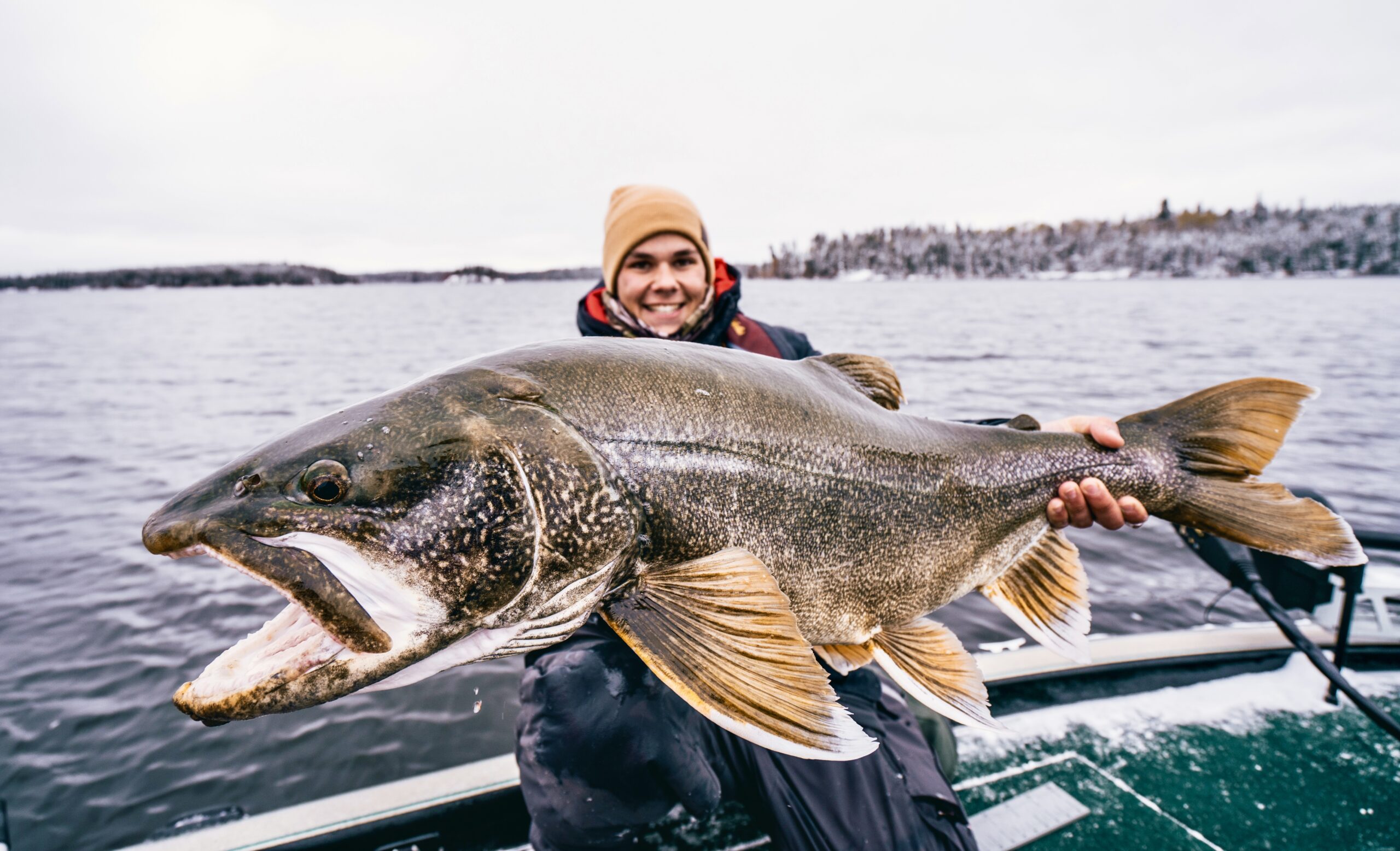
I love fishing and hunting, but, there’s something I love just a little more, and it’s filming fishing and hunting. Travelling across this incredible province working for Travel Manitoba capturing experiences and telling stories in the outdoor industry is truly a dream job and I am forever grateful for every second of it.
You can find Marcel’s work at [email protected]
