



/
RSS Feed
Welcome to the Complete Angler, your source of information on the outdoor industry in Central Canada.
With over 35 years in the field, host Don Lamont covers topics and issues with industry leaders and influencers to bring you up to speed on what’s happening in the outdoor world.
And now, here is your host, Don Lamont.
On today’s episode, we have the Managing Director of the Manitoba Wildlife Federation.
Carly Deacon and I share stories on how people find a love for the outdoors.
A lot of it has to do with positive hands-on mentorship with those willing to share their experiences.
Her work and others like her are giving women and families an opportunity to learn about all things outdoors.
Hey Carly, it’s nice to have you back on the show.
It’s been a couple of years.
It has.
Thanks for having me, Don.
Lots changed in that time.
It has, yeah.
Seems to change yearly, actually.
Yeah, it does.
We can actually see people again and the borders open and so we can have visitors from other places in the world.
And it’s been a pretty crazy time.
You know, I think the impact, the thing that impacted me the most, and it wasn’t a negative thing.
It was the time that we spent with family, close family, right?
I can remember actually going out.
Dad, you know, finally my kids are asking me, do you want to go fishing?
You know, there wasn’t anything else to do.
Or do you want to go outdoors?
Do you want to go on a trip?
Or, you know, so it was fantastic from that.
I got my wife, she, you know, she had kind of, you know, she wanted to fish, but she wasn’t that keen, but she got keen again.
Awesome.
She wanted to go golfing.
So, and then what changed was we decided during COVID that we wanted to go on a family fishing holiday every summer.
So we’ve been doing that for the last three years.
And you know what?
It’s been absolutely fantastic.
So the reason I’m having you on the show today, since you’re so involved through the Manitoba Wildlife Federation
and all your different programs, teaching people about hunting and fishing, have you really seen a change in especially family participation and new participants?
Oh yeah, tons.
And I would say, Dawn, this dates back like 20 years, in my opinion.
Because 20 years ago, when I started hunting and fishing, I didn’t see a lot of families.
It just felt like a different, it felt like a different vibe around the whole perspective of hunting.
And that shift over the years, I feel, has really almost saved hunter recruitment and retention in Canada.
Like, it’s a difference between, you know, flipping through a magazine and seeing, and not to be, this isn’t meant to be rude or anything,
but, you know, men with painted faces and angry and stormy weather and heaps of birds versus now you flip through, you know,
magazines and see industry leaders telling the story around what our hunting community is.
And it’s not that.
It’s family and food and time in the outdoors and smiling faces and labs and all this amazing things that we do.
And so, so that has related to me more over the years.
And I can suspect that it’s related to women and families and people that would have otherwise been intimidated to try to get into hunting or angling.
But that shift has helped us enormously.
But then COVID, with that, I mean, COVID rewired our brains to start focusing on things that we can do that are simple and affordable and, you know, away from the public.
And it automatically turned us to outdoor adventures and it forced us to rebalance our priorities in our life.
Like, it rebalanced my priorities in terms of how much time I spend with my daughter, Bray, and the things that we do that mean the most to me,
and the things that I want to share in that time is just like, it’s so important to me.
So, that outdoor physical activity is, it’s rebalancing your priorities, but it’s also very healing.
Like, people use that through COVID as physical and mental healing, I think.
So, all those things combined have been enormous for recruiting new families and women into hunting and that on top of programs that we can get into, but just more opportunities to try it as well.
The reason this conversation started is a piece of paper came across my desk.
Well, it’s not paper anymore.
It’s an email from the U.S., the Fishing for the Future Foundation.
And they set out some amazing stats, which, in fact, was that 37% of the anglers in the U.S. are female.
They had, last year alone, they had 1.5 million new female anglers in the U.S.
I mean, obviously, they have a lot higher population density than we do, but I think that just gives you an idea, a baseline of, yeah, the impact of just what you said,
that people have to go and do something they feel safe about, and they’re not intimidated anymore about being outdoors.
It’s almost like a healing process.
It is, for sure.
And hunting and angling and trapping and hiking and camping and gardening, they all fall into the same niche, right?
It’s just a family event that you can do in the outdoors, and there’s really not a difference between one and the other, except that one may require a little bit more mentorship.
And that’s where folks that maybe don’t have family members or people within their concentric circles to take them rely on programs that happen across Canada that have been expanding exponentially for the last 10 years,
I feel, as the U.S. and Canada have taken, you know, hunter recruitment and retention as more of a priority, as we’ve seen hunter numbers decline.
They’re looking at ways of exposing opportunities to people that may have been originally intimidated or not know how to get into it.
Yeah, that’s a big part of what the Benitova Wildlife Federation does, and we do through the hooked media that we do.
How do you get involved, learn to fish, learn to hunt, all of those things, basic information.
One of the other things that’s really been growing, too, you mentioned gardening, but also foraging.
You know, people want to get out, whether it’s pick a mushroom and understand, you know, all these, you know, you go out in the forest and you pick a mushroom,
and then you come back and you prepare it, you learn how to do all these things.
There’s a lot of growth in that industry as well, so it’s been really, really fascinating stuff, and I don’t know, it’s hard to believe.
So what are some of the things, sorry, go ahead, Carl.
Sorry, no, I was just, I find that very interesting, because we ran some seminars on foraging, and the participation was massive,
and it just, I feel like people, anything that has to do with harvesting your own food has really become a highlight in the last little while,
where when you can get out in the outdoors and actually put the work in to harvest your food has been appealing to a lot of demographics,
so it has been interesting there.
There has been a lot more people coming forward and wanting that kind of education,
so Federation has been offering a few of those seminars lately.
It’s been neat.
Oh, that’s great.
A prime example, you know, we went on a flying fishing trip.
My kids always wanted to do one.
We’d never done one until last summer, and we went in.
But what was so unique was that it wasn’t just about the fishing.
You know, the fishing was just part of the experience.
It was the hiking, the picking berries, you know, going down backcountry trails to another lake just to view the falls,
just, you know, see a, what do you call that, a woodland caribou, you know, running along the shoreline.
I mean, just fantastic stuff.
And then, you know, we come in for a nice leisurely lunch and have a couple card games and go back and fish for three hours
and come back and have a nice supper, go out for an evening fish.
I mean, and it’s just always so great to be around your family and just enjoy those times together.
Yeah, definitely.
It’s awesome.
So, you were recently in Saskatoon for a conference.
Maybe you could tell us a little bit about that, Carly.
Sure.
Yeah, this was something brand new.
It was called Advancing Women in Conservation Summit.
So, this is the first year that it was launched.
Saskatchewan Wildlife Federation took the lead in it, but pulled in.
There was about five or six women from across Canada, including myself, that was on a steering committee,
just trying to help with the organization and pulling it all together.
We met in Saskatoon with about 100 other ladies, and we talked about everything from skill building seminars to accessing resources,
eliminating barriers, increasing opportunities and careers, but all based around conservation and the outdoors as well.
We did have some guest speakers on hunting and how to get involved in hunting and angling in the outdoors.
So, it was just this incredible dynamic of women in a supportive environment that wanted to just…
So, it was a networking opportunity for women.
We talked about mentorship.
We talked about everything from public speaking to networking to becoming leaders in your industry, paving the way.
Like, we had guest speakers from enforcement branches to say, like,
Hey, women in enforcement, here is how I went through my career.
Here are the challenges and the benefits and the things I did right and the things I did wrong.
And it was just a really, really cool environment.
And for the first one, I was really impressed, really impressed.
And so, we’re planning the second one now.
It’s going to be in Moncton, New Brunswick.
Probably the same timing, yeah.
So, like, beginning around November time of year.
And it’s open to anybody.
It’s open to anybody, whether you just want to be involved in conservation or wildlife or fishing or hunting or anything in the outdoors.
If you want to be a volunteer, if you want to pursue your career in it, or if you are already established in your career and you just want to network and help other people come up the ranks.
It’s just a really inclusive event for anybody.
That sounds like a really great program.
That’s awesome.
Yeah.
So, what are some of the things, is there anything new that you’ve been doing in the Manitoba Wildlife Federation as far as programs since we talked two years ago?
Well, we’ve gotten started doing programs again after COVID.
So, we haven’t really been able to expand on a lot of programs in the last couple of years.
But we have come back and reinstituted all the programs that we had running.
And then now we have a dedicated staff member, Chris Benson, here that is in charge of all of our hunter ed recruitment and angling recruitment and Chase Drellick as well as on staff for angling side.
So, we have BOW again becoming an outdoors woman in June.
That’s a huge one.
We did have various fishing clinics for women with the Manitoba Fly Fishers Association helped and partnered with that.
So, we had a few of those going on.
But I have noticed that just in Manitoba, there has been some really keen women that have started their own programs, which is really good to see.
And that’s exactly what we want.
Because the Federation, as a staff of eight, isn’t going to be able to execute programs province-wide to give everybody opportunity.
So, to see other people take the reins and deliver these programs is massive.
And I’ve seen in the last little while, there’s like trips to Crowduck Lake, all women’s learn-to-fish clinics with Erin.
There’s women’s fishing derbies happening, which is just a fun way to get women out on the ice, whether you’re experienced or not.
So, I see these starting to pop up by these keen ladies that I feel share the same passions as we do at the Federation here, just as, you know, had a great experience and now wants to pay it forward to other women.
So, there’s lots there.
And I’ve also seen a lot more momentum in social media, like groups of women that have participated in MWF programs, congregating on Facebook page sites, sharing information, asking each other questions, inviting other opportunities to come out and meet again, and just building friendships in that hunting community.
So, the social media aspect of that has really gone a long way with some of these programs and taking these women to the next level.
Yeah, I’m glad you mentioned that.
I got to meet Erin at the outdoor show.
She was doing a seminar on getting women involved in ice fishing, and she’s very professional, does a great job, and I understand her program is very successful.
She’s a gangbuster, yeah, and she’s offering two this year.
I just talked to her yesterday about it, and she’s offering one in June and one in September because of the high demand.
Okay, how can people find her?
She said it’s through the Facebook page, her Facebook page.
So, I don’t have all that information with me, but probably the female anglers of Manitoba, is that her?
I think so, yeah.
Yeah, so if you go to their Facebook page, registration, she said, is supposed to be up, either yesterday or today.
So, I believe all the registration details is posted there, and women can sign up.
New or reoccurring.
She’s open to both.
So, pretty fantastic to see other women taking the reins and getting these programs going.
Yeah, you know, I mentioned my family holiday.
Your family’s been involved every summer in going out to Temple Bay Lodge, correct, and having a family get together there.
I saw you holding a nice walleye.
Are you a pretty good angler?
Well, it gets competitive.
We had some prizes on the line, so I had to bring my A game to that one.
But, no, I don’t fish enough, man.
Life gets so busy, you don’t fish enough, but we have a little fishing boat that we get around in, just the three of us.
And I absolutely love it.
I’m more of an open water fisher than an ice fisher lately, just because of the equipment that we have.
But that trip is one of my favorite.
I think there’s 17 of us that go, and we’re, like, outnumbered by kids.
And it’s just pontoon boats and fish fries and kids jumping off the sides and dogs and total craziness.
But it is probably the best five days and my favorite five days of the year.
It’s just so much fun.
So, how do we get more hunters and fishers on the landscape, Carly?
Well, I think we keep providing opportunity.
I think we keep providing programs and engaging programs that connect them to the hunting community.
And that’s the biggest part.
And I always talk to our clubs about this, Dawn, about, you know, succession and building a hunting community and engaging your community through programs.
And one of the most amazing thing about programs is that when you provide somebody with a life-altering experience, and I’m going to call it life-altering because it feels like that to them.
For someone that’s never shot a rifle or shotgun or never caught a fish or never been on the ice, ice fishing or whatever it is, you’re providing them with something that they’ve never experienced before or never thought they could experience before.
And it’s empowering.
It’s empowering, but it’s also, you also kind of feed this urge for them in appreciation that they want to always pay that forward because they’re so appreciative.
And these programs sometimes, like participants leave, and there’s tears running down their faces, and they’re hugging their mentors saying, thank you.
Like, I never thought I could do that, and now I did it, and now I want to train someone else to do it, or take my kids out next weekend, or share this passion that you’ve given me.
So I think recruitment comes from sharing our passions, from mentorship, from education, from just giving more people opportunity that didn’t think that they could have that opportunity to try it.
And I think our programs and the programs that are happening all across Canada right now and the US are doing just that.
You create monsters, you create these amazing monsters that instantly become engaged, that instantly become protectors of our resources because they want to see it pursued, and they instantly become, you know, leaders in hunter recruitment and some of our programs.
We often see a lot of our volunteers coming from past program participants.
And to me, that is succession and recruitment at its finest.
You’re taking somebody that is a novice, and you’re turning them into an instructor at becoming an outdoors woman, or a volunteer at one of our fly fishing clinics.
So I think that’s where recruitment lies, in my opinion, is just getting and reaching out there, opening doors for folks, looking in your concentric circles, who have you not invited within your family, your friends, your business, wherever, and bringing them out and giving them that first-time experience.
So it’s really the hands-on stuff that has the final impact.
So I think so.
I think so.
So we tried virtual seminars through COVID, you know, waterfowl seminars, mushroom-picking seminars, everything, and the engagement is there, the participation is there.
But the retention, I don’t think, is that that is the key, is just, it’s breaking down the barriers, it’s introducing yourself as someone that they can come to later and ask questions or go hunting with or fishing with again.
So it’s building the hunting community, or the angling community, really, it’s, it’s providing them with opportunity, but it’s also connecting them with like-minded people so that they can build their own family and friends of people that they can go out again with.
And that’s where family comes in, right?
Like you train a dad or a mom, their kids are more likely to become anglers or trappers or hunters.
So, yeah, I get that question a lot, you know, from either a single mother or a dad, a single parent, and they say, I don’t know anything about fishing, but my kids really seem interested in it.
How should I go about it?
Well, depending, you know, depends on income.
If, you know, if they’re fairly well off, you could actually take your kid out for a day with a guide.
So they learned something about how to, you know, bait your hook, what to use, what to look for and that kind of thing.
So that’s one option, but that’s, that’s kind of a high end option.
And then the learn to fish programs, which, you know, I was involved in with for 40 years.
We put thousands of kids through that and gave them rods and reels.
And, you know, it’s unfortunate some of that stuff went by the wayside, but I know that MWF is trying to do some of that stuff, you know, go down and fish from the shores.
They’re red, the Assiniboine rivers.
And I mean, it doesn’t have to be complicated, you know, and I know there’s a lot of parents that I’ve talked to during COVID where the kids were stuck in the city.
And, you know, they’re having, they would just ride their bikes up and down the Assiniboine and Red River and catch fish.
And it was just a blast, you know, so, I mean, I went shore fishing during COVID in Winnipeg.
I thought it was fantastic with my friends.
It was great.
Yeah.
Yeah.
So you just, you know, you got to get out there and experience it and get the thrill.
I mean, that’s how I got in this industry.
When I was broadcasting up in Prince Edward, Saskatchewan, I never fished when I was a kid.
You never hunted when you were a kid.
I know you told me, and then you got involved with some people at work that did, did that.
And that’s what happened to me.
I got involved with some people that I worked with and I fell in love with fishing and I caught my first big fish and the opening of the walleye season in Prince Edward in the North Saskatchewan River and the rest is history.
So, you know, that’s it.
That’s it.
Yeah.
That’s it in a nutshell.
Yep.
Yeah.
100%.
Yep.
Okay.
Is there anything you wanted to add before we wrap this up, Carly?
I don’t think so.
We appreciate the opportunity to chat with you as always.
Conversation’s always good.
Well, I’m going to put that picture of that big walleye in the podcast right up so that people can see it.
Yes, you do catch big fish.
And you’re just not a really good hunter.
You’re also a pretty darn good angler.
Well, thanks.
Okay.
Thanks so much again, Carly, for coming on the show.
Thanks so much.
Appreciate it.
Take care.
Okay.
Thanks for tuning in.
Visit hookedmagazine.com to subscribe to The Complete Angler and never miss an episode.
With over 35 years in the field, host Don Lamont covers topics and issues with industry leaders and influencers to bring you up to speed on what’s happening in the outdoor world.
And now, here is your host, Don Lamont.
On today’s episode, we have the Managing Director of the Manitoba Wildlife Federation.
Carly Deacon and I share stories on how people find a love for the outdoors.
A lot of it has to do with positive hands-on mentorship with those willing to share their experiences.
Her work and others like her are giving women and families an opportunity to learn about all things outdoors.
Hey Carly, it’s nice to have you back on the show.
It’s been a couple of years.
It has.
Thanks for having me, Don.
Lots changed in that time.
It has, yeah.
Seems to change yearly, actually.
Yeah, it does.
We can actually see people again and the borders open and so we can have visitors from other places in the world.
And it’s been a pretty crazy time.
You know, I think the impact, the thing that impacted me the most, and it wasn’t a negative thing.
It was the time that we spent with family, close family, right?
I can remember actually going out.
Dad, you know, finally my kids are asking me, do you want to go fishing?
You know, there wasn’t anything else to do.
Or do you want to go outdoors?
Do you want to go on a trip?
Or, you know, so it was fantastic from that.
I got my wife, she, you know, she had kind of, you know, she wanted to fish, but she wasn’t that keen, but she got keen again.
Awesome.
She wanted to go golfing.
So, and then what changed was we decided during COVID that we wanted to go on a family fishing holiday every summer.
So we’ve been doing that for the last three years.
And you know what?
It’s been absolutely fantastic.
So the reason I’m having you on the show today, since you’re so involved through the Manitoba Wildlife Federation
and all your different programs, teaching people about hunting and fishing, have you really seen a change in especially family participation and new participants?
Oh yeah, tons.
And I would say, Dawn, this dates back like 20 years, in my opinion.
Because 20 years ago, when I started hunting and fishing, I didn’t see a lot of families.
It just felt like a different, it felt like a different vibe around the whole perspective of hunting.
And that shift over the years, I feel, has really almost saved hunter recruitment and retention in Canada.
Like, it’s a difference between, you know, flipping through a magazine and seeing, and not to be, this isn’t meant to be rude or anything,
but, you know, men with painted faces and angry and stormy weather and heaps of birds versus now you flip through, you know,
magazines and see industry leaders telling the story around what our hunting community is.
And it’s not that.
It’s family and food and time in the outdoors and smiling faces and labs and all this amazing things that we do.
And so, so that has related to me more over the years.
And I can suspect that it’s related to women and families and people that would have otherwise been intimidated to try to get into hunting or angling.
But that shift has helped us enormously.
But then COVID, with that, I mean, COVID rewired our brains to start focusing on things that we can do that are simple and affordable and, you know, away from the public.
And it automatically turned us to outdoor adventures and it forced us to rebalance our priorities in our life.
Like, it rebalanced my priorities in terms of how much time I spend with my daughter, Bray, and the things that we do that mean the most to me,
and the things that I want to share in that time is just like, it’s so important to me.
So, that outdoor physical activity is, it’s rebalancing your priorities, but it’s also very healing.
Like, people use that through COVID as physical and mental healing, I think.
So, all those things combined have been enormous for recruiting new families and women into hunting and that on top of programs that we can get into, but just more opportunities to try it as well.
The reason this conversation started is a piece of paper came across my desk.
Well, it’s not paper anymore.
It’s an email from the U.S., the Fishing for the Future Foundation.
And they set out some amazing stats, which, in fact, was that 37% of the anglers in the U.S. are female.
They had, last year alone, they had 1.5 million new female anglers in the U.S.
I mean, obviously, they have a lot higher population density than we do, but I think that just gives you an idea, a baseline of, yeah, the impact of just what you said,
that people have to go and do something they feel safe about, and they’re not intimidated anymore about being outdoors.
It’s almost like a healing process.
It is, for sure.
And hunting and angling and trapping and hiking and camping and gardening, they all fall into the same niche, right?
It’s just a family event that you can do in the outdoors, and there’s really not a difference between one and the other, except that one may require a little bit more mentorship.
And that’s where folks that maybe don’t have family members or people within their concentric circles to take them rely on programs that happen across Canada that have been expanding exponentially for the last 10 years,
I feel, as the U.S. and Canada have taken, you know, hunter recruitment and retention as more of a priority, as we’ve seen hunter numbers decline.
They’re looking at ways of exposing opportunities to people that may have been originally intimidated or not know how to get into it.
Yeah, that’s a big part of what the Benitova Wildlife Federation does, and we do through the hooked media that we do.
How do you get involved, learn to fish, learn to hunt, all of those things, basic information.
One of the other things that’s really been growing, too, you mentioned gardening, but also foraging.
You know, people want to get out, whether it’s pick a mushroom and understand, you know, all these, you know, you go out in the forest and you pick a mushroom,
and then you come back and you prepare it, you learn how to do all these things.
There’s a lot of growth in that industry as well, so it’s been really, really fascinating stuff, and I don’t know, it’s hard to believe.
So what are some of the things, sorry, go ahead, Carl.
Sorry, no, I was just, I find that very interesting, because we ran some seminars on foraging, and the participation was massive,
and it just, I feel like people, anything that has to do with harvesting your own food has really become a highlight in the last little while,
where when you can get out in the outdoors and actually put the work in to harvest your food has been appealing to a lot of demographics,
so it has been interesting there.
There has been a lot more people coming forward and wanting that kind of education,
so Federation has been offering a few of those seminars lately.
It’s been neat.
Oh, that’s great.
A prime example, you know, we went on a flying fishing trip.
My kids always wanted to do one.
We’d never done one until last summer, and we went in.
But what was so unique was that it wasn’t just about the fishing.
You know, the fishing was just part of the experience.
It was the hiking, the picking berries, you know, going down backcountry trails to another lake just to view the falls,
just, you know, see a, what do you call that, a woodland caribou, you know, running along the shoreline.
I mean, just fantastic stuff.
And then, you know, we come in for a nice leisurely lunch and have a couple card games and go back and fish for three hours
and come back and have a nice supper, go out for an evening fish.
I mean, and it’s just always so great to be around your family and just enjoy those times together.
Yeah, definitely.
It’s awesome.
So, you were recently in Saskatoon for a conference.
Maybe you could tell us a little bit about that, Carly.
Sure.
Yeah, this was something brand new.
It was called Advancing Women in Conservation Summit.
So, this is the first year that it was launched.
Saskatchewan Wildlife Federation took the lead in it, but pulled in.
There was about five or six women from across Canada, including myself, that was on a steering committee,
just trying to help with the organization and pulling it all together.
We met in Saskatoon with about 100 other ladies, and we talked about everything from skill building seminars to accessing resources,
eliminating barriers, increasing opportunities and careers, but all based around conservation and the outdoors as well.
We did have some guest speakers on hunting and how to get involved in hunting and angling in the outdoors.
So, it was just this incredible dynamic of women in a supportive environment that wanted to just…
So, it was a networking opportunity for women.
We talked about mentorship.
We talked about everything from public speaking to networking to becoming leaders in your industry, paving the way.
Like, we had guest speakers from enforcement branches to say, like,
Hey, women in enforcement, here is how I went through my career.
Here are the challenges and the benefits and the things I did right and the things I did wrong.
And it was just a really, really cool environment.
And for the first one, I was really impressed, really impressed.
And so, we’re planning the second one now.
It’s going to be in Moncton, New Brunswick.
Probably the same timing, yeah.
So, like, beginning around November time of year.
And it’s open to anybody.
It’s open to anybody, whether you just want to be involved in conservation or wildlife or fishing or hunting or anything in the outdoors.
If you want to be a volunteer, if you want to pursue your career in it, or if you are already established in your career and you just want to network and help other people come up the ranks.
It’s just a really inclusive event for anybody.
That sounds like a really great program.
That’s awesome.
Yeah.
So, what are some of the things, is there anything new that you’ve been doing in the Manitoba Wildlife Federation as far as programs since we talked two years ago?
Well, we’ve gotten started doing programs again after COVID.
So, we haven’t really been able to expand on a lot of programs in the last couple of years.
But we have come back and reinstituted all the programs that we had running.
And then now we have a dedicated staff member, Chris Benson, here that is in charge of all of our hunter ed recruitment and angling recruitment and Chase Drellick as well as on staff for angling side.
So, we have BOW again becoming an outdoors woman in June.
That’s a huge one.
We did have various fishing clinics for women with the Manitoba Fly Fishers Association helped and partnered with that.
So, we had a few of those going on.
But I have noticed that just in Manitoba, there has been some really keen women that have started their own programs, which is really good to see.
And that’s exactly what we want.
Because the Federation, as a staff of eight, isn’t going to be able to execute programs province-wide to give everybody opportunity.
So, to see other people take the reins and deliver these programs is massive.
And I’ve seen in the last little while, there’s like trips to Crowduck Lake, all women’s learn-to-fish clinics with Erin.
There’s women’s fishing derbies happening, which is just a fun way to get women out on the ice, whether you’re experienced or not.
So, I see these starting to pop up by these keen ladies that I feel share the same passions as we do at the Federation here, just as, you know, had a great experience and now wants to pay it forward to other women.
So, there’s lots there.
And I’ve also seen a lot more momentum in social media, like groups of women that have participated in MWF programs, congregating on Facebook page sites, sharing information, asking each other questions, inviting other opportunities to come out and meet again, and just building friendships in that hunting community.
So, the social media aspect of that has really gone a long way with some of these programs and taking these women to the next level.
Yeah, I’m glad you mentioned that.
I got to meet Erin at the outdoor show.
She was doing a seminar on getting women involved in ice fishing, and she’s very professional, does a great job, and I understand her program is very successful.
She’s a gangbuster, yeah, and she’s offering two this year.
I just talked to her yesterday about it, and she’s offering one in June and one in September because of the high demand.
Okay, how can people find her?
She said it’s through the Facebook page, her Facebook page.
So, I don’t have all that information with me, but probably the female anglers of Manitoba, is that her?
I think so, yeah.
Yeah, so if you go to their Facebook page, registration, she said, is supposed to be up, either yesterday or today.
So, I believe all the registration details is posted there, and women can sign up.
New or reoccurring.
She’s open to both.
So, pretty fantastic to see other women taking the reins and getting these programs going.
Yeah, you know, I mentioned my family holiday.
Your family’s been involved every summer in going out to Temple Bay Lodge, correct, and having a family get together there.
I saw you holding a nice walleye.
Are you a pretty good angler?
Well, it gets competitive.
We had some prizes on the line, so I had to bring my A game to that one.
But, no, I don’t fish enough, man.
Life gets so busy, you don’t fish enough, but we have a little fishing boat that we get around in, just the three of us.
And I absolutely love it.
I’m more of an open water fisher than an ice fisher lately, just because of the equipment that we have.
But that trip is one of my favorite.
I think there’s 17 of us that go, and we’re, like, outnumbered by kids.
And it’s just pontoon boats and fish fries and kids jumping off the sides and dogs and total craziness.
But it is probably the best five days and my favorite five days of the year.
It’s just so much fun.
So, how do we get more hunters and fishers on the landscape, Carly?
Well, I think we keep providing opportunity.
I think we keep providing programs and engaging programs that connect them to the hunting community.
And that’s the biggest part.
And I always talk to our clubs about this, Dawn, about, you know, succession and building a hunting community and engaging your community through programs.
And one of the most amazing thing about programs is that when you provide somebody with a life-altering experience, and I’m going to call it life-altering because it feels like that to them.
For someone that’s never shot a rifle or shotgun or never caught a fish or never been on the ice, ice fishing or whatever it is, you’re providing them with something that they’ve never experienced before or never thought they could experience before.
And it’s empowering.
It’s empowering, but it’s also, you also kind of feed this urge for them in appreciation that they want to always pay that forward because they’re so appreciative.
And these programs sometimes, like participants leave, and there’s tears running down their faces, and they’re hugging their mentors saying, thank you.
Like, I never thought I could do that, and now I did it, and now I want to train someone else to do it, or take my kids out next weekend, or share this passion that you’ve given me.
So I think recruitment comes from sharing our passions, from mentorship, from education, from just giving more people opportunity that didn’t think that they could have that opportunity to try it.
And I think our programs and the programs that are happening all across Canada right now and the US are doing just that.
You create monsters, you create these amazing monsters that instantly become engaged, that instantly become protectors of our resources because they want to see it pursued, and they instantly become, you know, leaders in hunter recruitment and some of our programs.
We often see a lot of our volunteers coming from past program participants.
And to me, that is succession and recruitment at its finest.
You’re taking somebody that is a novice, and you’re turning them into an instructor at becoming an outdoors woman, or a volunteer at one of our fly fishing clinics.
So I think that’s where recruitment lies, in my opinion, is just getting and reaching out there, opening doors for folks, looking in your concentric circles, who have you not invited within your family, your friends, your business, wherever, and bringing them out and giving them that first-time experience.
So it’s really the hands-on stuff that has the final impact.
So I think so.
I think so.
So we tried virtual seminars through COVID, you know, waterfowl seminars, mushroom-picking seminars, everything, and the engagement is there, the participation is there.
But the retention, I don’t think, is that that is the key, is just, it’s breaking down the barriers, it’s introducing yourself as someone that they can come to later and ask questions or go hunting with or fishing with again.
So it’s building the hunting community, or the angling community, really, it’s, it’s providing them with opportunity, but it’s also connecting them with like-minded people so that they can build their own family and friends of people that they can go out again with.
And that’s where family comes in, right?
Like you train a dad or a mom, their kids are more likely to become anglers or trappers or hunters.
So, yeah, I get that question a lot, you know, from either a single mother or a dad, a single parent, and they say, I don’t know anything about fishing, but my kids really seem interested in it.
How should I go about it?
Well, depending, you know, depends on income.
If, you know, if they’re fairly well off, you could actually take your kid out for a day with a guide.
So they learned something about how to, you know, bait your hook, what to use, what to look for and that kind of thing.
So that’s one option, but that’s, that’s kind of a high end option.
And then the learn to fish programs, which, you know, I was involved in with for 40 years.
We put thousands of kids through that and gave them rods and reels.
And, you know, it’s unfortunate some of that stuff went by the wayside, but I know that MWF is trying to do some of that stuff, you know, go down and fish from the shores.
They’re red, the Assiniboine rivers.
And I mean, it doesn’t have to be complicated, you know, and I know there’s a lot of parents that I’ve talked to during COVID where the kids were stuck in the city.
And, you know, they’re having, they would just ride their bikes up and down the Assiniboine and Red River and catch fish.
And it was just a blast, you know, so, I mean, I went shore fishing during COVID in Winnipeg.
I thought it was fantastic with my friends.
It was great.
Yeah.
Yeah.
So you just, you know, you got to get out there and experience it and get the thrill.
I mean, that’s how I got in this industry.
When I was broadcasting up in Prince Edward, Saskatchewan, I never fished when I was a kid.
You never hunted when you were a kid.
I know you told me, and then you got involved with some people at work that did, did that.
And that’s what happened to me.
I got involved with some people that I worked with and I fell in love with fishing and I caught my first big fish and the opening of the walleye season in Prince Edward in the North Saskatchewan River and the rest is history.
So, you know, that’s it.
That’s it.
Yeah.
That’s it in a nutshell.
Yep.
Yeah.
100%.
Yep.
Okay.
Is there anything you wanted to add before we wrap this up, Carly?
I don’t think so.
We appreciate the opportunity to chat with you as always.
Conversation’s always good.
Well, I’m going to put that picture of that big walleye in the podcast right up so that people can see it.
Yes, you do catch big fish.
And you’re just not a really good hunter.
You’re also a pretty darn good angler.
Well, thanks.
Okay.
Thanks so much again, Carly, for coming on the show.
Thanks so much.
Appreciate it.
Take care.
Okay.
Thanks for tuning in.
Visit hookedmagazine.com to subscribe to The Complete Angler and never miss an episode.
On this episode we talk with Carly Deacon about the upsurge in participation of women in hunting and fishing. Carly, who is the managing director of the Manitoba Wildlife Federation, was awarded Canada’s Top Outdoors Woman in 2017. She outlines how women and families can get involved in the many programs now available to help people enjoy their outdoor experiences.
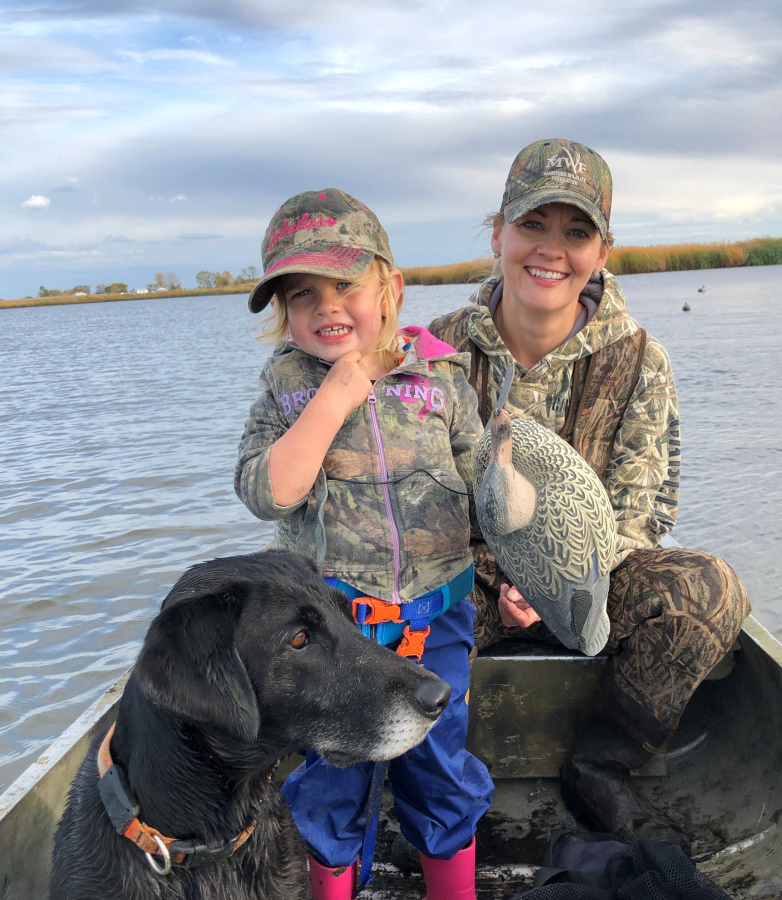
Carly has managed the Hunter Education Program for Manitoba for the past 11 years and has spearheaded a successful revamp of the online program. She also loves to fish and has been know to land some trophies!
