


Baits you need to have tied on this year
With all of the guide trips I have done over the years, it’s interesting to see the baits that people show up with, tied to the end of their rods or the baits they see in my boat and want to try. Often, they are the bright, loud, gaudy baits that would be fun to catch a fish on. Sometimes those baits work well, but often they are not the best option.
MULTI SPECIES ADVENTURE
When I write these columns for Hooked, it’s with an intent to help you all catch more fish, of all species. This column – all about baits you should have tied on this season – is going to hit on the Smeltinator jig and the Ned rig, which I have talked about in the past. The fact is, in central Canada these baits are fish catchers, so you should have them as part of your arsenal, not only for bass but for walleyes, trout and other species you’re trying to catch.
At the end, we’re going to discuss big baits…oversized swimbaits mostly, but bigger baits in general and their ability to generate bites, especially from bigger fish. There are times when they shine.
Smeltinator for the minnow eaters
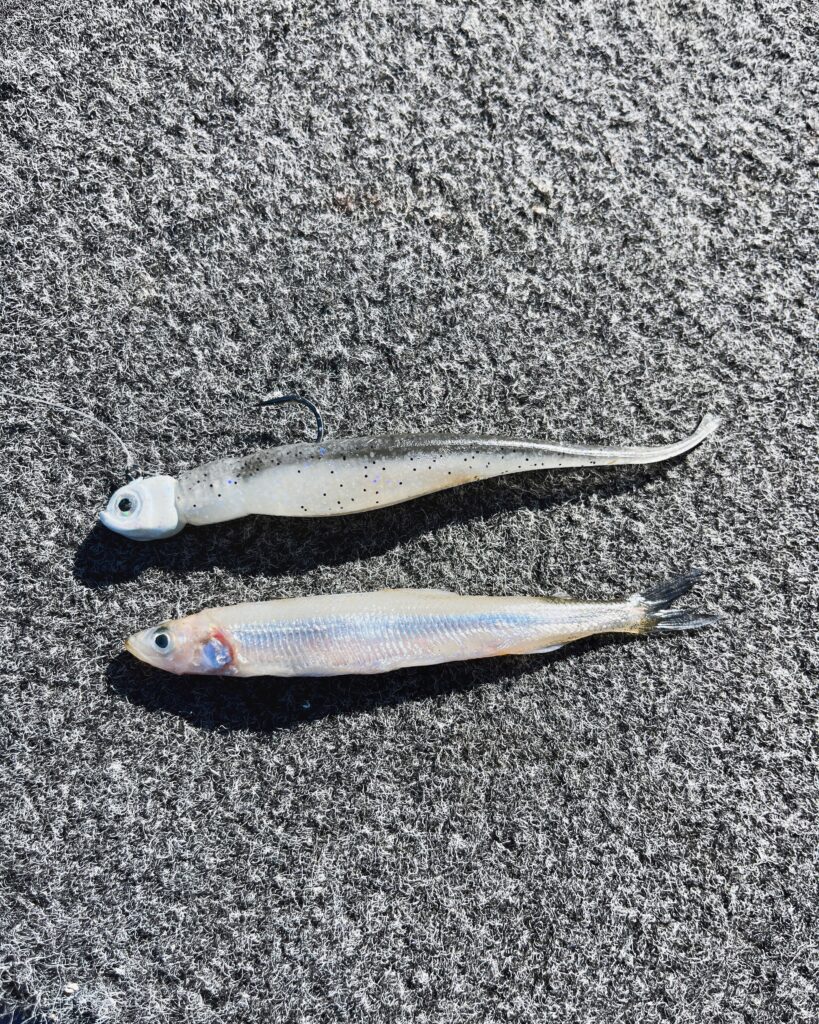
The Smeltinator Jig, designed and created by Bryan Gustafson at Lake of the Woods Sports Headquarters, has been a staple in my tacklebox for over a decade. It was the first jig we had available with a life-like, minnow shaped head that came with a quality Gamakatsu hook in it.
We have used these jigs in conjunction with minnow baits and swimbaits for years for a number of species. I have caught thousands of fish on the Smeltinator jigs and won a lot of money in tournament competition with them. Most of the sport fish that we target eat minnows, so using these minnow-imitating baits is natural.
If you follow the professional bass tournament scene, you have seen that a jig head tipped with a minnow bait has been one of the most dominant baits in recent years, especially when used in conjunction with forward-facing sonar. On the pro walleye scene, we’re seeing a similar trend, where anglers are going away from live bait in many events, instead using jig heads tipped with soft plastics to win tournaments.
With the Smeltinator Jig, it comes in four sizes (1/8 oz – ½ oz) and offers five different hooks sizes from 1/0 up to 5/0. This allows you to match up the jig head to almost any sized minnow imitator in your tackle box. The most often used jig for me is the ¼ ounce, 2/0 model, which I’ll use for all of the 3.5” to 4.5” baits. As baits get bigger, or I’m chasing bigger fish, I’ll use larger hooks. The 5/0 is going to fit those 6” and 7” baits. It an especially awesome head for big lake trout, in the ½ ounce model.
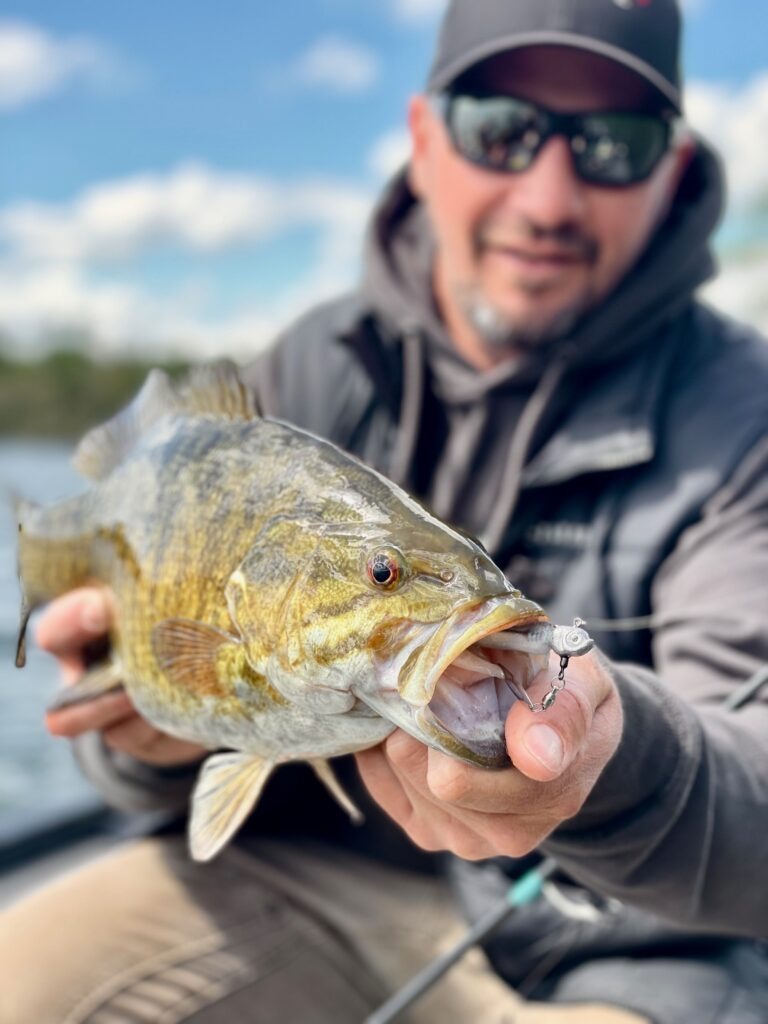
For me, I’m mostly using straight tailed minnows, like the Z-Man Jerk ShadZ or small swimbaits like the MinnowZ or Slim SwimZ. In general, for bass, I like the straight-tailed baits the best and for walleye, I really like the small swimbaits. If it’s windy, sometimes the swimbait gets a little more attention. I like to use the Slim SwimZ on the Smeltinator Underspin, which just gives it a little different look.
As a general rule, if you’re using your electronics to watch your bait and see fish, you should try to always keep your minnow baits above the fish, make them swim for it and work for it a little bit. If you’re simply casting, try to hit the sweet spots, like the tip of a point, a windblown cove or a mudline. Both bass and walleye love to set up on mudlines on those breezy days.
Finally, make sure you rig your bait up straight on the jig head. If it’s not perfectly straight, it’s going to twirl, twist your line and not look natural. It takes some practice to get these baits rigged up perfect, but it’s worth taking the time to do it right.
Shake that Nedster
The Ned rig has been popular for about a decade. If you haven’t used it, you have surely heard of it in the past. It is a small, straight-tailed worm, rigged up on a mushroom style jig head. It’s a plain, boring looking rig but it’s a great crayfish, bug and minnow imitator that simply catches fish.
There are times when the minnow baits shine, like when fish are in deeper water and really focused on eating minnows, but a lot of the time, the Ned rig is the deadliest weapon in my boat. I have won a bunch of money in tournaments around Lake of the Woods and Rainy Lake with the Ned and it’s better than live bait for walleyes if I can use my electronics.
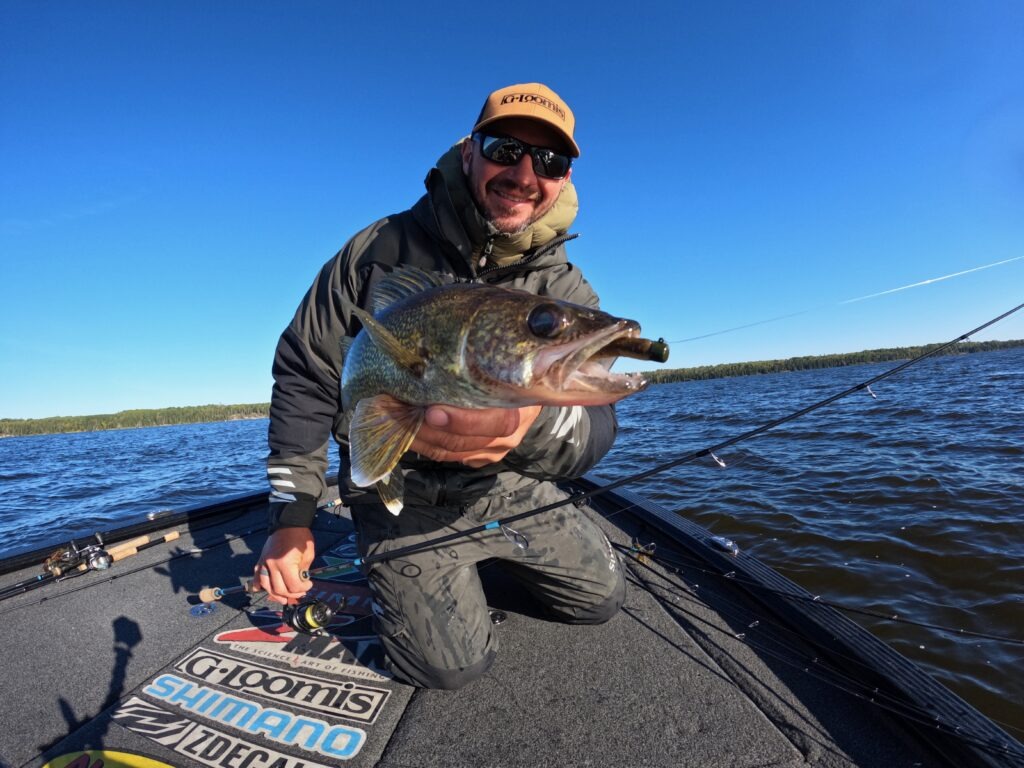
The Ned rig is a bottom bait so you’re letting your jig sink to the bottom, then shaking it along or snap-jigging it along to generate strikes.
Around home, my favourite place to toss a Ned rig is around areas that have a mixture of sand and boulders, where a lot of crayfish can be found. It’s also a lethal bait for pitching to fish you see on your sonar.
Like the minnow, rigging the Ned rig up straight is important so that bait falls straight. I tend to use slightly heavier jigs because I usually just want the jig to get to the bottom and then I’ll start working it along. For under ten feet, I’m going with a 3/16-ounce jig and for water deeper than ten feet, I’m going with a ¼-ounce. I carry some 3/8-ounce finesse football jigs in my boat as well that are for use in deeper water (25 feet plus) or heavier current.
The Z-Man TRD is the most popular Ned bait and it’s a good one that comes in a variety of colours. For me, I seldom use anything except a Z-Man Hula StickZ, which is a slightly longer 4” worm with tentacles on the end of it. I cut off a little less than an inch on a fresh bait, to shorten it up a bit. Since I started using this bait in 2016, there’s no telling how many fish I’ve caught on it. Thousands of bass and walleye. The Ned rig is legit, just get it in front of some fish and shake it on the bottom. Some days, imparting short snaps into the bait will generate reaction strikes.
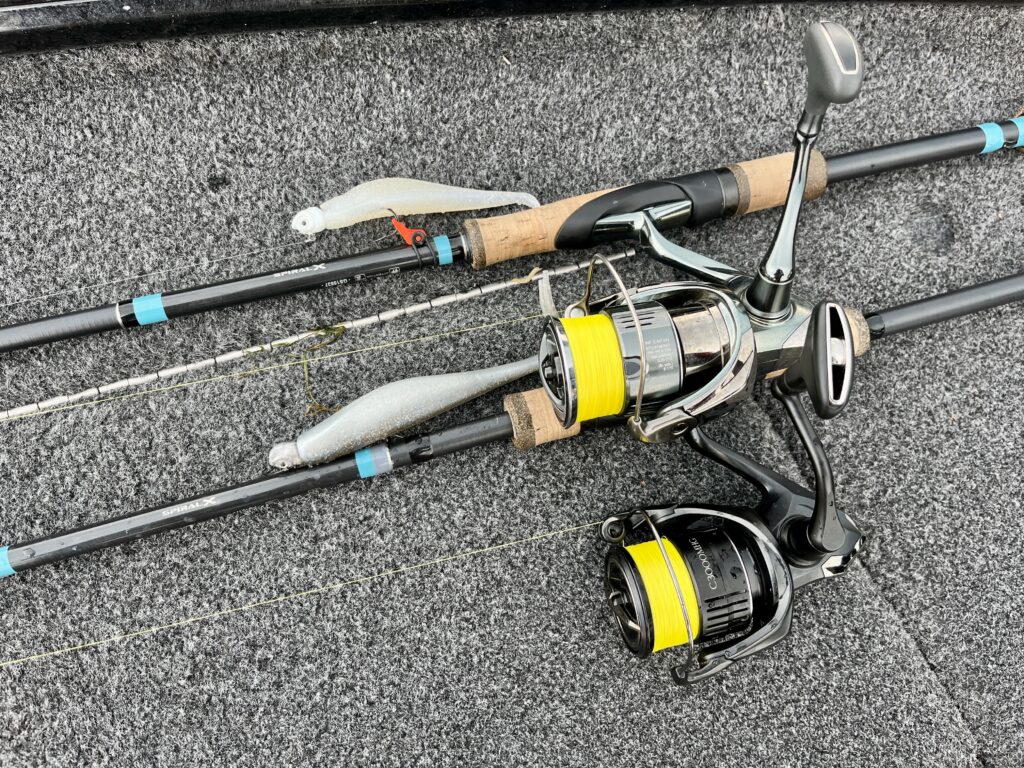
Both the minnow and Ned rig are best thrown on a medium action spinning rod. My favourite all-around stick is a G.Loomis NRX+ 842, a seven-foot rod with a beautiful action for fishing these baits. I like to rig up for both with a 10 lb Power Pro braid main line, then attach a ten-foot leader of 10 lb fluorocarbon with an FG knot. My preference is for a 3000 sized spinning reel because I feel like I get less line twist with the slightly bigger spool.
Give the big baits a shot
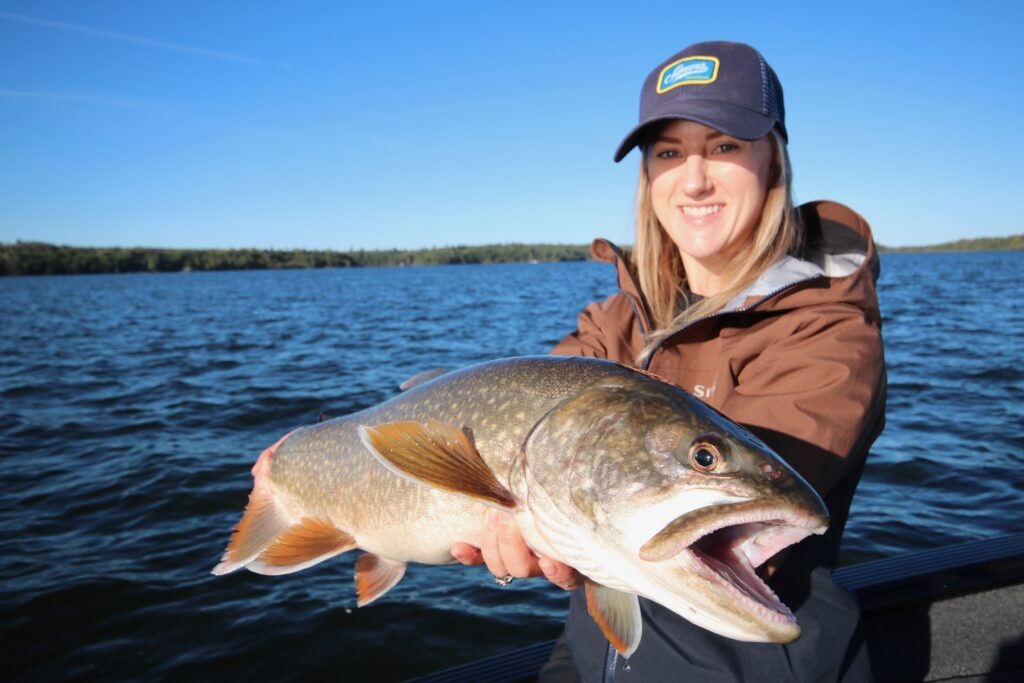
On the bass tournament scene there has been a trend towards using bigger baits in recent years, even on waterbodies that aren’t known for trophy bass. Anglers are using larger swimbaits and glide baits to trick the biggest bass in the system, even on northern fisheries where finesse tactics have typically dominated.
Using these big baits is one of the weaker parts of my game but it’s something I’m going to continue to work on a little more moving forward. Some of my best friends out on the Bassmaster Elite Series are incorporating these big baits into their program at most fisheries and catching big fish on them.
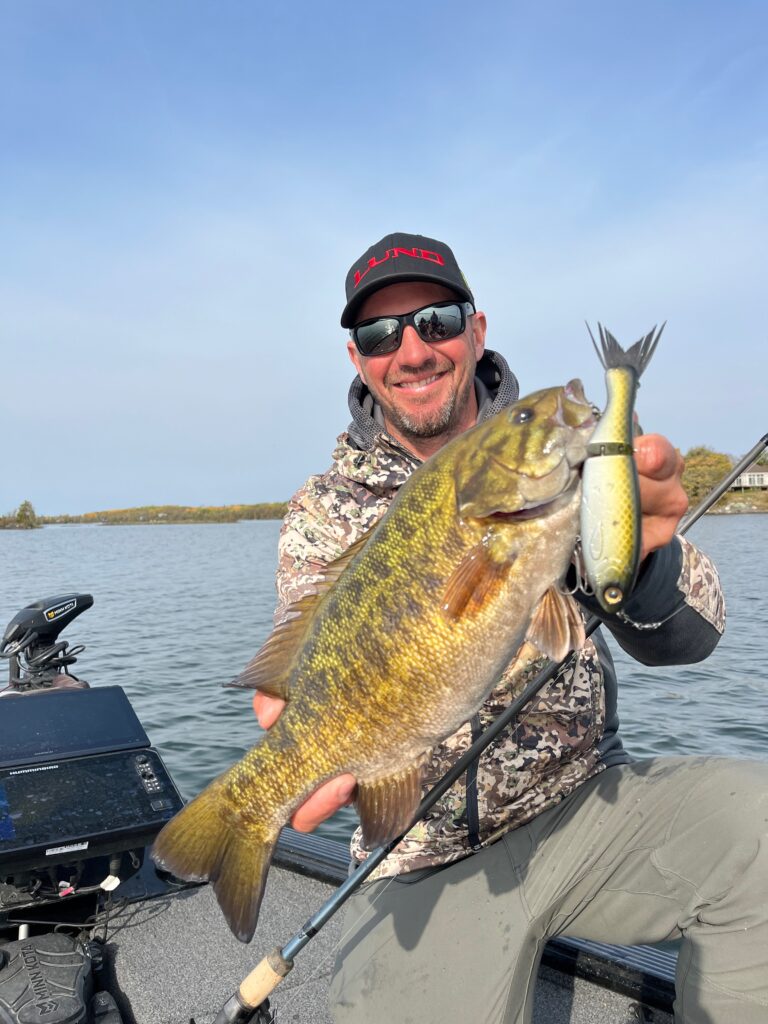
Last year I started using them a little bit more around home and caught some of my biggest smallmouths and largemouths on six- and seven-inch glide baits. These are generally for use in shallow water but anglers are weighting them to use deeper in conjunction with forward sonar.
The thing with these big baits is they have the ability to capture the fish’s attention and then how you work the bait is the triggering mechanism to get them to bite. With the soft-bodied swimbaits, it’s generally a slow and steady retrieve, incorporating a few changes in speed with your reel. With the glide baits, you actually use your reel to move the bait, not the rod, like you would with a jerkbait. You make quick turns with the reel handle to move the bait, causing it to glide back and forth. I have been throwing these baits on heavier G.Loomis baitcasting rods, with 20-25 pound fluorocarbon. A flipping stick will work but I just got my hands on the IMX-PRO 966 SWBR, an 8-foot rod designed for throwing these baits and it is sweet!
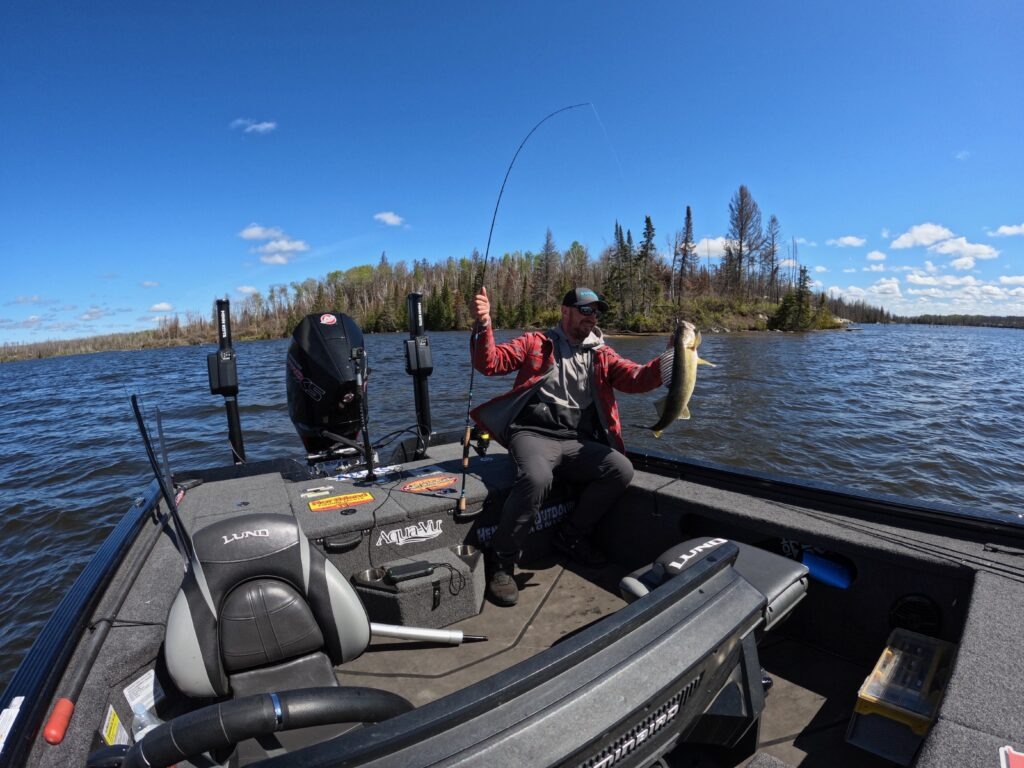
Throw these big baits around shallow cover like trees, docks, boulders and points. Places that could hold a fish. If you chase fish other than bass, the same principles apply. Throw oversized baits at fish that you can see on your electronics or around fish holding cover and see how they react, sometimes you’ll be surprised!
Last year I caught pike, lake trout and walleye on oversized baits, so it’s not just a bass thing. It’s fun throwing them, having that feeling that you’re going to get an oversized bite. Just don’t be surprised when a small fish, the size of the bait, takes a run at it too!
The open water season is just around the corner for everybody in central Canada. Try and incorporate some of these baits into your arsenal and have a great season on the water!
