

With over 35 years in the field, host Don Lamont covers topics and issues with industry leaders and influencers to bring you up to speed on what’s happening in the outdoor world.
And now, here is your host, Don Lamont.
On today’s show, we talk to friend Wes David about his 10th year hosting and producing Fishing the Wild West television.
A former professional bull rider, Wes turned his love for the outdoors into a full-time career.
Besides the television show, Wes pens articles for a variety of outdoor publications, including Hooked magazine.
Hello, Wes. Welcome to The Complete Angler podcast again.
Hello, Don. It’s great to be back.
Yeah, it’s been a few years, but this is a pretty special year for you and Chuck because you’re going into your 10th season.
Man, that’s a long time.
Yeah, we’re extremely proud of it, for sure.
And, you know, not only 10 years of Fishing the Wild West TV, but Chuck and I have been doing it together for 10 years.
And, um, it’s, we’re very flattered.
It’s been a, it’s been incredible.
Well, it’s a credit to you guys that you’re still together because 10 years, even in a marriage sometimes, is a long time.
Chuck is easier to get along with than my wife.
He just wants to go fishing.
Yeah, there you go.
Yeah, yeah.
He’s a, he’s a great cameraman and a great guy.
So you’re lucky to have him.
I was very fortunate.
I had Ian Rogers when I did the show and he was very much like Chuck, hardworking and, and would do anything to make the show look good.
And, and as you know, he, because we’ve been together so long and, and probably with you and Ian so long, truthfully, he’s the boss.
When we’re on the boat and the camera’s rolling, he’s the boss.
He knows, I can’t see what he’s seeing, you know, and he’ll stop, he’ll stop a shoot to make sure, you know, the sun’s not in the camera, you know, whatever the case may be.
So it’s, yeah, it’s a pretty good marriage, as you say.
Yeah.
I mean, it’s a little more complicated than people would think.
You know, it takes experience to know what you need, what shots you need, you know, what looks good, what doesn’t look good.
So it, it does take some experience, but wow, 10 years, what have you got planned in this big celebration?
Well, we’re coming out to Manitoba.
Matter of fact, we’re leaving Saturday for Lake Winnipeg.
As you know, there’s been lots of shows and different things done on Lake Winnipeg through the ice.
We did one two or three years ago, open water, and had an incredible time, had a little wind issues, some weather issues.
So we’re coming back, coming back next week.
Then we’re going to Rice Lake from there, and then somewhere into, yeah, I’m getting older, Dawn.
I need my schedule in front of me to know where I’m at next.
Well, you’ve, you’ve been to a lot of different places across Western Canada, that’s for sure.
And we got a, there’s a, it’s a little bit different this year too.
There’s, we’re, we’re very fortunate.
Again, Flattered Networks have, have really stepped up to promote and support our 10th season, Hooked Magazine as well.
So there’s a lot of, there’s a lot more things going on that, you know, to help, help us with this milestone.
Well, that’s good.
And, you know, speaking of, you’ve been to all these different places.
Maybe you could mention some of your bucket list destinations, some of the trips that you were thought were, were pretty memorable.
Oh, I don’t even know where to say, everything has been, been an experience.
For sure, one that really stands out is, you know, 200 pound halibut on the West Coast.
My first Thai salmon, you know, one after another monster catfish on the Red River.
Walleye from, from, you know, throughout the Western provinces or Prairie provinces, you know, the, the river fishing in and just every experience, every lodge that we go to, you know, as a, as a trip of a lifetime, there’s always something unique.
And truthfully, the last three, four years, we’ve kind of forced ourself to slow down and appreciate the sights and sounds and smells and everything along the way, you know, not just the fishing.
Because there’s, when we go into a lodge or, you know, we’re, we’re, we’re going to do a job, whether it’s a drive to lake, a lodge, you know, we’ve, we’ve got an agenda.
And, you know, we’re trying to put out the best episode we possibly can.
And we kind of miss, you know, some of the things, whether, you know, be other tourist things going on sites.
And so we’ve slowed down the last few years and just really taken in, you know, our country, you know, seeing the things that we get to see, meeting the people we get to meet.
And, um, the fishing has always spoke for itself, but slowing down and taking advantage of everything else around us is, as, uh, I’m glad we, glad we realized to stop and do that before it was too late.
Well, a prime example, that was the show I really enjoyed this year from Kenosie Lake, when you had that gentleman that won that award for his agriculture.
Yeah, Les Johnstone, he, uh, colourful character, farmer, rancher, his whole life.
And I have farming, ranching, agriculture background.
He was inducted into the Saskatchewan Hall of Fame for, you know, his work within the cattle industry,
his work in the 4-H industry and, and bringing youth into agriculture.
And, uh, he’s retired now and spends his time fishing.
And, uh, I ran into him probably five years ago and, you know, we hit it off right away and it just worked out for schedule wise last year.
And I got to fish with him and, and learn more about his, his story.
And there’s all kinds of things like that, like Chuck and I, we’ve been, you know, in any of the provinces pull up for gas to fill up the truck and fill up the boat and ended up being there for 45 minutes to an hour visiting with people.
And, and I, I think that’s what, um, really stands out and what I’ll remember the most when I retire is, is the people you meet along the way.
Oh, I would, yes, I would totally agree with that and, uh, become a lifelong friends as well, for sure.
Um, yeah.
Yep.
Go ahead.
Um, yeah, I just, uh, when you mentioned the different trips that you’ve taken, I, I, for a prairie boy like me, um, it was really special when I went to the West coast and I was very fortunate during my show that I went about 15 times and I managed to catch a, uh, 48 pound Chinook, which was an incredible fish.
And it was one of the best battles of my life.
Um, that thing I fought for an over an hour on a, you know, a single action reel.
It was under the boat, it was around the boat, um, in the kelp, out of the kelp, you know, so, you know, that was a, that was a pretty special event.
Um, but I’ve been pretty blessed and, and people like bucket list trips, like a catfish, you mentioned crappies.
We did a crappie show and on the Lee river in the white shell provincial park.
That was a lot of fun.
Uh, you know, a different, and then small mouth bass, just different species, right?
Different things, you know, not walleye fishing, not just bike fishing.
Right.
Yeah.
Um, and that’s exactly right.
Um, and we’ve done some bass, small mouth bass at crappie shows in Manitoba with you and, and you’re right.
They really stand out for a guy like me.
Cause I can’t, I don’t get the opportunity to fish those all the time.
So they were really unique.
Even the episode we did, you and I did probably seven years ago now for freshwater drum on the river.
That was, that was a blast.
Yeah.
Yeah.
You know, and you know, some people take those fish for granted, but that’s really unique.
And I encourage anyone that doesn’t have the opportunity to fish for them every day to go, you know, experience those new techniques or new, uh, species, uh, GNS Marina, where you can fish the carp.
Oh yeah.
And, you know, just the catfish, the carp, the, the freshwater drum on my bucket list.
Uh, I’d like to get into Ontario and, and, and do some musky fishing.
Right.
Um, there’s some places, some lodges I’d love to go back to, but the, you know, the drive, one of the biggest eye openers.
And I knew this before, but telling the story and bringing it in front of everybody is central Manitoba, central and Southern Manitoba, central, Southern Saskatchewan, Alberta.
You know, the Northern portions of those province get so much credit for the amazing fishing, but there is some out world-class fishing drive-to lakes and central and Southern portions of our province.
And, uh, we’ve got to experience them and, and show them off.
The other side of the equation for me was when I got started doing the TV show is the opportunity to fish with so many great anglers.
And one of the things I really enjoyed, I picked up on fly fishing and I, I, you know, I got to fish with guys like Brian Jan and some just really top quality anglers and, and learn from them.
And so I, I just, in whatever the experience was, and if it was a new experience, I just enjoyed it so much.
Yeah.
And I, 30 years of fishing and I still, you know, whether you and I are in the boat, uh, a guide, whatever, I’m still learning, um, or confirming something that I knew, but knew that it still worked kind of thing.
And it’s, uh, and that’s one other great thing about, like we talked about Chuck and, and how great he is on the camera.
He’s also a very avid outdoorsman and we hunt and fish a lot together.
And when the camera’s off, we’re always bouncing ideas off each other.
Like, you know, a show comes together in a half hour, but you know, fishing’s fishing.
Sometimes it can be a real struggle and we lean on each other to, you know, to figure out from our past experiences, whether working with a guide, whether working with a local angler.
And bringing that back together to, you know, to turn the, turn the fish on and get the episode.
Exactly.
And, and which brings me to the point you go out, but there’s no guarantee you’re going to catch the, the kind of fish or they have the experience you want.
Depends on the weather that maybe the fish aren’t biting.
I remember going to Lake of the woods one, you know, with the camera guy and we’re going to do a smallmouth bass show in the, you know, the middle of May.
And we couldn’t catch a bass.
So I’m going like, what the hell are we doing wrong?
So it was the end of the day.
It was about an hour before dark.
We went into this bay.
I was going to cast for some pike and I ended up catching smallmouth and largemouth bass.
And so I managed to salvage half a show out of it.
Does that happen to you, Wes?
A hundred percent.
We’ve so many times we’ve gone out to do a walleye show and, you know, the proverbial walleye lockjaw.
And we, we ended up doing a pike episode because the pike we’re willing to buy in quality pike or vice versa.
You know, different things.
One species that I’ve really gained a great deal of respect for is lake trout.
You know, most people, you know, when you think lake trout, you know, three-way rigging, down rigging, trolling for them, but jigging them or in the spring of the year when they’re up shallows, big fish are up shallow.
But absolutely, it’s, you wouldn’t believe some of the dumb stuff I do on camera, dumb, but I got a hell of an editor.
That’s important too.
That’s for sure.
Yeah.
Yeah.
They make us look good, don’t they?
Yeah.
Yeah.
I, you know, I get asked quite a bit, well, you know, people, oh, I wish I had your job.
You fish for a living.
Well, yeah, but you only see me fishing for a half an hour.
There’s so much more that goes into it.
You know, it could be days to get an episode.
It’s the, the travel, um, you know, the time away from your family and, you know, the U S shows get nine, 10 months to do all their episodes where we get five, maybe six.
So there’s a lot behind the scenes that goes into it.
There’s only so many ways you can make ice fishing look exciting.
Yeah.
Yeah.
And, um, and you’re a hundred percent right.
It’s, it’s a lot harder.
It’s, I mean, everybody, you know, ice fishing puts everybody on a level playing field, but it is, or can be very hard to make it look exciting.
You know, staring down an eight inch ice hole.
Yeah.
Let’s talk about the, uh, the marketing component, because, um, if you don’t have sponsors, you don’t have a television show.
So, um, you know, when I started on the industry, I worked with a film crew, a production company out of Regina, and I ended up having to do most of the marketing.
So over the years, that was a big part of what I did.
And, you know, if I didn’t have sponsors, we wouldn’t have a TV show.
And one of the things that I’ve been really impressed with you, Wes, is that you do such a great job organizing, looking after your sponsors.
Tell us about that.
That is, um, never ending.
24-7.
Um, I’m very fortunate now, only year 10, I’ve had sponsors, you know, that have been with me since day one.
Len Thompson, Bass Pro, Cabela’s.
But new sponsors have come on, and, um, you know, when you say the word, I don’t, I, you know, to be honest, I don’t like the word sponsor, because I look at it as I now work for them.
I’m just a different spoke in the wheel.
But, you know, they can let you go at any time.
But I work my tail off to get them what they need, and more, and to do exactly what I said I would do, and more, so that they don’t want to get rid of me.
You know, it’s, it is always, it’s those individual relationships that, you know, I talk to every single sponsor, at least every, within a three-week span.
I just let them know where I’m at, what I’m doing, how things are going.
I’ve even, you know, talked, not even about fishing, just called to say hi, you know, and keep the communication there.
But it is, it is, it is, um, you’re 100% right, without our sponsorship and the companies that we work with and their support, Fish in the Wild West TV wouldn’t be possible.
Well, as your editor of Hooked Magazine, I can confirm, Wes, that you’re always on time with your articles, and, um, boy, that’s pretty rare in my world, so.
I gotta make it hard, hard on you to fire me.
But, you know, when I, when I talk to young people, like, if they ask me, how do I get in the industry, Don?
I just say, well, if you, if you, if you’re trying to work with and get sponsors, do more than they ask.
Supply as much as you can.
Do what you do, Wes.
Keep them informed of what you’re doing.
Update them constantly.
Look after them.
And do not burn bridges in this industry.
Or, or it gets around awfully fast.
And, uh, it’s a pretty exciting, yeah.
The, the hunting and fishing world is big, but it ain’t that big.
Um, you know, and if you work for one company today and, uh, say a competitor tomorrow, never be bad mouthing.
And what I could say for, for young people wanting to get in the industry, it’s not going to happen overnight.
And you are definitely going to hear no, but you just got to keep it head down, tail up, and just keep at it.
As long as you have that passion to, you know, put out good content, to, to go fishing.
It’s easy to go fishing when it’s beautiful out and nice weather, but when it’s raining and cold and miserable, you got to have that same passion.
Or after 40, 50 days on the road, on the water, same passion to go out and, and tell a good story.
Yeah, we, when you’re out filming, especially there could be some extremely long days and, and it, it does wear on you.
Um, I spent a lot of time on the road when I had a young family.
So I tried to plan my trips so I could do two or three shows on one trip.
That was an important part of allocating your time.
So you have more, more of it at home with your family.
Yeah.
And we try to, like when we come out next week to Winnipeg, we’re trying to do two or three episodes while we’re there and then work our way back.
And we’ve, we try now to, you know, if we’re on the road for 10, 12 days, we try to be home for at least seven or eight days.
Yeah.
You know, cause you know, you’re, you’re doing, we’re doing Fish and Wild West TV and, and other, um, projects, but you still have to be a husband, father, you know, maintain your home, that sort of thing.
And it’s, it can be a real balancing act sometimes.
And then there’s a next challenge.
What does life look like after your TV show is done and, uh, you move on in the industry?
That is, that is a, that is an interesting question.
Um, I’m still going to fish.
I actually, after all these years, I still have a great passion for fishing.
Um, I would like to obviously still be involved with it, but I would like to do more to get, keep our youth coming and keep,
keep our, our hunting and fishing heritage alive and get people into it.
Um, next year, 2026, I’m working with the city of Airdrie to host my first, my own, uh, kids can catch program.
Um, last time we did it, I worked with the city of Airdrie and we had over 200 kids come and not only the kids getting them fishing, getting their parents fishing, you know, kind of helping parents.
Learn to teach their kids to go fishing kind of thing, kind of a whole family deal.
Um, you know, maybe, maybe some reps with some of the companies I work with, um, but I will definitely be involved in the industry and, and to help promote and grow the industry.
Well, that’s very important, especially with a person with your experience and, um, and knowledge of the industry.
Um, that, that’s vital.
And as you know, we have a lot of challenges right now in our industry with, uh, access for all and other issues.
And, uh, you know, it was, it was, it’s interesting.
I, I recently did a video that I sent you, uh, Wes, um, economic impact of what hunt and fish brings to the economy in Manitoba.
Um, it’s over a billion dollars, by the way, uh, tourism, hunt, fish, tourism is over a billion dollars, $522 million in direct spending.
So it’s big industry, um, there are challenges and, um, I mean, that is important that we, we, we fight for our heritage.
It really is.
I agree on fighting for our, our, our heritage and our right to hunt and fish, but you couldn’t have said it more.
I don’t think a lot of people outside of our industry.
And I even think a lot of people within our industry don’t realize how much hunting, fishing, whether it be guides, lodges, or just the everyday angler going to the lake on the weekend, how much money they bring into the economy, how many jobs they create or help support.
We leave on Saturday for Manitoba.
I’m going to fuel up just for example, gas in three different provinces.
I’m going to have hotels, um, you know, how much money hunters and anglers put into the economy.
Hunters and anglers come in, whether it be from one province to another, from the U S to Canada to come hunt and fish, that’s all new money coming into the province, um, or the provinces.
And it is, I mean, I don’t know the numbers off the top of my head, but I was researching an article for hooked magazine.
I couldn’t believe how much money we put into the economy.
And I believe that is not talked about enough or showcased enough.
I think all tourism is important to all the provinces, but I wish hunting and fishing would get its, you know, recognition on how much is brought in.
Yeah, well, with the support of, uh, travel Manitoba and hunt fish Manitoba, we have done economic impact studies and we continue to do them every two years.
So that we can present them to government and let them know the value of tourism, uh, because travel Manitoba is, is funded based on the amount of tourism they bring in, the amount of new tourism.
And so they get a percentage of all new tourism money that’s brought in in this province.
So it, it, it makes sense for us to do a good job, right?
A hundred percent.
To have good, have good operators, good lodges, um, ethics, you know, make sure that whoever visits our place or has an experience with us has a good experience.
And that’s vitally important.
And every one of us, whether you own a lodge, you’re a guide, or you’re just love to go fishing on the weekend.
Every one of us need to promote and make that a positive experience for everyone, you know, for everyone.
We have some breathtaking places and lakes and whatnot here in Canada.
We need to showcase them and everyone involved can, can be a part of that.
Yeah.
You mentioned the youth and it disappoints me sometimes.
I’ve asked a lot of our young anglers, so-called, uh, you know, uh, YouTube stars.
What are you guys doing to promote youth angling?
A lot of, a lot of young people look up to you.
What are you doing to get more young people involved in the industry?
Like, come on, like, yeah, you know, let’s contribute.
I mean, I looked after the provincial rod and reel program in Manitoba for years, uh, gave away thousands of rods to kids all across the province.
And that is the kind of thing that we need to continue on doing.
And, uh, I’m glad to hear you say that, Wes.
Yes.
And everyone needs to be doing it.
Um, they are the next, the next generation.
I was once going to be the next generation and it was shared with me.
And I was taught, you helped me so much with, with, you know, learning the video work and the network stuff like that.
So it is my responsibility.
I believe it’s my responsibility to pass that on to the next ones coming.
I want to be sitting, watching their fishing show one day.
So how much longer do you think you’ll keep going, Wes?
Uh, I don’t know.
I haven’t, I haven’t given, it’s going to be a while because I haven’t really given that much thought yet.
That’s a good sign.
That’s a good sign.
I, uh, I, again, I still have a passion for, I still love it.
I still enjoy the travel and everybody and things you meet that we talked about, but I will admit, I don’t recover from the travel as easily as I used to.
Right.
So it’s, uh, but I’m still, you know, you come to the tail end of it.
Last year, we come off the water mid October and I was exhausted.
I didn’t even go hunting last year.
I was exhausted, but I can assure you by January, February, I was chomping at the bit.
Right.
So any final thoughts, uh, Wes, before I let you go?
I just, you know, thank you to everybody who has supported us, you know, or a set of comments.
Kind word or sent a kind message on social media.
Thank you for our 10 years.
Again, if it wasn’t for viewers and the, and the companies we work with 10 years of Fish and Wild West TV, wouldn’t be possible.
However, even more important than Fish and Wild West TV and any of that is if you get a chance to take a youngster fish, not even someone who’s never fished before.
Exactly.
Jump on that and take them fishing.
And you, you won’t believe how far that will go for them and how good that makes you feel.
So I’m going to wish you all the best on your 10th shooting season.
I look forward to seeing it next year and, uh, maybe I’ll even be part of it.
I hope you are.
We got you scheduled.
So, okay.
All right.
Thanks so much for coming on the show.
Thanks for tuning in.
Visit hookedmagazine.com to subscribe to The Complete Angler and never miss an episode.
Wes David was born and raised on a cattle ranch near Beiseker, Alberta, and has called Airdrie, Alberta, home for the last 23 years. The former professional bull rider became a professional walleye tournament angler, outdoor writer, and host & producer of Fishing the Wild West TV.
Wes David’s fishing show is dedicated to multiple species angling throughout western Canada and the northern U.S. States. Fishing the Wild West TV is in its 10th season and currently airing in Canada and the U.S. on 8 different outdoor networks.
Wes spends about 125 days on the water each year fishing, videoing, researching information for magazines, shooting Fishing the Wild West TV episodes, and working with and supporting conservation projects/efforts. He has videoed and written magazine articles covering all freshwater fish species, fishing for them, and many saltwater species. Articles and videos also cover hunting, wildlife and fisheries, fishing gear, outdoor youth, and future conservation.
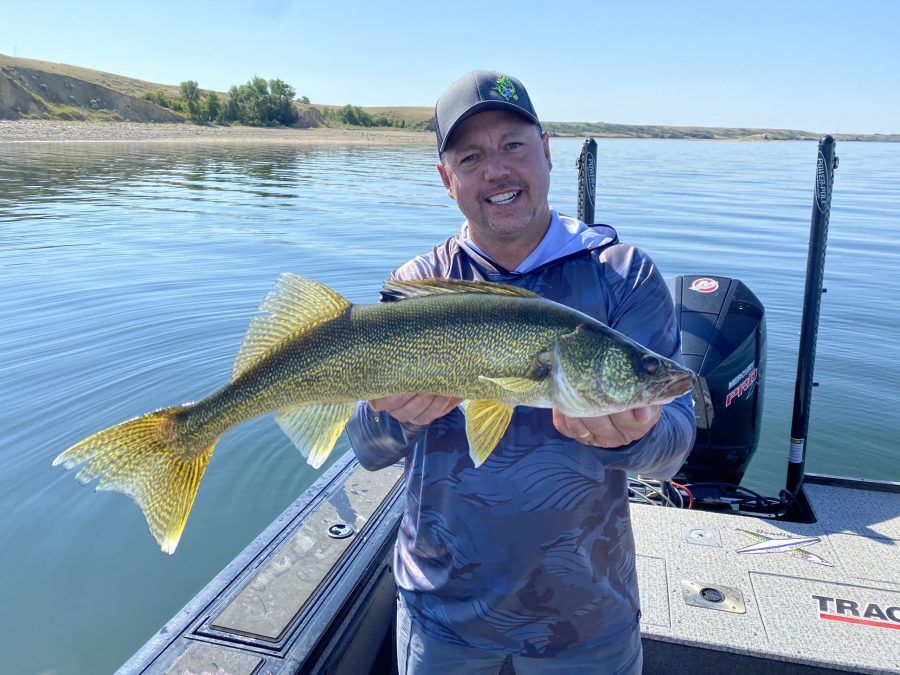
Wes is a big believer in conservation, educating about Canada’s fisheries and wildlife, and getting our youth involved in the outdoors.
